


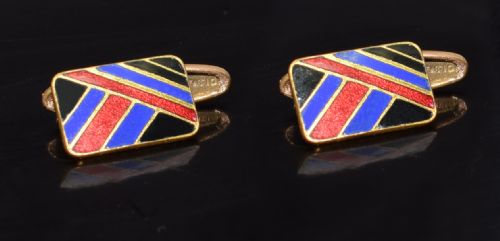


Geometric Art Deco Cufflinks
Geometric art deco cufflinks bring sharp symmetry and modernist colour to gentleman's tailoring, prized for their clean lines and period character.
Geometric Art Deco Cufflinks
Geometric art deco cufflinks are gentleman's accessories designed during the nineteen-thirties, dominated by strict lines, modernist motifs, and symmetrical patterns. The versions you meet most often on this page take the form of matching pairs of gents cufflinks dating from circa nineteen thirty, frequently combining metalwork with coloured enamel.
These pieces originate principally from the art deco style, capturing the architectural vigour and streamlined aesthetic of the interwar period. Alongside standard silver and silver plate, examples occasionally incorporate eighteen carat yellow gold or chrome, reflecting the diverse material palette utilised by makers of the era.
How they were made
Makers fashioned these accessories using metals such as silver, brass, and silver-tone metal, frequently pairing them with vitreous enamel to create vibrant blocks of colour. The technique relies on precise metalwork to form rigid rectangular, oval, or geometric shapes that define the art deco look.
Surface decoration often involves guilloche engraving beneath translucent enamel, adding subtle texture and depth beneath the polished surface. Construction methods focus on secure matching pairs intended for everyday wear on gentleman's double cuffs.
A gentleman could match his geometric red enamel cuffs to his Sunday motor car.
What varies in quality
The distinction between tiers rests upon the choice of base materials, moving from brass and silver-tone metal up to eighteen carat yellow gold and sterling silver. Superior examples demonstrate crisp execution in the geometric enamel work, with clean junctions between contrasting colours.
Design complexity also separates standard production from finer output, particularly where intricate guilloche patterns or sapphire additions elevate the piece. The precision of the modernist lines and the integrity of the enamel surfaces dictate the standing of individual pairs.
The Geometric Art Deco Cufflinks Glossary
- Enamel
- A vitreous substance fused to metal through high-temperature firing. It provides durable colour and a smooth, glossy finish on metal surfaces.
- Guilloche
- A decorative engine-turning technique that etches precise geometric patterns into metal. It is typically glazed with translucent enamel to reveal the pattern beneath.
- Modernist
- An early twentieth-century design movement favouring functionality, abstract geometry, and rejection of historic revival styles. It forms the core aesthetic of these geometric accessories.
- Vitreous enamel
- Glass powder melted onto a metal substrate under intense heat. This process creates a hard, permanent coloured layer resistant to fading.
- Silver-tone metal
- A base metal alloy finished to resemble silver in appearance. It offers the visual appeal of precious metal without the underlying bullion content.
Geometric Art Deco Cufflinks: Frequently Asked Questions
How do I wear art deco cufflinks?
These pieces require double-cuff shirts, commonly known as French cuffs, where the cuff is folded back and secured through all four layers.
Position the toggle flat against the outer cuff layer and slide the post through, ensuring the geometric enamel face displays upright on the outside.
Are these cufflinks from the 1930s?
The pieces originate primarily from the nineteen-thirties, capturing the height of the art deco movement. Makers of the period embraced strict geometric forms and modern industrial materials.
Production dates cluster around nineteen thirty and the subsequent decade, reflecting authentic interwar gentleman's accessories.
What metals are used in these cufflinks?
Materials span sterling silver, silver plate, brass, and silver-tone metal, alongside occasional examples rendered in eighteen carat yellow gold. Chrome also appears in select archival pieces.
The metal forms a structural armature that supports the prominent enamel panels and geometric faces.
How do I care for enamel cufflinks?
Protect the vitreous enamel surfaces from sharp impacts and abrasive chemicals to preserve the glossy finish. Store them individually in a lined box to prevent scratching against other metal items.
Clean gently using a soft cloth dampened with warm water, avoiding harsh silver dips that might damage vulnerable enamel or gilding.