



Gentlemans Wardrobe Art Deco
A gentlemans wardrobe art deco brings architectural symmetry and fitted storage to the bedroom.
Gentlemans Wardrobe Art Deco
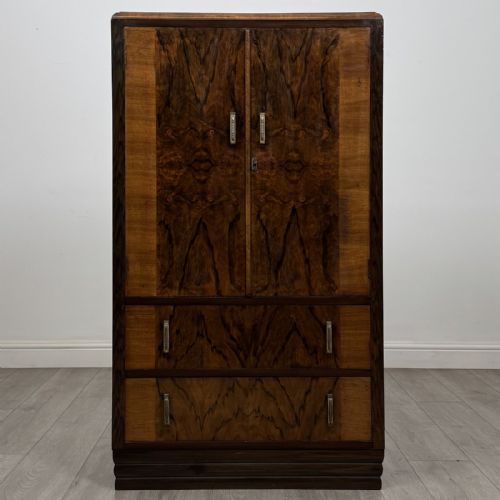
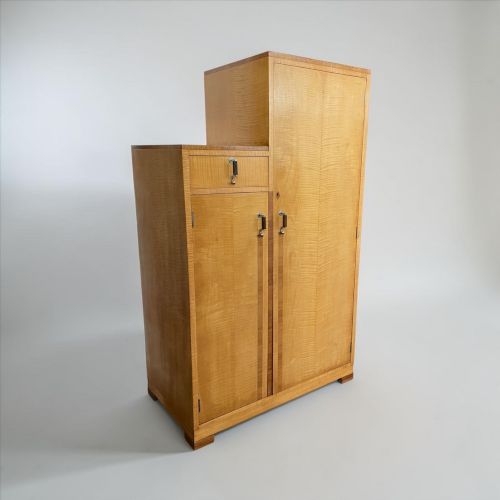
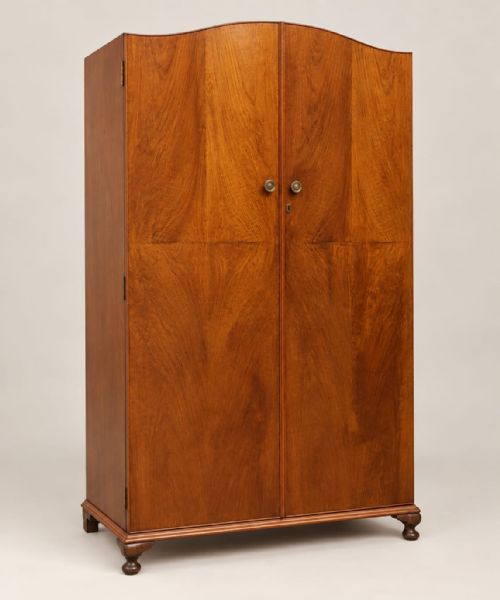
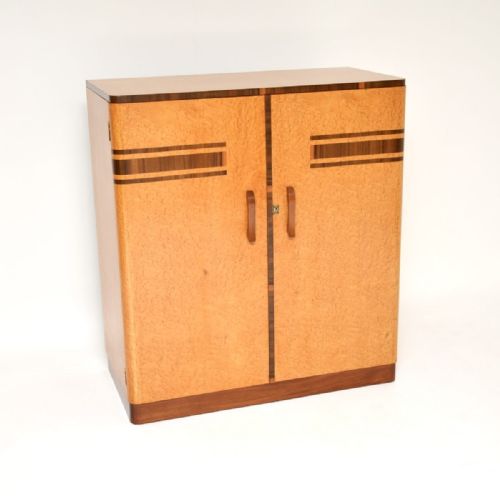
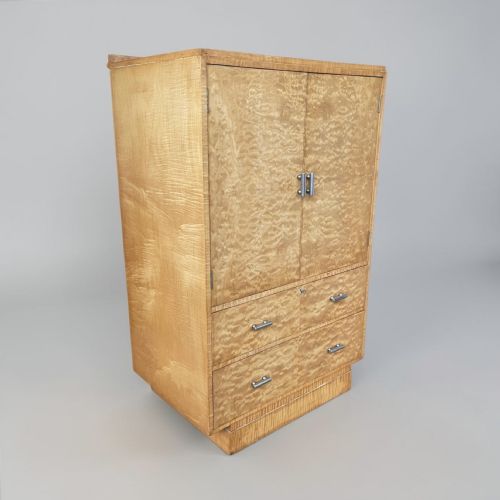
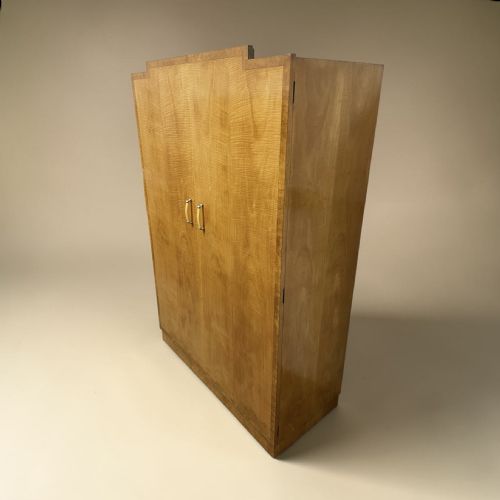
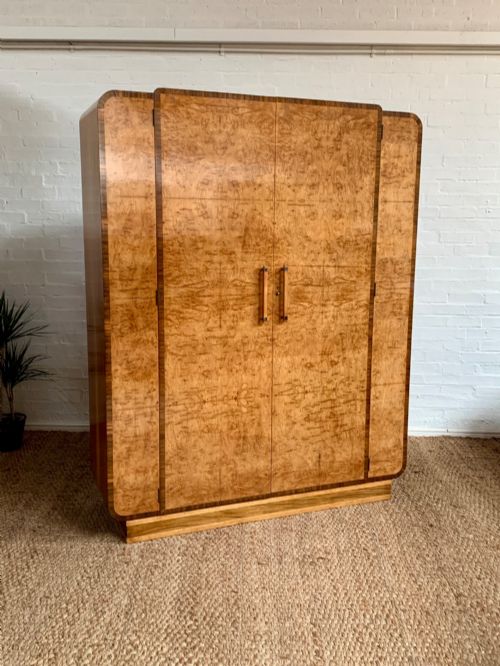
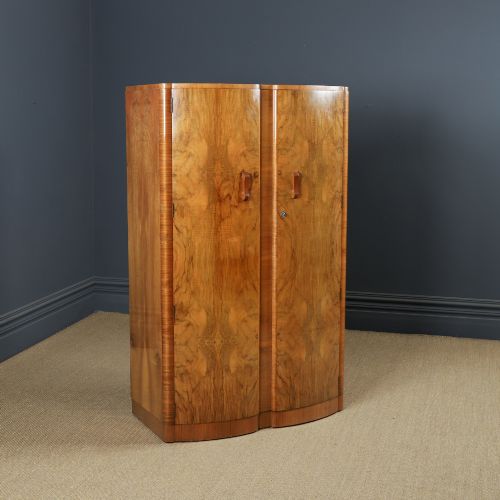
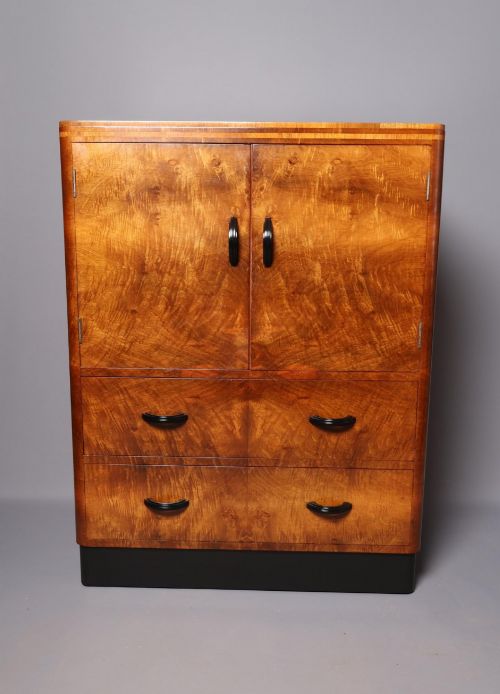
A gentlemans wardrobe art deco combines vertical storage with compartmented interiors designed for men's attire. Pieces appear from the 1920s, 1930s, and 1940s, taking the form of tallboys, compactums, and double wardrobes.
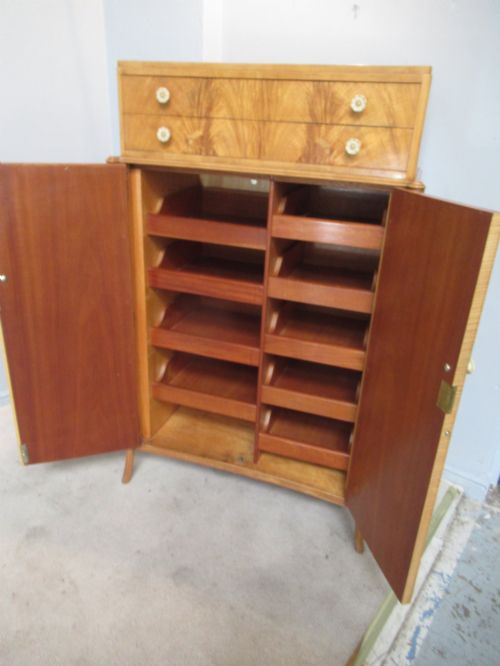
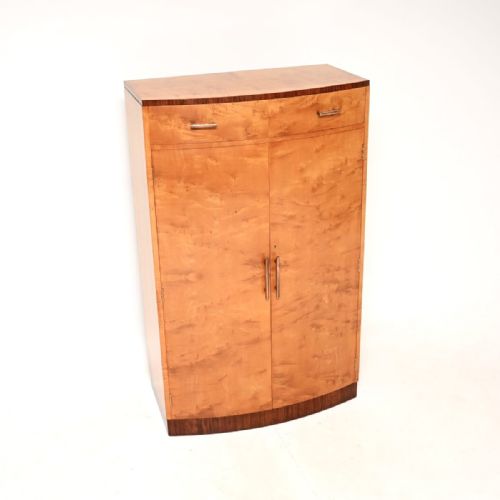
The layout typically pairs hanging space with internal drawers, shelves, and pull-out trays. Buyers encounter compact models alongside larger double doors and bow front designs.
Makers and workshops of the period utilised distinct regional woods and veneers to create striking grain patterns across the front facade.
How they were made
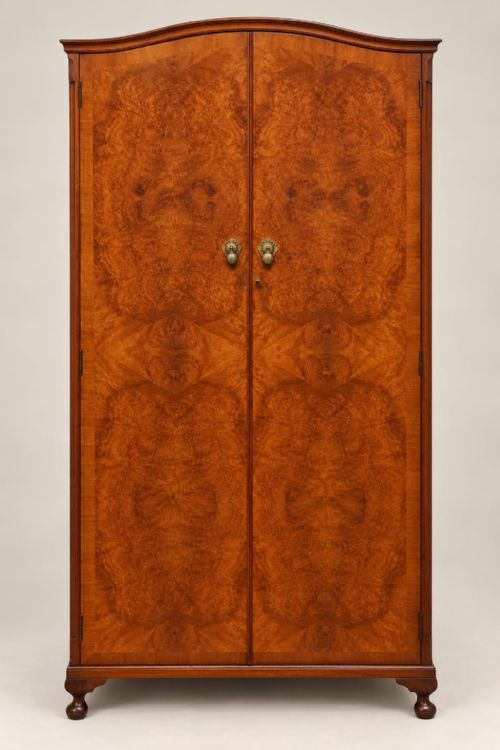
Carpenters applied burr walnut, birds eye maple, and satin birch veneers over solid carcases to display dramatic figuration. Cabinet makers contrasted dark walnut frames with lighter internal maple or mahogany elements.
Metal and brass hardware, alongside Bakelite handles, provide functional accents to the primary wood surfaces. Construction relies on fitted internal compartments, dovetailed drawers, and architectural paneling typical of the era.
Gentlemans Wardrobe Art Deco Retail Price Guide 2026
Typical asking prices for gentlemans wardrobe art deco among the pieces listed under this phrase on Sellingantiques today, from the lower quarter to the upper quarter. They describe what is for sale here now, not the wider market.
Listings demonstrate pieces spanning from 1920 to 1940, utilising burr walnut, birds eye maple, satin birch, and pale mahogany.
What varies in quality
The visual strength of the veneer selection dictates the presence and character of the piece. Symmetrical matching of burr walnut figures across dual doors marks superior cabinet work.
Complexity of internal fittings, such as specialised pull-out trays and dedicated shoe racks, separates utilitarian units from elaborately appointed compactums.
Waring & Gillow·Heal's
The Gentlemans Wardrobe Art Deco Glossary
- Compactum
- A multi-functional wardrobe combining hanging space, drawers, and shelving within a single cabinet. This form maximises storage efficiency for varied clothing items.
- Tallboy
- A tall chest of drawers or a wardrobe elevated above a drawer base. The vertical proportion saves floor space while offering substantial capacity.
- Veneer
- A thin layer of decorative wood applied to a secondary timber base. Master craftsmen arranged these slices to produce repeating symmetrical patterns.
- Bow front
- A cabinet front that curves outward in a convex sweep. This shaping softens the strict geometric lines often found in the style.
Gentlemans Wardrobe Art Deco: Frequently Asked Questions
What is a compactum wardrobe?
A compactum integrates hanging space, shelving, and internal drawers into one fitted cabinet. It provides complete storage for a variety of garments without requiring extra furniture.
These pieces appeared frequently during the 1930s to meet demands for efficient domestic organisation.
How do tallboys and wardrobes differ?
Tallboys prioritize vertical drawer storage, sometimes incorporating a small cupboard section at the top. Wardrobes focus primarily on vertical hanging space for coats and suits.
Both forms share the characteristic architectural proportions of the period.
What woods were used?
Walnut and burr walnut dominate the exterior surfaces, often paired with contrasting maple, satin birch, or mahogany veneers. Brass and metal fittings complete the construction.
Makers selected these timbers specifically for their rich grain patterns and warm tones.
How do I date these pieces?
Pieces generally date between the 1920s and 1940s based on structural proportions, hardware materials, and veneer choices. Simpler geometric lines and Bakelite details point toward the later 1930s.
Earlier examples from the 1920s often feature rich burr walnut with traditional fitted tray interiors.