
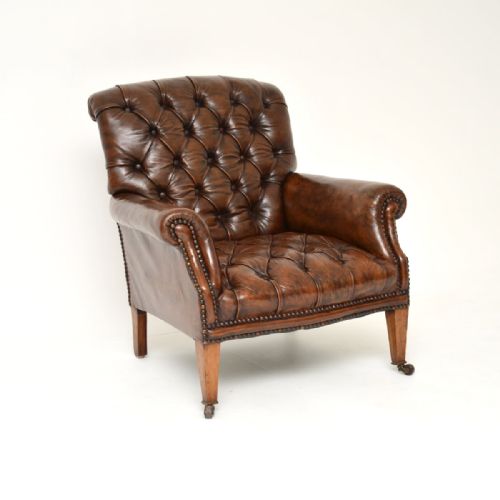
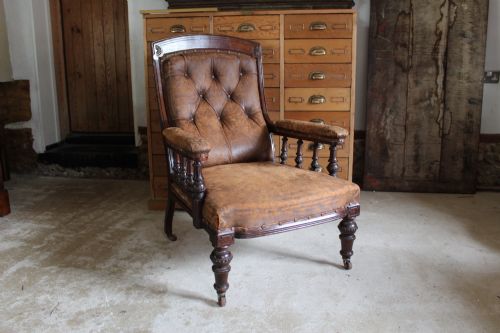


Gentlemans Club Armchair
A gentlemans club armchair offers deep, leather-bound comfort built for a library or study, defined by substantial proportions and traditional upholstery.
Gentlemans Club Armchair
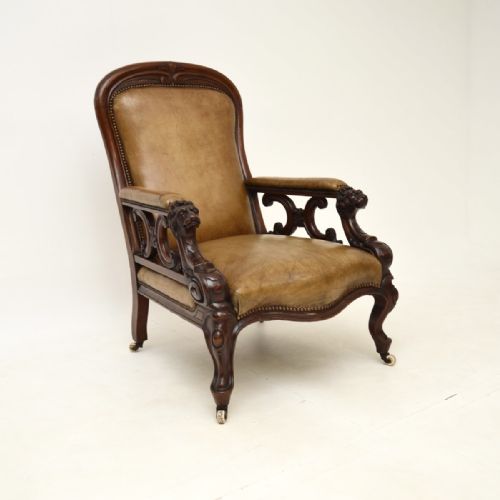
A gentlemans club armchair sits among the most substantial seating choices from the nineteenth and early twentieth centuries, designed specifically for libraries, studies, and private sitting rooms. These chairs offer deep seats and protective wing backs or low, enveloping club profiles built to host hours of reading and conversation.
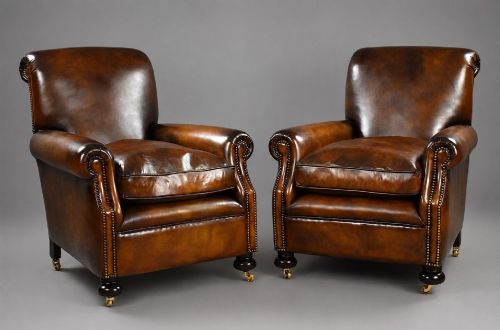
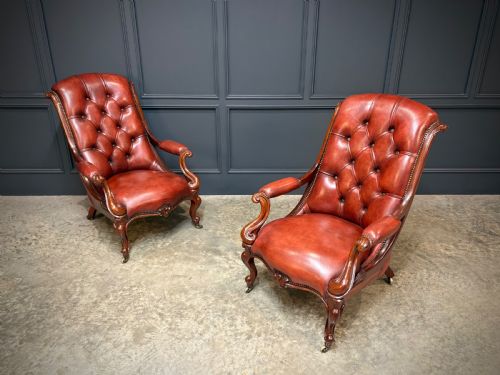
The version most commonly met on this page is the Victorian leather library armchair, frequently encountered in rich shades of brown, burgundy, or deep navy. Alongside these nineteenth-century forms appear later twentieth-century Art Deco club chairs and Georgian revival pieces.
Makers constructed these seats to anchor a room, combining architectural timber frames with heavy animal hides. They survive in pairs and single examples, each bearing the marks of extensive use in domestic and institutional settings.
Materials and construction methods
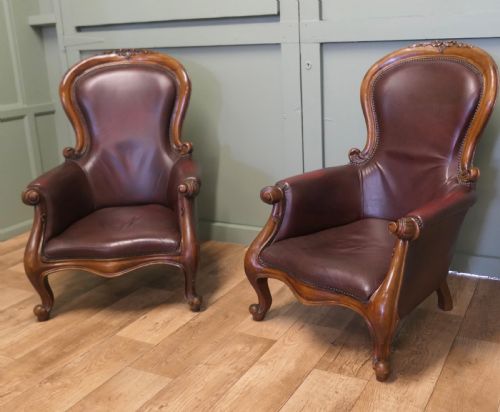
Makers built the structural frames of these armchairs from dense hardwoods including mahogany, walnut, oak, and general timber. These sturdy wooden carcasses frequently display carved details, spoon backs, or cabriole legs.
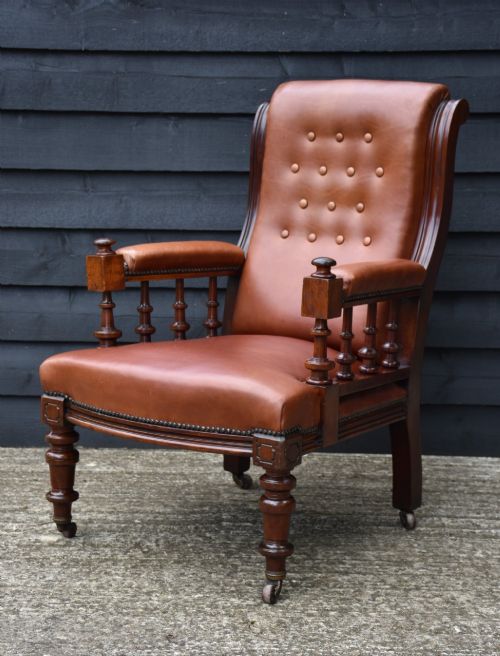
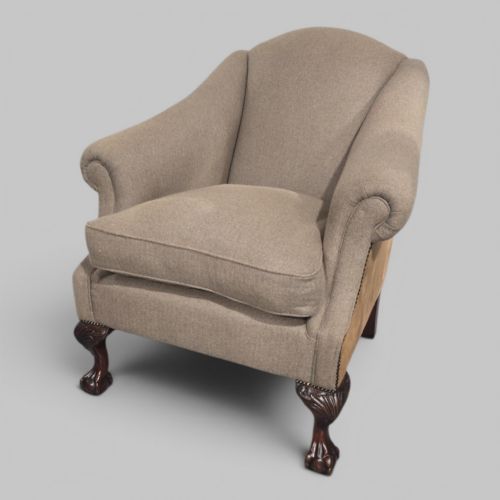
The primary upholstery material is leather, often hand-coloured, buttoned, or paired with brass nailhead trim. Some variants incorporate wool fabric or tweed to alter the texture of the seat.
Joinery involved traditional pinning and framing techniques to support the heavy weight of the sprung interior and thick leather covering. Carved ornamentation on the arms and legs added sculptural presence to the structural wood.
One unexpected Victorian armchair arrives upholstered entirely as a tweed jacket.
Distinctions in quality and execution
The grading of a gentlemans club armchair rests primarily on the depth and character of the timber carving and the tactile quality of the leather. Superior examples show crisp hand-carved detailing on mahogany or walnut frames rather than plain, unadorned surfaces.
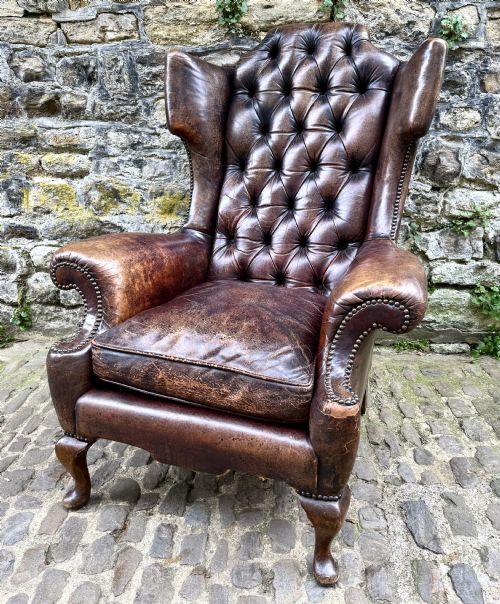
Upholstery execution creates a distinct tier between average seating and the finest library chairs. Deep buttoning, hand-coloured hides, and intact brass tacking separate workshops that focused on bespoke comfort from mass production.
Proportion and stance dictate the visual gravity of the piece. Chairs with balanced wing backs, sturdy cabriole supports, or integrated lion carvings hold greater presence than simpler salon chairs.
Robert Daws London·Gillows
The Gentlemans Club Armchair Glossary
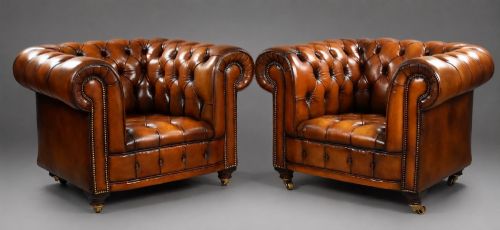
- Chesterfield chair
- A heavily buttoned leather seating form characterised by arms and back of the same height. This style provides a formal, traditional silhouette.
- Spoon back
- An upholstered chair back shaped in a concave oval resembling the bowl of a spoon. This nineteenth-century form contours closely to the human spine.
- Library armchair
- A sturdy seating piece designed for reading rooms, typically featuring padded armrests and durable leather upholstery. These chairs prioritize ergonomic support for long periods.
- Cabriole leg
- A furniture leg that curves outward in a convex arc before tapering inward in a concave sweep. This form often terminates in scroll or carved feet.
- Wing armchair
- A high-backed chair with side panels attached to the arms to shield the sitter from drafts. Early examples utilise deep leather upholstery.
Gentlemans Club Armchair: Frequently Asked Questions
What is a club armchair?
A club armchair is a heavy, deep-seated lounge chair traditionally upholstered in leather. It was designed for comfort in private clubs and studies.
These pieces emerged in various forms through the nineteenth and early twentieth centuries, ranging from Victorian library chairs to Art Deco styles.
How do I date a leather armchair?
Dating relies on examining the timber frame, leg style, and upholstery techniques. Victorian pieces often feature mahogany or walnut frames with hand-coloured buttoned leather.
Later twentieth-century examples, such as 1920s Art Deco club chairs, exhibit distinct streamlined profiles and different hide treatments compared to nineteenth-century Gothic or Georgian revival pieces.
Were these chairs only used by men?
While traditionally associated with male-dominated spaces like smoking rooms and gentlemen's clubs, historical listings include ladies and gents pairs and general library seating.
The scale and upholstery made them suitable for any domestic library or drawing room regardless of occupant.
How do I care for antique leather?
Antique leather requires regular cleaning and conditioning to maintain its suppleness and prevent cracking. Keeping the hide away from direct heat sources preserves the original hand-coloured finish.
Proper maintenance ensures the material retains its texture and colour over decades of daily use.