

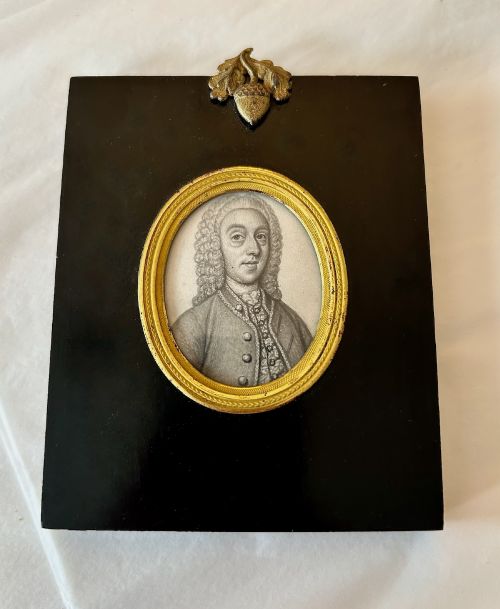
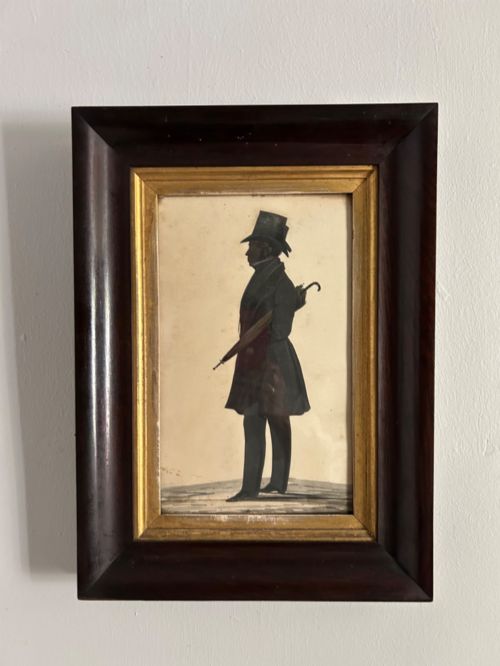
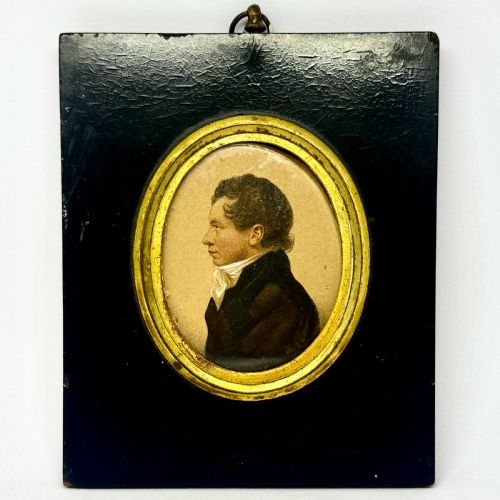


Gentleman Profile Silhouette
A gentleman profile silhouette captures a crisp likeness in monochrome, offering a remarkably direct window into past lives.
Gentleman Profile Silhouette
A gentleman profile silhouette presents a likeness cut from paper or painted in ink, capturing the sharp outlines of sitters from the eighteenth and nineteenth centuries. These framed artworks range from intimate bust portraits to full-length studies.
Most examples found here date from the Georgian, Regency, and Victorian periods, reflecting the height of the medium's popularity before photography took over. The sitters include elegant young men and bearded gentlemen alike.
Framed artwork and wall art forms dominate the selection, often preserved behind glass in traditional wood or papier-mache frames. Portrait miniatures also appear, offering smaller-scale studies of male sitters.
Materials and construction
Makers cut profiles freehand from black paper or painted directly onto card and glass using dense black ink. Artists then mounted these contrasting likenesses against pale backgrounds to maximise the dramatic outline.
Gentleman Profile Silhouette Retail Price Guide 2026
Typical asking prices for gentleman profile silhouette among the pieces listed under this phrase on Sellingantiques today, from the lower quarter to the upper quarter. They describe what is for sale here now, not the wider market.
The listings span the eighteenth, nineteenth, and twentieth centuries, featuring works from the Georgian, Regency, and Victorian periods.
Judging quality in profiles
Precision in cutting or painting determines the success of a profile, separating skilled likenesses from crude approximations. The accuracy of the jawline, nose, and cravat reveals the dexterity of the hand behind the work.
Condition of the paper and the originality of the glass and frame influence the integrity of the piece over centuries. Works bearing a signature or originating from a known studio carry distinct historical weight.
Bateman·Frith·Hubard Gallery·Miers·Nathaniel Bermingham
The Gentleman Profile Silhouette Glossary
- Silhouette
- A portrait profile filled in with a solid dark colour, typically black, against a lighter background. This method relies entirely on outline and shadow to convey identity.
- Portrait miniature
- A small-scale painting or profile executed with fine detail. These works were often housed in protective cases or small wall frames.
- Papier-mache
- A composite material made from paper pulp reinforced with glue, moulded and baked for strength. It served as a popular material for polished frames in the Regency and Victorian eras.
- Gilt
- Covered thinly with gold leaf or gold paint. This technique highlights borders and specific details within the artwork.
Gentleman Profile Silhouette: Frequently Asked Questions
How do I date a silhouette?
Costume details, particularly the shape of coat collars, cravats, and hairstyles, provide the most reliable clues for dating. Framing materials and paper types also help narrow down the decade of production.
Signed works or labels on the reverse offer definitive markers, connecting the piece to specific artists or commercial galleries active during the Georgian and Victorian eras.
Where should I hang these portraits?
These intimate works suit smaller wall spaces, hallways, or groupings alongside other period artwork. They benefit from placement away from direct sunlight to protect fragile paper and ink.
Grouping several profiles together creates a striking display that mirrors how historic collectors arranged their portrait cabinets.
Are all silhouettes cut from paper?
While paper is the most common medium, artists also painted profiles directly onto glass, plaster, or card using dark ink. Some examples incorporate pastel or delicate watercolour touches alongside the cut paper.
Back-painted glass pieces require particular care, as the pigment sits on the reverse of the protective panel rather than on the background.
How do I care for antique silhouettes?
Keep framed pieces in stable environments with moderate humidity to prevent the paper from warping or foxing. Avoid hanging them where strong light can fade the black ink or discolour the paper ground.
Leave original sealed frames intact where possible, as opening them can introduce dust and moisture that damages the delicate materials inside.