

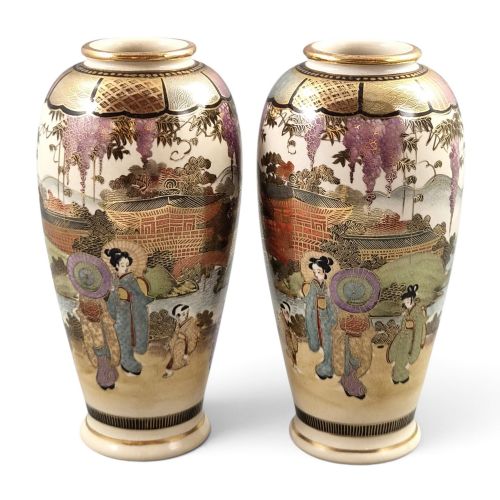


Geisha Figure
Geisha figures are Japanese works in porcelain, bronze, wood, and earthenware that capture traditional dress and posture for the collector.
Geisha Figure
A geisha figure represents traditional Japanese women through sculptural forms, vases, and statues originating from the nineteenth and early twentieth centuries. These pieces encompass Satsuma earthenware, Kutani porcelain, bronze statuary, and carved wood.
The versions most commonly met on this page include Satsuma vases and okimono depicting court figures or bijin. Makers utilise detailed enamels and gold leaf to render traditional kimonos and hairstyles.
Objects range from small desk sculptures to life-size bronzed statues and decorative plates. Each item records distinct stylistic periods spanning the Meiji era and Victorian times.
Materials and construction
Ceramic pieces utilise earthenware and porcelain bases decorated with cobalt grounds, enamel, and gold leaf. Potters applied moriage techniques to build raised details on Satsuma surfaces.
Sculptural works combine bronze casting, carved wood in specific regional styles like nata-tsukuri, and applied gilt finishes. Artisans modelled intricate robes and accessories by hand.
Pigments and watercolours appear on paper works alongside ceramic glazes and metallic patinas. Metal statues incorporate patinated bronze and signed bronze foundations.
Geisha Figure Retail Price Guide 2026
Typical asking prices for geisha figure among the pieces listed under this phrase on Sellingantiques today, from the lower quarter to the upper quarter. They describe what is for sale here now, not the wider market.
A card butler figure stands ready to hold your letters, perhaps wondering why nobody plays whist anymore.
Distinctions in quality
Quality separates through the precision of hand-painted enamels, the crispness of bronze casting, and the depth of wood carving. Finer examples display meticulous control over gold leaf and cobalt grounds.
Signed works and pieces originating from established Kyoto potteries command attention for their artistic execution. The complexity of moriage work and the naturalistic posture of the subject indicate superior craftsmanship.
Kinkozan Kyoto·Shozan·Miyao
The Geisha Figure Glossary
- Bijin
- A depiction of a beautiful woman in traditional Japanese art. These subjects appear frequently on Satsuma and Kutani ceramics.
- Satsuma
- A type of Japanese earthenware featuring a crackle glaze decorated with enamel and gold leaf. Kyoto workshops produced notable examples of this ceramic.
- Moriage
- A decorative ceramic technique using slip to create raised patterns. This method adds tactile relief to floral and figure motifs.
- Okimono
- A small Japanese display piece intended for traditional interior decoration. These standalone sculptures often portray figures and musicians.
- Meiji Period
- The era in Japanese history spanning from eighteen sixty-eight to nineteen twelve. Pieces from this time demonstrate refined craftsmanship in metal and ceramic.
Geisha Figure: Frequently Asked Questions
What is a geisha figure?
A geisha figure is a decorative or sculptural representation of a traditional Japanese entertainer or court woman, rendered in materials such as porcelain, bronze, earthenware, or carved wood.
These pieces reflect historical Japanese aesthetics and were produced in various forms, including freestanding statues, vases, and okimono, during the nineteenth and early twentieth centuries.
How do I identify Satsuma ware?
Satsuma ware is typically identified by its distinctive cream-coloured earthenware body covered in a fine network of crackled glaze. Artisans decorated these surfaces with detailed enamels and gold leaf.
Many pieces also feature raised decorative elements known as moriage and frequently depict court figures, bijin, or natural scenes.
Where were these figures displayed?
Historically, figures and decorative vases were placed in traditional interiors, mantelpieces, or display cabinets as ornamental works. Bronze statues and wooden carvings served as focal points in reception spaces.
Today, collectors place them on sideboards, desks, or specialised display shelves where the detail of the robes and patination can be observed closely.
How do I care for bronze statues?
Bronze statues require gentle dusting with a soft, dry cloth to prevent the accumulation of dirt on the patinated surface. Avoid using chemical cleaners or polishing agents, which can strip the original finish.
Keep the metal away from damp environments to preserve the integrity of the bronze and any applied gilt work over time.