



Garden Ornament Pedestal
A garden ornament pedestal elevates urns, sundials, and statues to create focal points in outdoor spaces.
Garden Ornament Pedestal
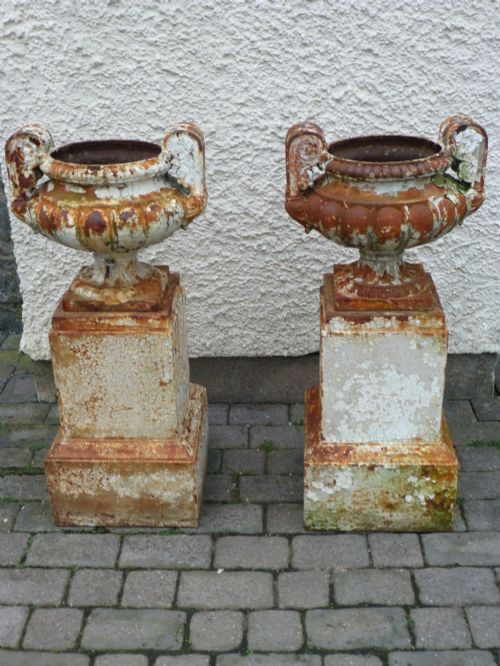
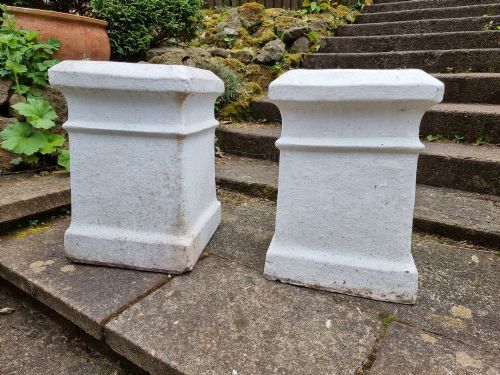
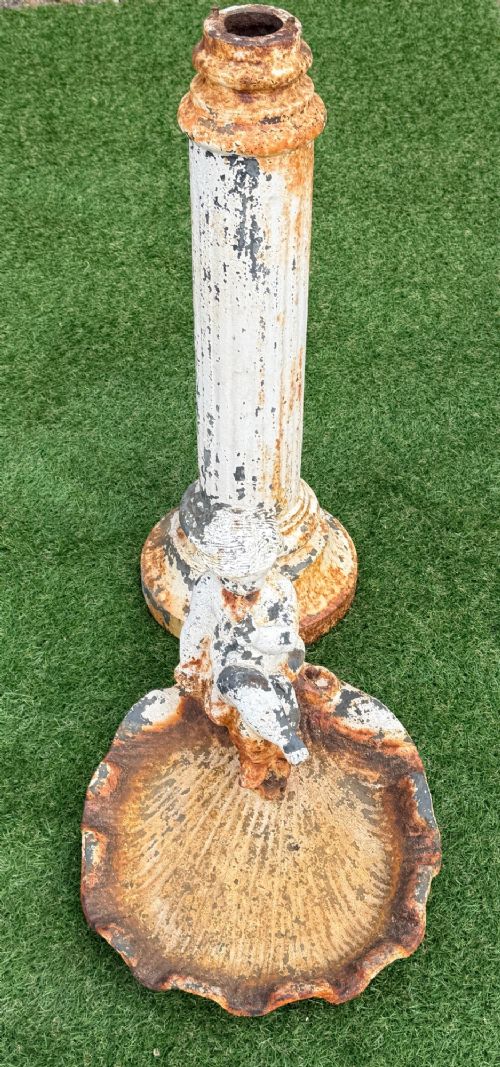
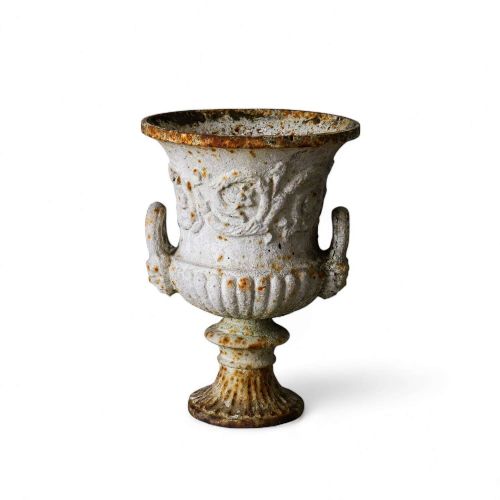
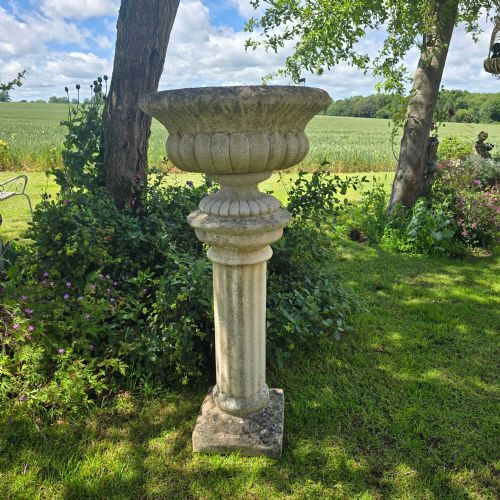
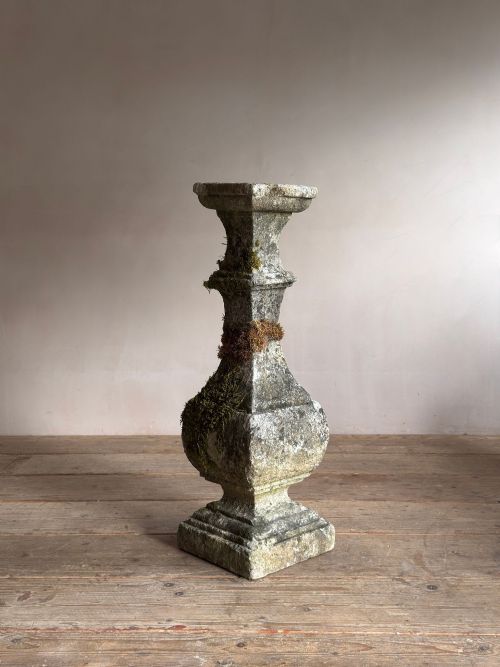
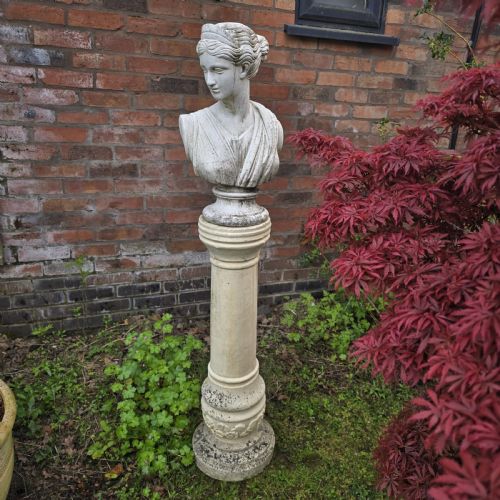
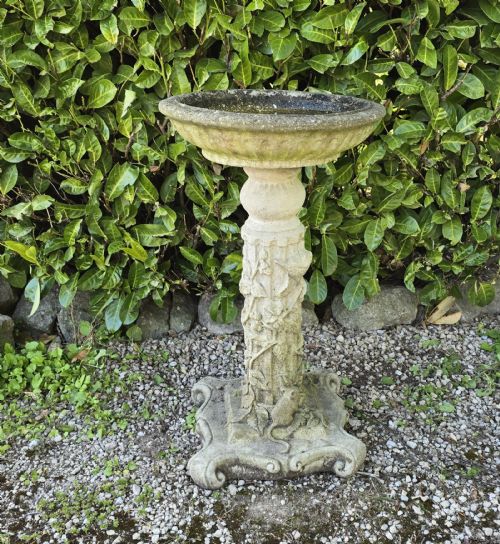
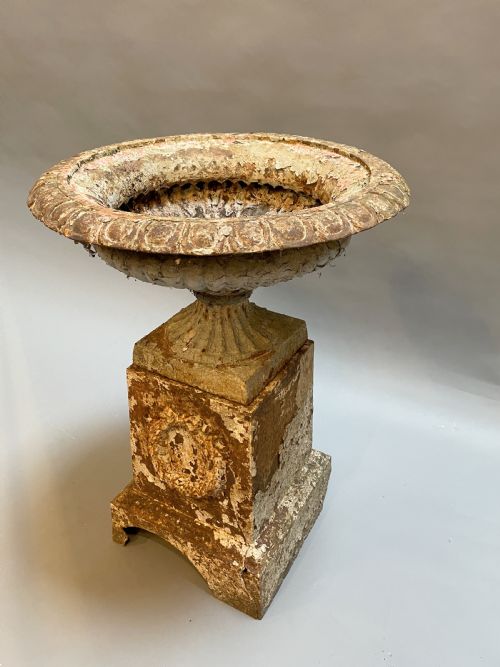
A garden ornament pedestal provides a raised platform or support column for display in grounds, lawns, and terraces. When searching for a garden ornament pedestal, buyers encounter heavy cast iron stands, weathered stone plinths, and classical columns designed to elevate urns, bird baths, and busts.
The selections span multiple eras, featuring Victorian cast iron examples alongside Edwardian and mid-twentieth century stone pillars. These supports range from simple cylindrical columns to elaborate architectural plinths styled with neoclassical or Gothic Revival motifs.
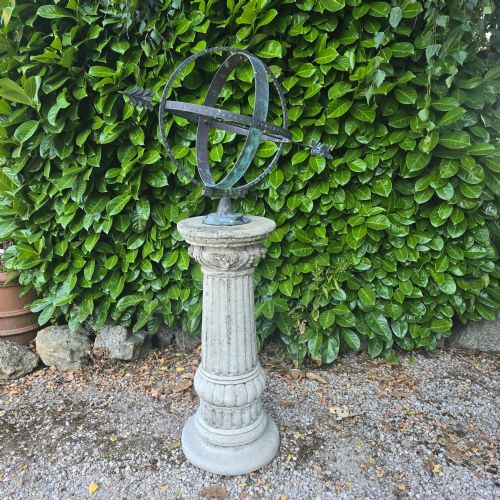
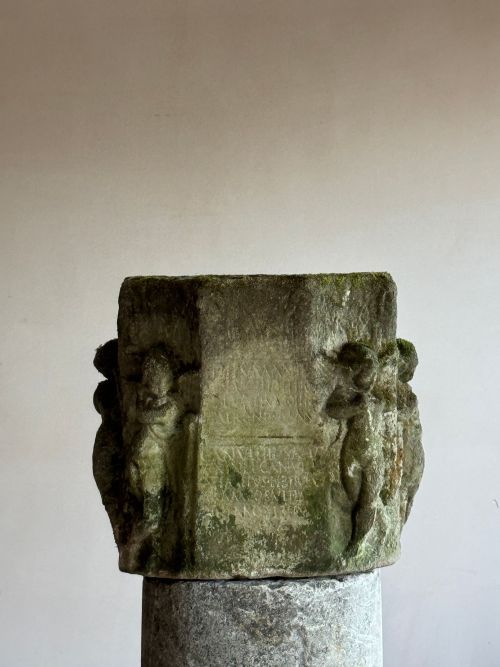
Many examples arrive paired with campana urns, armillary spheres, or figural sculptures resting upon the original base. Buyers frequently find individual plinths designed specifically to display staddle stones, terracotta lanterns, and carved stone busts.
Materials and Construction
Foundries utilised durable metals like cast iron, pouring molten iron into sand moulds to produce robust columns and stands that withstand outdoor elements. Makers such as Coalbrookdale and Andrew Handyside stamped their metalwork with intricate decorative details.
Stone variants utilise traditional carving methods on limestone, Purbeck stone, sandstone, and local rock formations. Later twentieth century pieces often employ reconstituted stone and cast stone moulded into classical shapes.
Terracotta and salt-glazed ceramics provide alternative mediums for planters and urn bases, fired at high temperatures to achieve weather resistance. Bronze components occasionally appear integrated as sundial elements atop stone columns.
Listings feature materials spanning cast iron, Purbeck stone, sandstone, terracotta, and reconstituted stone.
Judging Quality and Character
Quality rests in the crispness of the cast iron or the precision of the stone carving, where sharper relief work indicates superior craftsmanship. Well-defined mouldings on neoclassical plinths separate workshop productions from utilitarian architectural fragments.
Surface patination and weathering significantly influence visual appeal, with centuries of outdoor exposure creating natural lichens and organic oxidation that enhance the material. Original matched pairs carry greater distinction than assembled or mismatched components.
Falkirk Carron foundry·Coalbrookdale·Andrew Handyside
The Garden Ornament Pedestal Glossary
- Plinth
- A heavy base or square block supporting a statue, urn, or column. It elevates the ornament above ground level.
- Campana
- A bell-shaped garden urn with a flaring rim and a footed base. These vessels often sit atop dedicated pedestals.
- Reconstituted stone
- A composite material made from crushed stone and cement binder moulded into architectural forms. It simulates natural stone for garden ornaments.
- Staddle stone
- A mushroom-shaped stone support formerly used to elevate granaries off the damp ground. They find modern use as garden pedestals.
Garden Ornament Pedestal: Frequently Asked Questions
How do I secure a pedestal outdoors?
Heavy stone and cast iron pedestals generally remain stable under their own weight on level ground.
For taller columns or windy locations, professional installation using appropriate mortar or concealed dowels ensures safety.
Can cast iron pedestals stay outside in winter?
Cast iron handles frost effectively when the metal has been properly maintained with protective coatings.
Regular inspection prevents moisture ingress in vulnerable joints during freezing temperatures.
What goes on top of a pedestal?
Campana urns, armillary sphere sundials, and carved stone busts traditionally occupy the top surface.
Planters and architectural finials also create balanced garden displays when mounted securely.
How do I clean weathered stone?
Gentle brushing with water removes loose debris while preserving the historic patination accumulated over decades.
Harsh chemical cleaners or pressure washers damage fragile stone surfaces and strip away desirable weathering.