

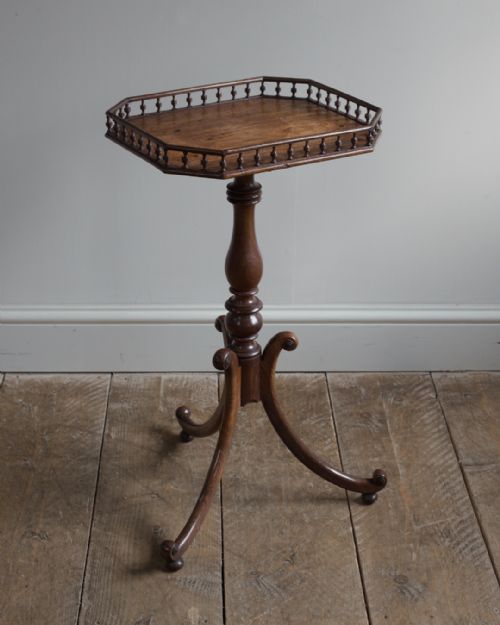
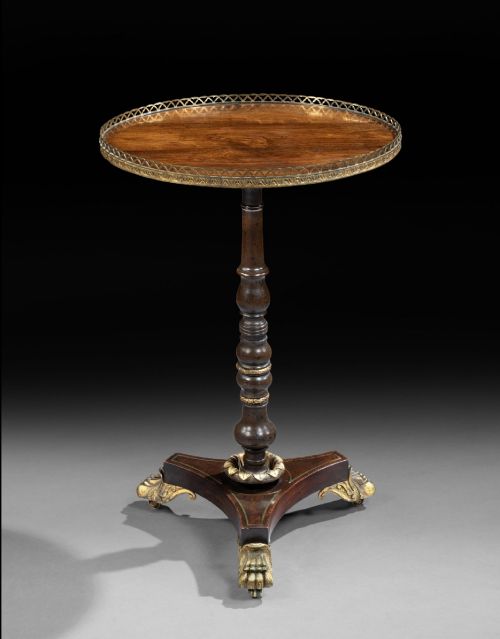
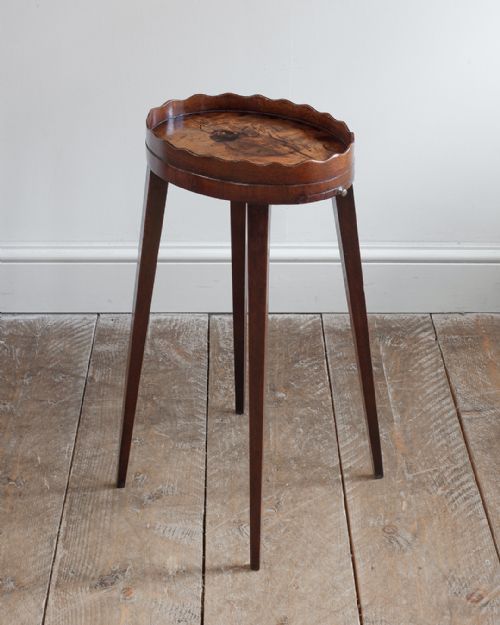
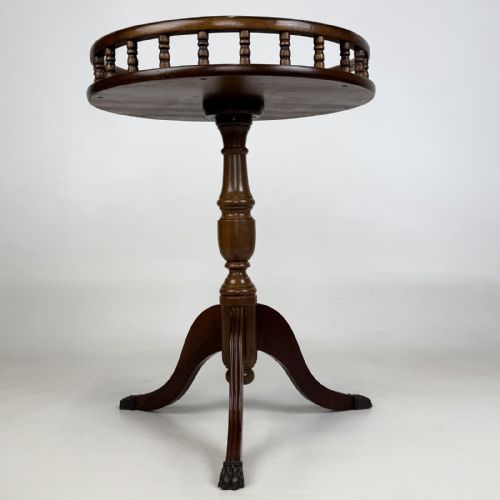





Gallery Top Candle Stand
A gallery top candle stand is a sturdy portable support for illumination, built with a raised edge to keep things secure.
Gallery Top Candle Stand
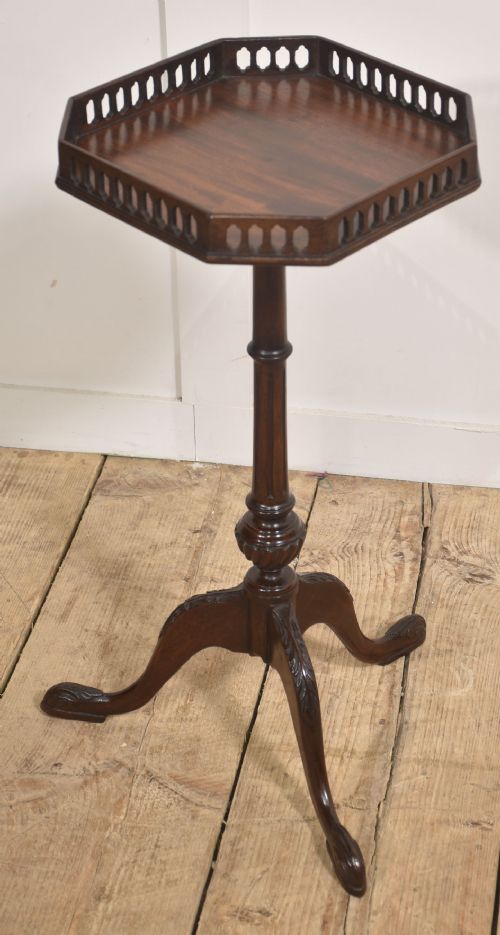
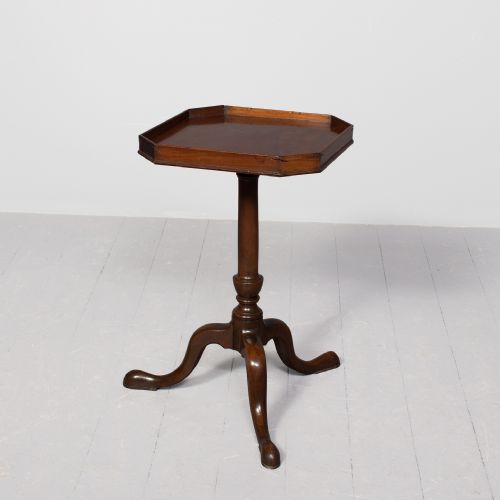
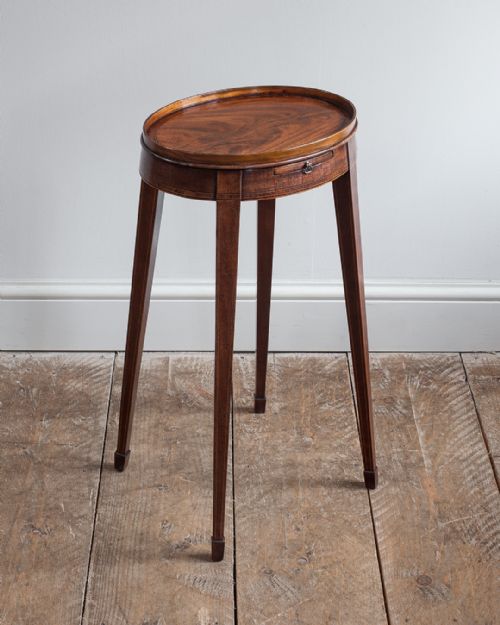
A gallery top candle stand is an occasional piece designed to hold a light source or small vessel within arm's reach. The inventory on this page spans the eighteenth century through the twentieth century, taking the form of wine tables, occasional tables, urn stands and kettle stands.
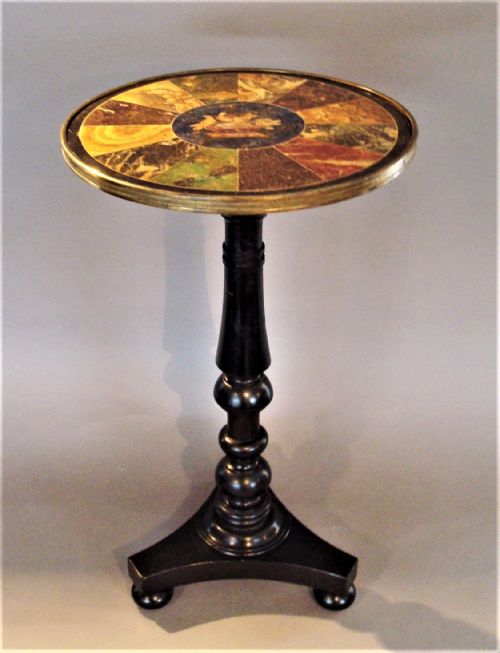
The dominant material across these pieces is mahogany, accompanied by rosewood, brass, ebonised wood and simulated marble. Most examples lean on traditional aesthetic idioms, including Georgian, George III, George II, Victorian and Chippendale styles.
Buyers will encounter circular, octagonal, oval, square and serpentine surfaces supported by tripod bases or central columns. These versatile stands served various domestic duties in sitting rooms and parlours across multiple stylistic eras.
How they were made
Woodworkers shaped these stands primarily from mahogany and rosewood, frequently incorporating turned columns and tripod legs for balance. Selected pieces utilise birdcage mechanisms or snap top functions to tilt the surface when not in use.
The defining feature is the gallery top itself, formed by mounting a pierced or solid raised rim around the perimeter of the tabletop. Additional materials such as brass and simulated marble appear in specific nineteenth-century designs.
Gallery Top Candle Stand Retail Price Guide 2026
Typical asking prices for gallery top candle stand among the pieces listed under this phrase on Sellingantiques today, from the lower quarter to the upper quarter. They describe what is for sale here now, not the wider market.
Listings feature woods including mahogany and rosewood, alongside decorative brass elements and simulated marble surfaces.
What varies in quality
Quality reveals itself in the crispness of the pierced gallery fretwork and the proportional harmony between the top, column and legs. Finer examples display carefully selected timber grain and robust joinery that keeps the tripod stable.
Revival pieces from later periods contrast with eighteenth-century originals in the depth of hand-carving and the patina accumulated over generations of use. The complexity of the tabletop outline, from simple circles to serpentine or octagonal forms, also shifts the character of the piece.
The Gallery Top Candle Stand Glossary
- Gallery
- A raised wooden or metal rim around the edge of a tabletop designed to prevent items from sliding off. Pierced galleries feature openwork fret patterns cut through the timber.
- Tripod table
- A small freestanding table supported by a central pillar resting on three legs. This construction prevents wobbling on uneven historic floors.
- Snap top
- A tabletop mounted on a catch mechanism that allows the surface to tilt flat against the pedestal for storage. This clever arrangement saved valuable floor space in period rooms.
- Birdcage
- A wooden box-like framework beneath the tabletop that allows the surface to rotate and tilt independently of the central column. It is a mark of sophisticated eighteenth-century cabinetmaking.
- Kettle stand
- A tall, compact occasional table specifically sized to support a heavy water kettle or urn over a heat source. They typically feature diminutive proportions and protective raised borders.
Gallery Top Candle Stand: Frequently Asked Questions
What is a gallery top?
A gallery top is a raised border encircling the edge of a tabletop. It creates a shallow tray effect to secure items placed on the surface.
This practical feature protected fragile vessels and candles from tumbling off during busy domestic use.
Where were these stands used?
These pieces functioned as movable furniture in principal rooms of the house. Owners placed them beside seating to hold drinks, lamps or warming vessels.
Their portable nature allowed servants to reposition them easily according to the daily routine.
How do I date a stand?
Dating relies on combining the stylistic details, timber characteristics and structural methods visible in the piece. Eighteenth-century models often show hand-turned components and specific carving vocabularies.
Later Victorian and twentieth-century revivals reinterpreted these historical forms with different manufacturing tolerances.
Why use a tripod base?
A three-legged base contacts the floor firmly on uneven or flagged surfaces without rocking. This stability made tripod tables practical for holding burning candles and hot liquids safely.
It also allowed makers to cluster slim legs compactly beneath small tabletops.