
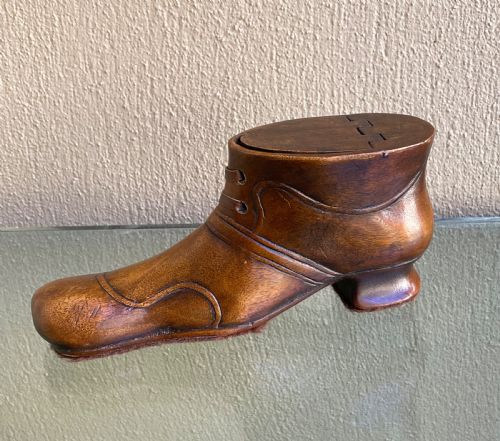


Fruitwood Treen Folk Art
These fruitwood treen folk art pieces are tactile domestic carvings made by hands that shaped utilitarian timber into expressive tokens of affection, daily work, and amusement.
Fruitwood Treen Folk Art
When you search for fruitwood treen folk art, you encounter small domestic objects shaped from timber during the Georgian, Victorian, and nineteenth-century periods. The selection here leans heavily towards utilitarian items transformed by carving into personal belongings.
You are most likely to meet knitting sheaths, snuff boxes, and nutcrackers alongside decorative lovespoons and bowl stands. These domestic survivors carry the marks of everyday use across English, Welsh, and continental workshops.
The objects range from a child toy rattle to a carved squirrel nutcracker or a bird-shaped snuff box. Each piece bridges the gap between practical household tool and imaginative folk sculpture.
How they were made
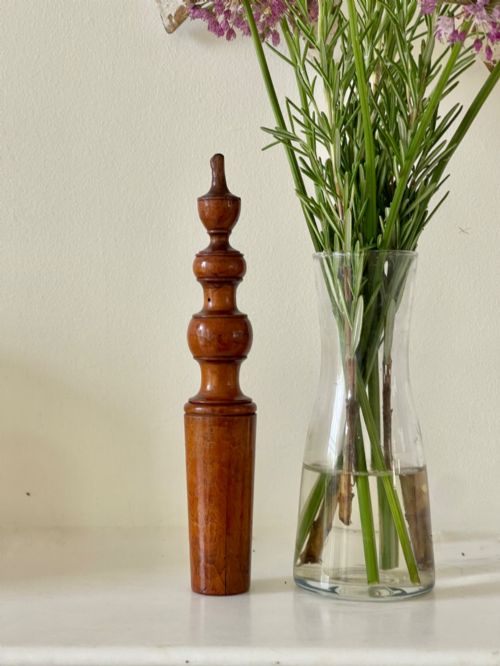
The makers utilised dense fruitwoods, plum wood, and burr wood, turning them on simple lathes or carving them entirely by hand with pocket knives. These tight-grained timbers allowed makers to cut crisp details that held their edge through decades of handling.
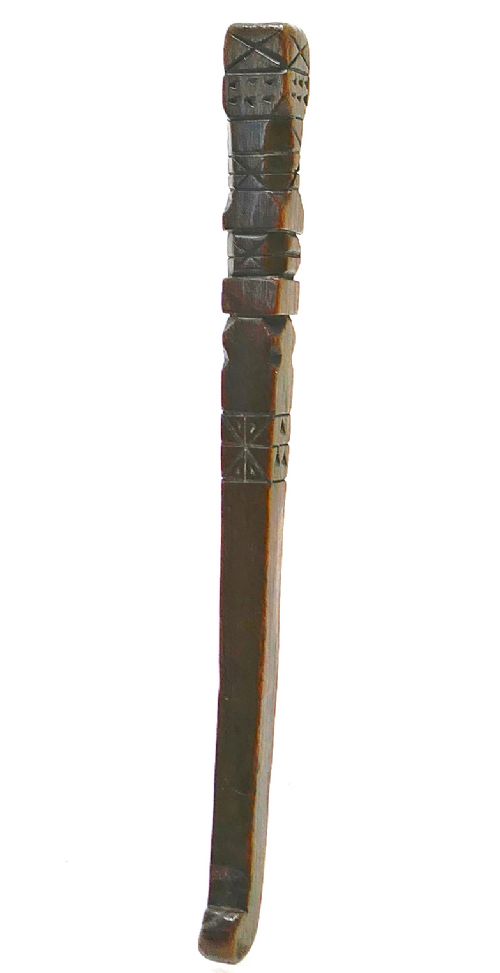
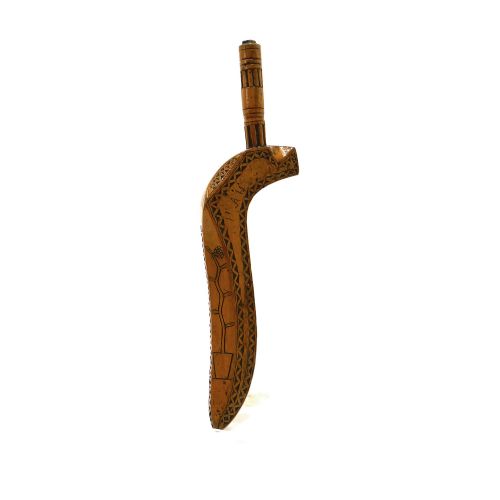
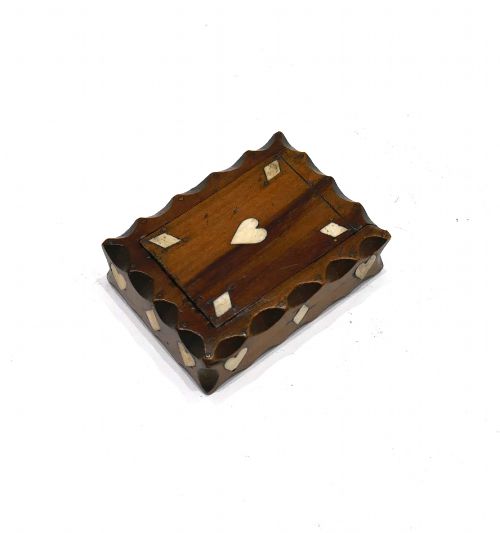
Decoration relied on incision, punchwork, and occasionally inlaid bone hearts and diamond shapes to bring contrast to the warm timber surfaces. Surface ornament was worked directly into the fruitwood without the need for complex finishing agents.
Someone once carved a functional nutcracker into the likeness of a squirrel eating a nut.
What varies in quality
Quality rests upon the ambition of the carving and the dexterity shown in turning difficult timber like plum wood or fruitwood. A simple turned goblet differs from a sculptural bird snuff box or a heavily decorated goosewing knitting sheath.
The depth and crispness of punchwork and incised lines distinguish spirited domestic pieces from plain workshop production. Patina earned through years of touch completes the character of the better-surviving examples.
The Fruitwood Treen Folk Art Glossary
- Treen
- Small handmade wooden domestic objects and utensils produced before the dominance of mass manufacturing. These pieces served practical household functions.
- Knitting sheath
- A carved wooden holder tucked into a belt or apron string to support a single knitting needle during hand-production. They often display punchwork and incised line decoration.
- Lovespoon
- A decorative wooden spoon carved as a token of courtship or affection. Makers embellished them with symbols like hearts and geometric patterns.
- Snuff box
- A small lidded container designed to hold powdered tobacco for ingestion. Examples take conventional oblong shapes or figurative forms like birds and shoes.
- Fruitwood
- Timber sourced from fruit-bearing trees such as apple, pear, or plum. This wood provides a fine, dense grain suitable for detailed carving.
Fruitwood Treen Folk Art: Frequently Asked Questions
What is fruitwood treen?
Fruitwood treen comprises small, functional wooden objects fashioned from dense orchard timbers like apple, pear, and plum. These items served everyday domestic needs before mass production standardised household goods.
Craftsmen and household makers turned and carved these dense woods into items ranging from kitchen implements to personal accessories.
How were knitting sheaths used?
Knitting sheaths held one of the two needles steady while a person knitted by hand while sitting or walking. The user tucked the carved wooden sheath into a waistband or apron string.
This freed one hand to manage the yarn and speed up the production of stockings and garments.
What do lovespoons signify?
Lovespoons represent tokens of affection and courtship carved by suitors to demonstrate their woodworking skill and devotion. Recipients hung these decorative spoons on cottage walls rather than using them for eating.
Carvers often incorporated symbolic motifs such as hearts and geometric punchwork into the fruitwood handle.
How do I care for treen?
Keep wooden treen away from direct heat sources and sudden temperature shifts that cause timber to dry and split. Gentle handling allows the natural oils from your hands to maintain the historic patina.
Avoid using water or modern polishes, relying instead on a soft, dry cloth for cleaning.