


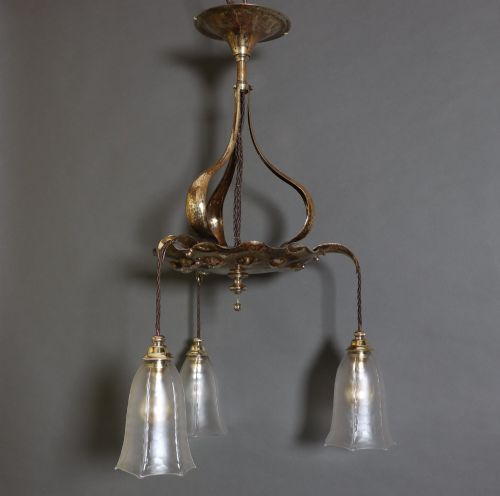
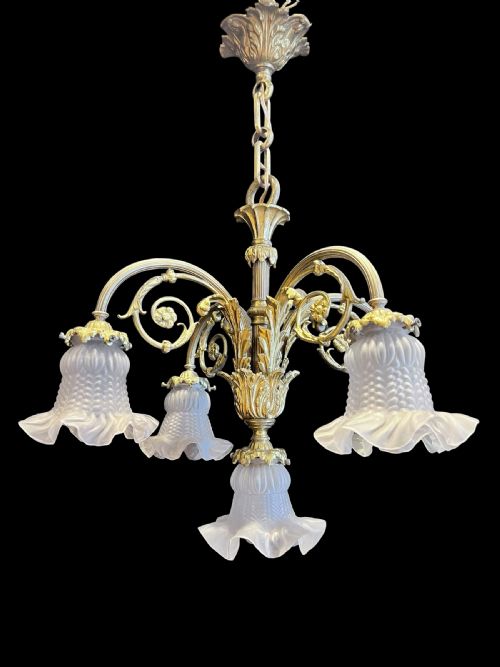
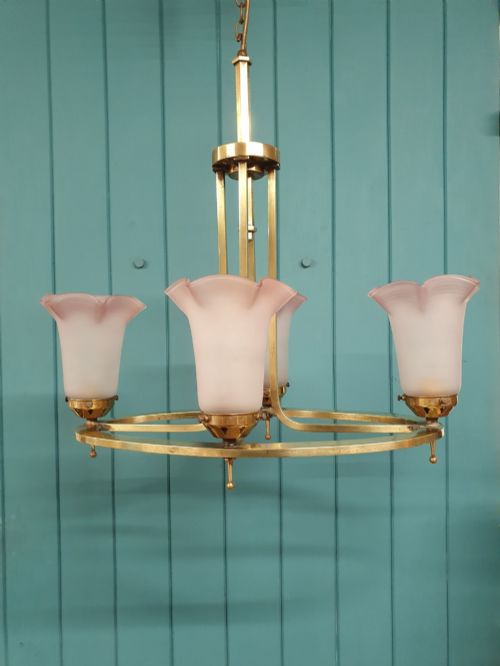


Frosted Shade Chandelier
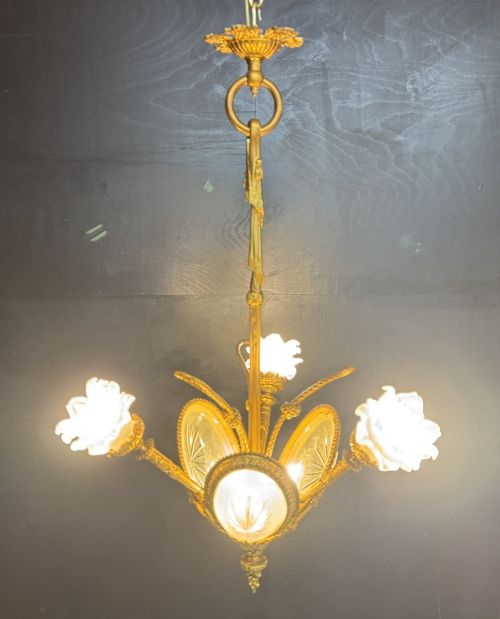
A frosted shade chandelier brings a soft, diffused glow to a room, offering the distinct period character collectors seek in ceiling lighting.
Frosted Shade Chandelier
When searching for a frosted shade chandelier, you are looking at ceiling lights and pendant lights that span from the nineteenth century through the Art Deco and Edwardian periods. These pieces combine metal frames with treated glass diffusers to soften interior illumination.
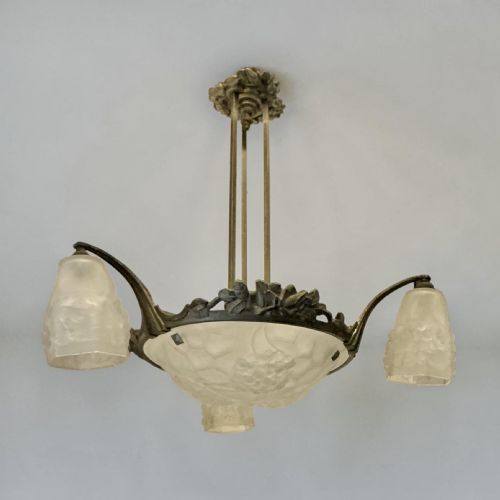
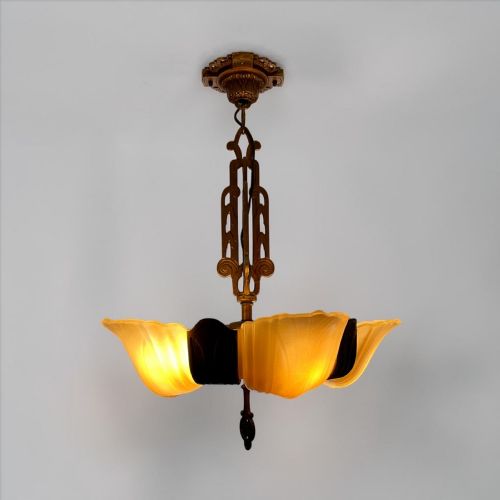
You are most likely to meet Art Deco iterations from the 1920s and 1930s featuring moulded or slip-pressed glass bowls, alongside earlier brass and bronze frames dating back to the Victorian era and the 1880s.
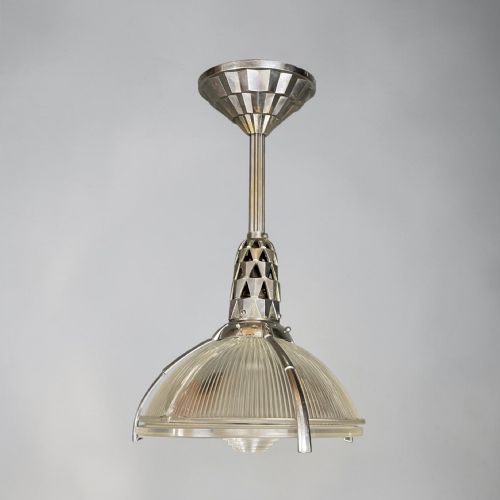
The selection ranges from simple single-lamp hall lanterns and pendant lights to large multi-arm chandeliers utilising copper, wrought iron, and crystal components.
Materials and construction methods
Makers built the structural frameworks of these fixtures using cast brass, bronze, wrought iron, and beaten copper, often combining them with cut glass or crystal drops.
The characteristic diffusers relied on frosted glass techniques, sometimes incorporating ruby staining, gilding, or moulded clam shell and slip shade designs produced by specialised glassworks.
Frosted Shade Chandelier Retail Price Guide 2026
Typical asking prices for frosted shade chandelier among the pieces listed under this phrase on Sellingantiques today, from the lower quarter to the upper quarter. They describe what is for sale here now, not the wider market.
Assessing craftsmanship and finish
The distinction between standard examples and superior pieces rests on the weight and depth of the metalwork, whether cast bronze or hand-beaten copper, alongside the crispness of moulding in the glass shades.
Integration of design elements, such as matched sets of frosted bowls or documented workshop attributions, elevates certain pendant lights and multi-light fixtures above utilitarian alternatives.
Émile-Jacques Ruhlmann·F&C Osler·Verrerie Des Vosges·Jean Gauthier
The Frosted Shade Chandelier Glossary
- Slip shade
- A type of moulded glass insert held in place by the metal frame of a light fixture, common in Art Deco designs.
- Downlight
- A ceiling fixture designed to cast illumination directly downwards into a space rather than diffusing it outwardly.
- Tent and waterfall
- A configuration of crystal strands forming an upper tent shape above a cascading arrangement of drops on a chandelier.
- Clam shell
- A curved, ribbed form of moulded frosted glass frequently utilised in 1920s pendant lighting.
- Hall lantern
- A compact hanging ceiling light traditionally suspended in entranceways and corridors.
Frosted Shade Chandelier: Frequently Asked Questions
How do I clean an antique frosted shade chandelier?
Remove the glass shades carefully from the metal frame to wash them in warm, soapy water. Wipe down brass, bronze, or copper components with a dry or slightly damp cloth, avoiding harsh chemical polishes.
Ensure all electrical connections are switched off before undertaking any maintenance. Allow glass parts to dry completely before resecuring them to the fixture.
What rooms suit a frosted shade chandelier best?
These fixtures work well in dining rooms, entrance halls, and period living spaces where diffused lighting creates a warm atmosphere. Their varied drops and bowls fit spaces with adequate ceiling height.
Smaller single-lamp hall lanterns suit compact corridors, while multi-arm brass and bronze chandeliers anchor larger rooms.
How do I date a frosted shade chandelier?
Examine the metal construction and glass styling for period indicators, such as geometric moulded slip shades typical of the 1930s or heavy cast bronze frames from the Victorian era. Screw threads, fixings, and wiring channels often provide clues to the manufacturing decade.
Art Nouveau and Arts and Crafts examples display hand-beaten copper and organic floral motifs, contrasting with later machine-finished Art Deco designs.
Can I replace missing glass shades on these chandeliers?
Finding exact period replacements for broken or missing shades requires searching for matching glass elements from the same decade and maker. Dimensions and fitter sizes must align precisely with the existing metal frame.
Many collectors prefer keeping original components together, making complete suites of matched shades desirable.