



Frosted Glass Wall Sconce
A frosted glass wall sconce brings diffuse, warm illumination to a room, drawing on periods from the nineteenth century through to the height of Art Deco.

Frosted Glass Wall Sconce
When you search for a frosted glass wall sconce, you are looking at wall-mounted lighting designed to soften the glare of a bulb through etched, moulded, or acid-treated glass. These fixtures range from simple Victorian and Edwardian brackets to elaborate sets from the 1920s and 1930s.
The version you are most likely to meet on this page is the Art Deco wall light, frequently paired with chrome, brass, or bronze backplates. Geometric skyscraper designs, clam shell shades, and flame motifs dominate the selections from this period.
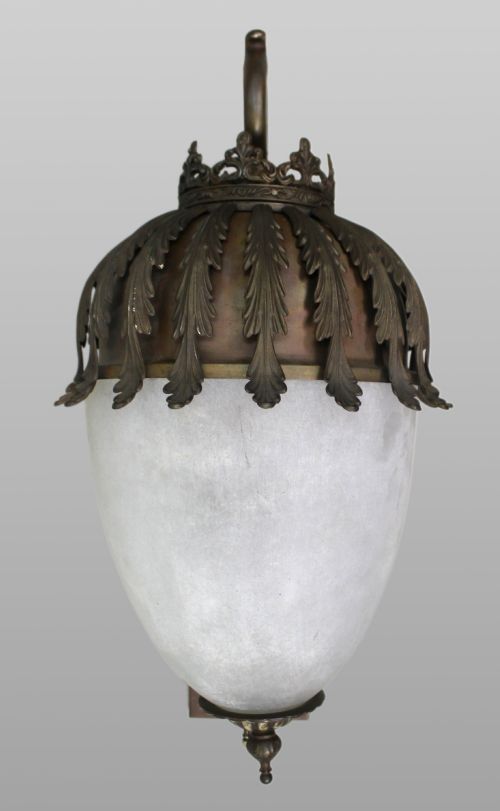
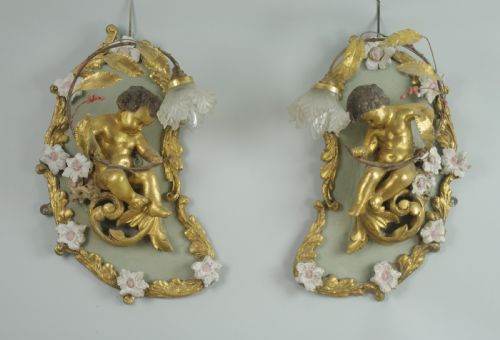
Earlier examples bridge the nineteenth century with the twentieth, incorporating Gothic ironwork, neoclassical ormolu, and French rococo revival details alongside carriage lanterns and boudoir lights.
How they were made
Makers combined cast metals with specialty glass, utilising brass, bronze, copper, and wrought iron alongside chrome and catalin bakelite for the structural frames and backplates. Ormolu and gilt finishes frequently appeared on neoclassical and French revival pieces.
Glass production relied on moulding and frosting techniques to create amber and clear shades, including notable signed pieces by Dugué, Lalique, and ROS. These shades were secured to metal arms or backplates designed to mount directly onto interior or exterior walls.
Materials represented across the selection include brass, bronze, wrought iron, chrome, bakelite, and ormolu paired with various frosted glass forms.
What varies in quality
The distinction between standard commercial lighting and exceptional examples lies in the weight of the metal casting and the depth of the glass moulding. Heavier ormolu, solid bronze, and thick press-moulded glass shades indicate higher manufacturing standards.
Design integrity also separates the output, with matched suites, original maker shades, and integrated elements like bakelite switches or specialised carriage frames commanding greater attention than assembled or replacement components.
Dugué·Lalique·ROS
The Frosted Glass Wall Sconce Glossary
- Ormolu
- Gilt bronze, often seen on neoclassical wall lights and torcheres from the nineteenth and early twentieth centuries. It provides a rich, golden finish to heavy metal castings.
- Bakelite
- An early synthetic plastic utilised in electrical components and fittings during the Art Deco period. It appears on switchgear and structural mounts of the 1930s.
- Torchere
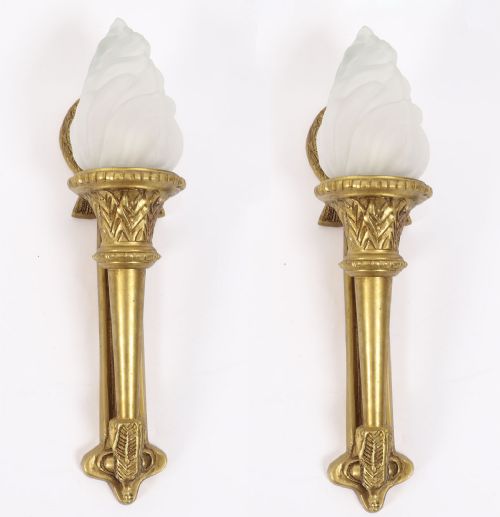
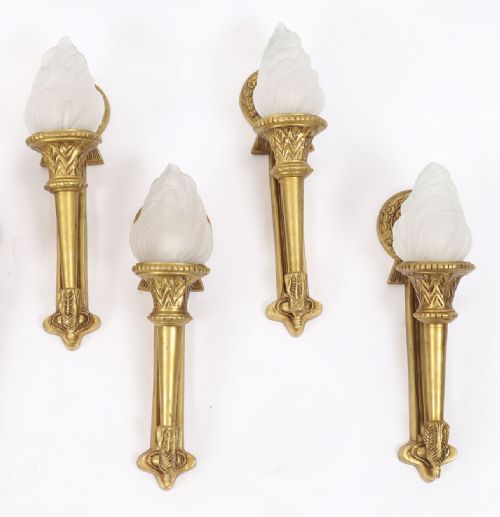
- A wall light styled to resemble a flaming torch, frequently executed in neoclassical or empire designs with frosted glass flames. These fixtures direct light upwards along the wall.
- Gothic Revival
- A nineteenth-century architectural and decorative style that influenced heavy iron castle wall lights. It incorporates medieval motifs and robust metalwork.
- Clam shell
- A distinctive glass shade form popular in Art Deco lighting design. The curved, ribbed profile diffuses light evenly across the wall.
Frosted Glass Wall Sconce: Frequently Asked Questions
How do I wire an antique wall sconce?
Most vintage wall lights arrive with their original lampholders and brackets, requiring a qualified electrician to adapt them for modern domestic wiring standards.
Backplates generally accommodate standard wall fixings, though heavier iron and ormolu pieces require secure anchoring into studs or masonry.
Are these sconces suitable for bathrooms?
While many historic wall lights originated in boudoirs, hallways, and hotel corridors, their suitability for damp environments depends on the IP rating assigned by an electrician.
Original Victorian and Art Deco fittings were manufactured without modern moisture seals, so careful placement away from direct water spray is essential.
How do I date a frosted glass wall light?
Dating relies on stylistic markers such as the geometric symmetry of 1930s Art Deco chrome versus the ornate scrolling of nineteenth-century French gilt bronze.
Materials also offer clear clues, transitioning from heavy brass and wrought iron in earlier eras to bakelite and extruded chrome by the interwar period.
Can I find matching pairs or sets?
The selection frequently includes matching pairs of wall lights, alongside larger suites of three or four coordinated sconces.
These sets were originally produced for grand salons, hotels, and dining rooms, making them suitable for balanced placement flanking mirrors or doorways.