



Fringed Shade Oil Lamp
A fringed shade oil lamp brings period warmth and tactile textile texture into a room.
Fringed Shade Oil Lamp
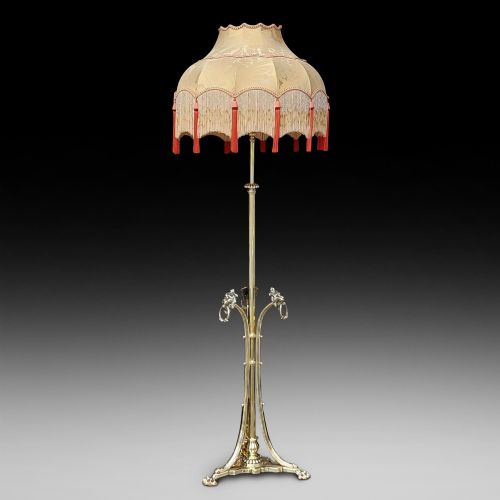
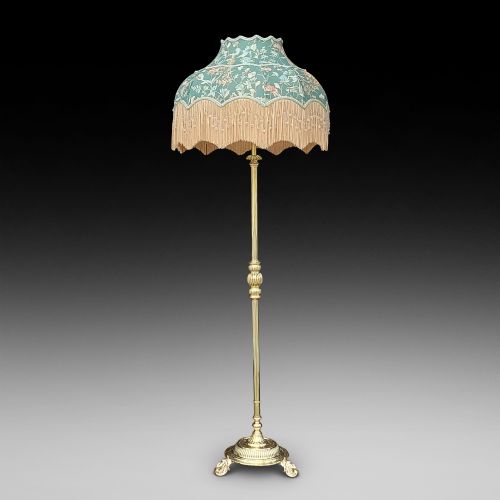
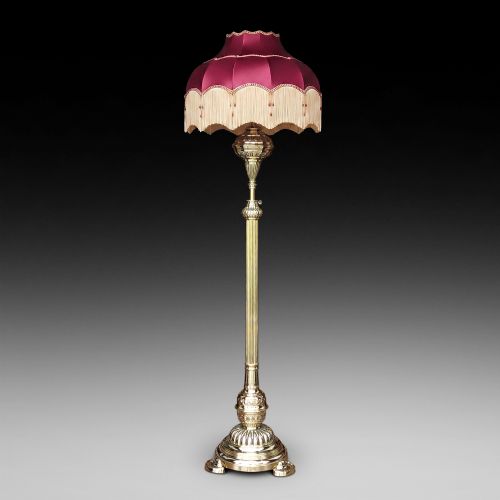
When you search for a fringed shade oil lamp, you encounter Victorian lighting designed to burn oil before domestic electricity became widespread. The examples on this page span the late nineteenth century, predominantly taking the form of tall floor standards and table lamps.
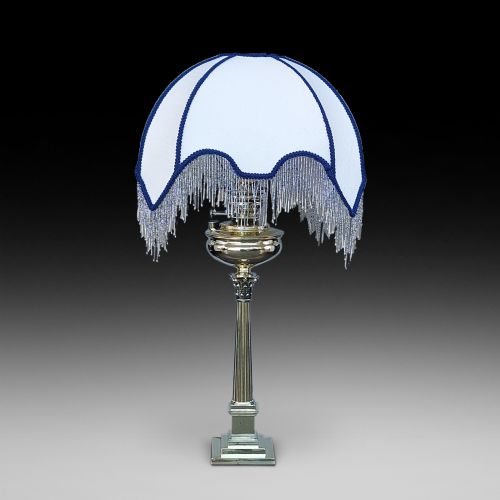
Makers such as Hinks of Birmingham and Messenger produced these adjustable brass standards. Alongside standard brass columns, the selection includes pieces featuring porcelain elements, Corinthian capitals, cold painted bronze, and Art Nouveau influences.
Floor lamps dominate the selection, offering adjustable heights and extending columns built to illuminate large spaces. Table lamp variants provide similar period character on a more intimate scale, often paired with decorative fabric or beaded shades.
How they were made
Makers constructed the structural elements using cast and turned brass, gilt brass, and bronze, frequently mounting columns upon heavy marble bases for stability. Corinthian column details and adjustable mechanisms required precise metalworking skills typical of late nineteenth-century workshops.
Fabric shades utilised silk and other textiles, finished with elaborate glass bead fringing that softened the illumination. Cold painted bronze provided durable, detailed coloration for figurative or decorative mounts on the lamp bodies.
Fringed Shade Oil Lamp Retail Price Guide 2026
Typical asking prices for fringed shade oil lamp among the pieces listed under this phrase on Sellingantiques today, from the lower quarter to the upper quarter. They describe what is for sale here now, not the wider market.
This site's listings show Victorian brass standards exclusively from the late nineteenth century, including works by Hinks of Birmingham and Messenger.
What varies in quality
The sophistication of the metalwork separates standard production pieces from finer examples. Heavy cast brass components, intricate Corinthian capitals, and signed works by makers like Hinks or Messenger demonstrate superior craftsmanship.
The complexity of the materials also dictates the standing of a piece. Gilt finishes, cold painted bronze details, and undamaged silk shades with intact glass bead fringes elevate the overall decorative presence.
Hinks of B'ham·Messenger
The Fringed Shade Oil Lamp Glossary
- Standard oil lamp
- A tall floor lamp designed to support an oil reservoir and burner at an elevated height. These adjustable pieces allowed users to direct light across a room.
- Corinthian column
- A classical architectural column style featuring ornate, acanthus-leaf capitals used here on brass lamp standards. This decorative motif reflects nineteenth-century historicism.
- Cold painted bronze
- A technique where bronze figures or mounts received non-fired oil or varnish-based paint applications. This method produced vivid polychrome details on decorative elements.
- Adjustable standard
- A lamp pillar engineered with a sliding or telescoping mechanism to alter the overall height. It provided practical flexibility for Victorian interiors.
Fringed Shade Oil Lamp: Frequently Asked Questions
How do I date a fringed shade oil lamp?
Examine the materials and construction methods to determine the age of the piece. The current selection relies on late nineteenth-century Victorian manufacturing techniques and brass components.
Look for specific Maker signatures or stylistic clues such as Art Nouveau motifs and Corinthian capitals. These design markers firmly place the items within the late Victorian period.
Where were these lamps placed originally?
Victorian households positioned tall standard oil lamps in principal reception rooms to provide ambient illumination. Their adjustable height made them versatile for reading corners.
Table lamp variants sat on side tables and desks for task lighting. Their decorative brass and fabric forms complemented heavily furnished nineteenth-century interiors.
How should I clean a brass lamp standard?
Maintain brass surfaces by dusting regularly with a soft, dry cloth to prevent grime accumulation. Avoid abrasive cleaners that strip the historic finish.
Treat fabric and beaded fringes with gentle care using a low-suction attachment. Excessive handling can damage delicate silk and glass beadwork.
Can these lamps be converted to electricity?
Many period oil lamps receive careful wiring conversions to function safely with modern electrical fittings. This allows collectors to utilise original brass standards as functional floor or table lamps.
Consult a professional electrician experienced with antique lighting to ensure safe rewiring. Preserving the original adjustable mechanisms during conversion is essential.