

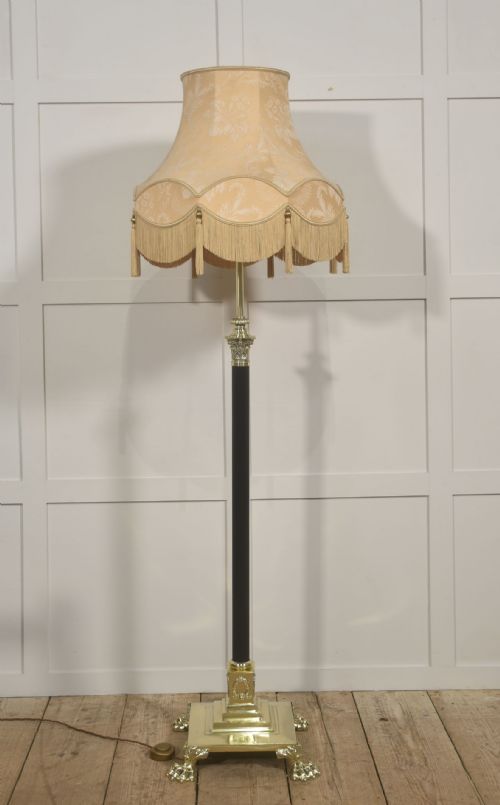


Fringed Lampshade Floor Lamp
A fringed lampshade floor lamp brings period warmth to a room, offering height and a soft pool of light.
Fringed Lampshade Floor Lamp
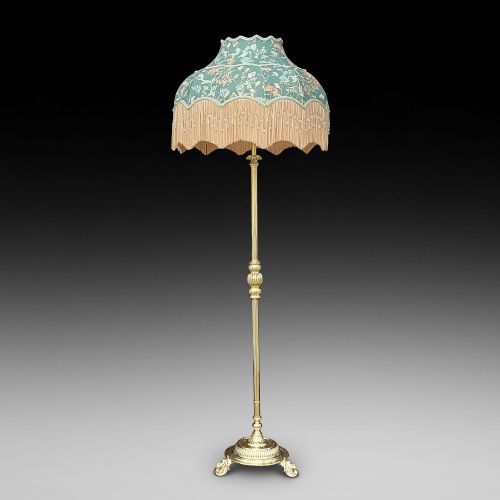
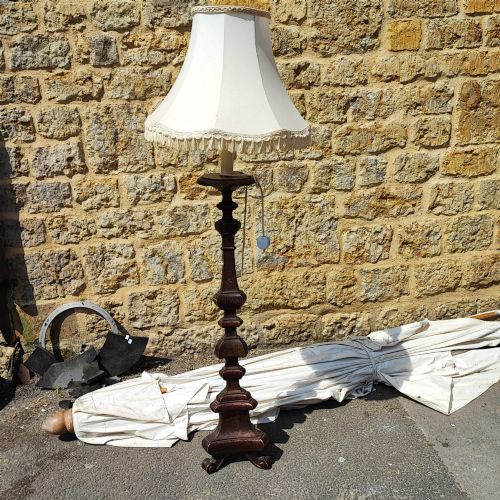
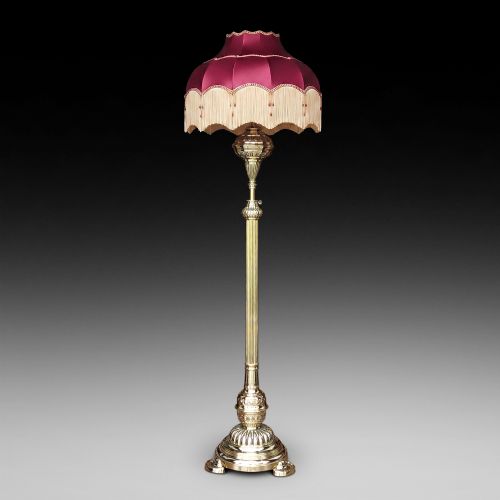
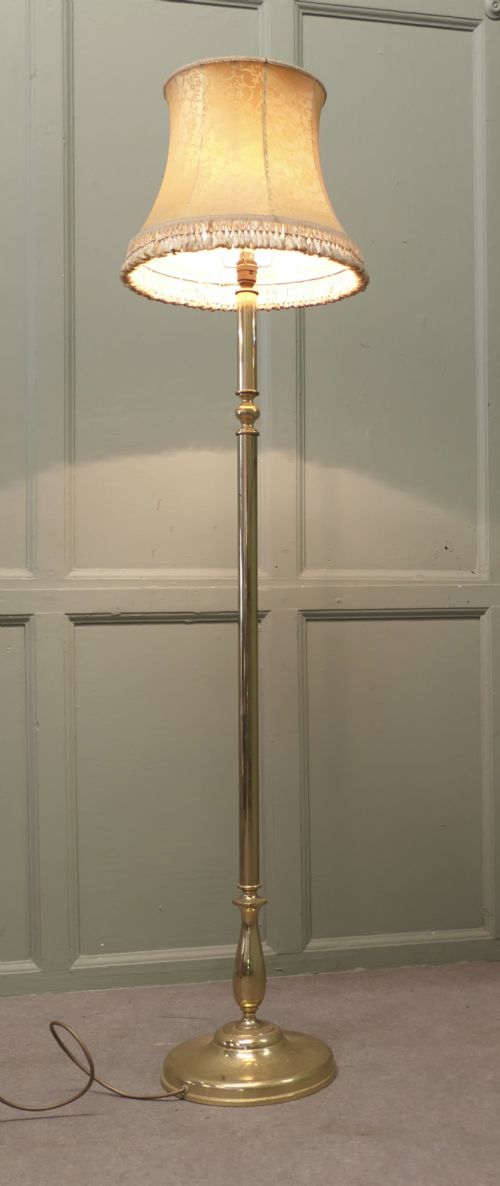
A fringed lampshade floor lamp combines a tall standard base with a fabric shade, drawing on Victorian, Edwardian, and later twentieth-century traditions. These pieces include adjustable brass oil lamps, carved mahogany standards, and slender columns designed to stand beside a reading chair or in a corner.
The selection on this page leans heavily towards brass standard lamps from the Victorian and Edwardian eras, alongside carved wood and occasional painted or enamelled metal examples. You will encounter extending brass stems, heavy weighted bases, and decorative elements ranging from Art Nouveau curves to Neoclassical columns.
Materials and construction
Brass is the predominant metal found in these standards, often paired with extending stems and heavy bases to support the weight of the fitting above. Wood examples rely on carved mahogany or painted finishes, shaping the upright post from traditional timber sections.
Upper fittings incorporate textile elements such as silk damask, fabric, and decorative glass beads or thread fringes. Metalwork techniques involve casting, turning, and blackening, while structural joints allow for height adjustment on standard oil lamps.
Listings feature brass, mahogany, copper, and painted wood, spanning the Victorian, Edwardian, and Art Nouveau periods.
Assessing quality in standard lamps
Quality rests on the weight and stability of the base, the integrity of the extending mechanism, and the crispness of the metal casting or wood carving. A solid brass shaft with a heavy, well-balanced footing maintains upright poise without leaning.
Detailing on the metalwork or timber distinguishes standard utility items from finer decorative pieces, showing clean lines in Neoclassical columns or organic fluidity in Art Nouveau stems. The preservation of original mechanical parts and fittings elevates the piece.
Hinks of B'ham
The Fringed Lampshade Floor Lamp Glossary
- Standard lamp
- A tall floor-standing lamp designed to illuminate a room from a standing position. These items use heavy bases to support long vertical shafts.
- Standard oil lamp
- A tall lighting fixture originally built to burn oil before conversion to electricity. Many retain their adjustable brass reservoirs and extending stems.
- Torchere vase
- A tall ornamental stand or lamp base modelled after classical torch holders. This form provides a slender profile for interior display.
- Silk damask
- A reversible figured fabric woven on a jacquard loom, frequently used for period lampshades. It offers a subtle sheen and textured pattern.
Fringed Lampshade Floor Lamp: Frequently Asked Questions
How do I date a brass standard lamp?
Dating relies on stylistic clues such as Neoclassical fluting or Art Nouveau whiplash curves, alongside construction methods like threaded brass joins and heavy cast iron weighting inside the base.
Makers' marks stamped onto the metal collars or burner knobs can also pinpoint the manufacturing workshop and era.
Are these lamps safe for modern electrical use?
Many older standards have been rewired at some point in their history to meet modern safety standards while retaining their original brass or wooden outer columns.
It is wise to have any vintage lighting checked by a qualified electrician before plugging it in at home.
Can I adjust the height of these lamps?
Several examples feature extending stems with screw keys or ratchet mechanisms designed to alter the overall height of the standard. This functionality originated from the practical needs of oil lamps requiring height changes for reading.
Where should I place a floor lamp in a room?
These tall pieces suit corners, beside writing desks, or next to armchairs where they cast downward illumination over a specific seating area. Their vertical presence adds height and architectural interest to an empty wall space.