
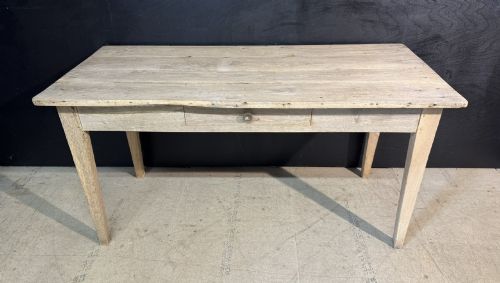
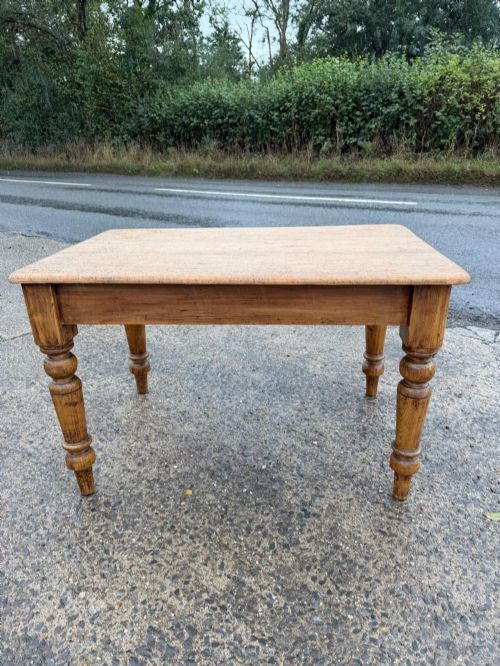
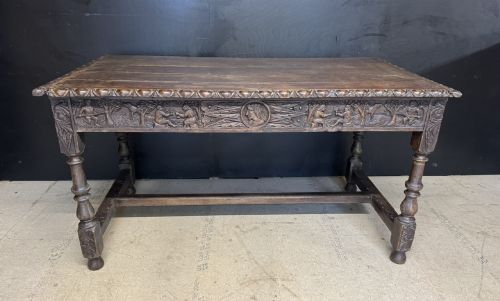
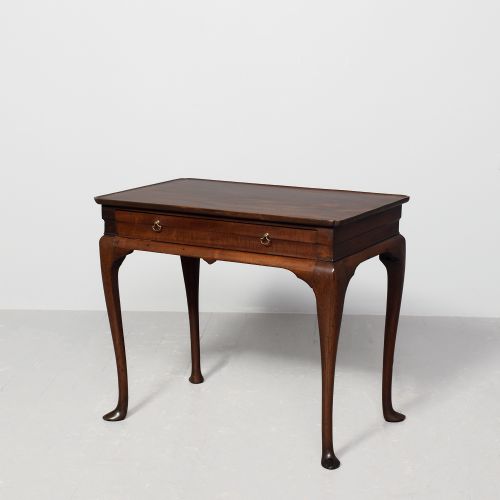
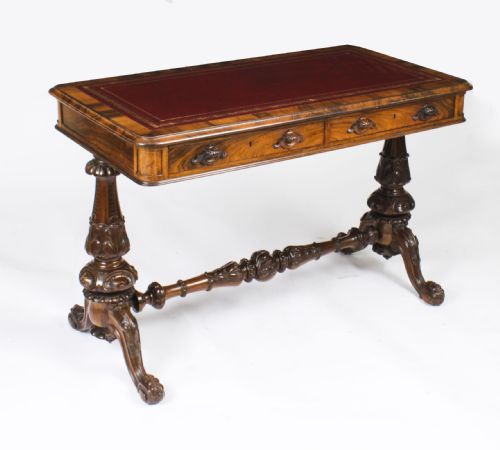
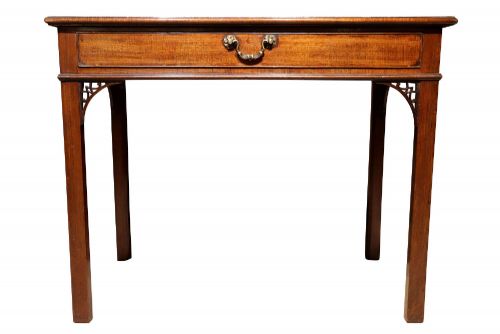
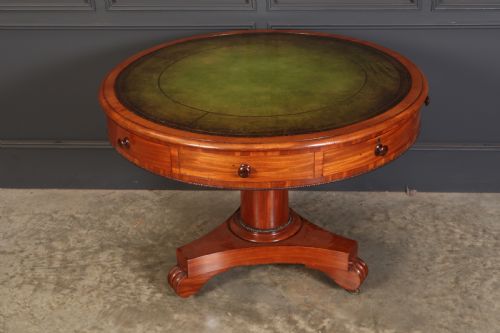
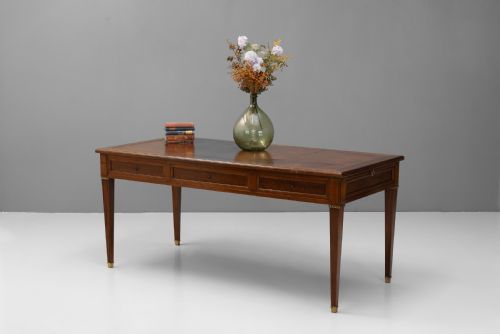
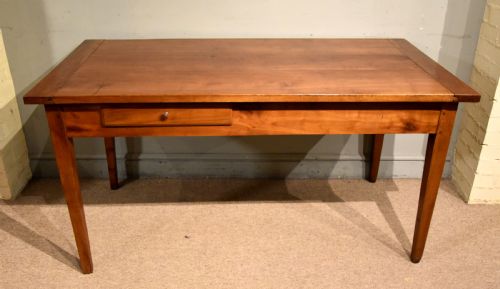


Frieze Drawer Writing Table
A frieze drawer writing table is a sturdy working desk designed with built-in storage beneath the top, bringing practical workspace and period character into a room.
Frieze Drawer Writing Table
A frieze drawer writing table provides a clean surface for correspondence alongside discreet storage integrated directly into the wooden framework beneath the top. When you search for a frieze drawer writing table, you encounter practical items designed for daily study and administration from several distinct eras.
The versions most commonly met on this page span the Georgian, Regency, William IV and Victorian periods, constructed primarily in timbers such as mahogany, rosewood and oak. These pieces function equally well as standalone desks or centre tables within a study, library or drawing room.
Many examples incorporate leather writing surfaces, brass fittings and turned legs, reflecting the domestic requirements of their original owners. Their proportions range from compact side tables to large partners desks intended for central placement in a room.
How They Were Made
Cabinet makers built these tables using dense timbers like mahogany, rosewood and oak, often finished with brass handles, escutcheons and castors. Surfaces frequently received inset leather panels for writing, whilst drawer construction relied on traditional dovetail joints to ensure durability.
Decorative finishes included crossbanding, parquetry inlay and carved detailing, particularly on pieces originating from the Regency and Victorian periods. Selected examples also utilised satinwood, walnut and pine depending on regional preferences and the intended status of the furniture.
Listings feature items from the eighteenth, nineteenth and twentieth centuries, constructed in mahogany, rosewood, oak, walnut and satinwood.
What Varies in Quality
The standard of a frieze drawer writing table depends upon the selection of timber figure, the precision of the cabinet work and the integrity of the original construction. Superior pieces display well-matched grains, finely cut dovetails in the drawer boxes and minimal structural alterations over time.
Maker attribution and documented origin elevate certain examples, whilst secondary woods and hardware choices reflect the workshop standards of the period. Attention to detail in carved motifs, inlay work and brass mountings distinguishes standard domestic items from high-grade library furniture.
Edwards & Roberts·Maurice Adams·Whytock & Reid·W Priest·Gillows of Lancaster
The Frieze Drawer Writing Table Glossary
- Frieze
- The horizontal band situated directly beneath the top of a table, typically housing one or more drawers.
- Crossbanding
- A narrow strip of veneer laid across the grain of the primary surface to create a decorative border.
- Dovetail
- A interlocking woodworking joint formed by alternating wedge-shaped pins and tails, prized for its tensile strength in drawer construction.
- Partners desk
- A large writing table designed with drawers and cupboards on both opposing sides to accommodate two users simultaneously.
- Library table
- A substantial freestanding table utilised for reading and writing, often finished on all four sides for central room placement.
Frieze Drawer Writing Table: Frequently Asked Questions
How do I identify a period writing table?
Examine the timber selection, construction methods and structural hardware to determine the likely era of manufacture. Secondary woods inside the drawers often provide reliable clues regarding the date and region.
Compare the leg styling, carving techniques and edge profiles with established design conventions from the Georgian, Regency or Victorian periods.
Can I use an antique desk daily?
These practical surfaces accommodate modern writing and study tasks effectively when treated with reasonable care. Ensure that the leather top, if present, is protected from excessive moisture and sharp implements.
Regular use suits sturdy timber constructions well, provided the joints and castors remain stable and secure.
Where should I place a library table?
Freestanding library tables suit central room placements because their finished backs allow them to be viewed from any angle. They function well in studies, living rooms or open-plan areas as a focal point.
Position the table away from direct heat sources and strong sunlight to protect the aged timber and leather surfaces from drying out.
What is a lowboy?
A lowboy is a small occasional table featuring one or more drawers in the frieze, popular during the eighteenth century. They served various household functions including dressing tables and serving surfaces.
Their compact proportions allow them to fit easily into smaller domestic spaces whilst offering practical concealed storage.