

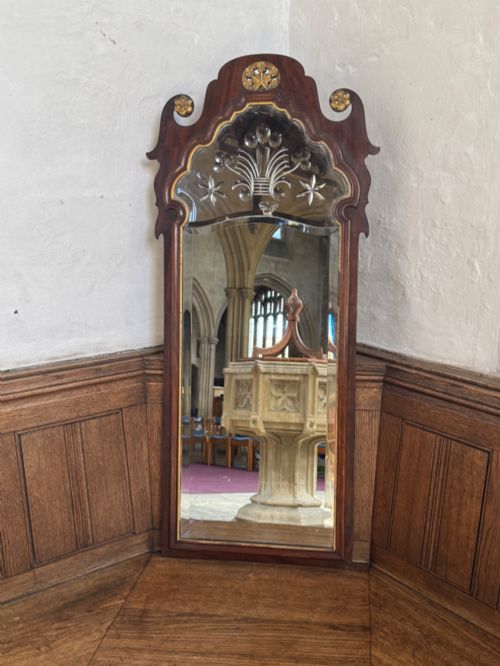
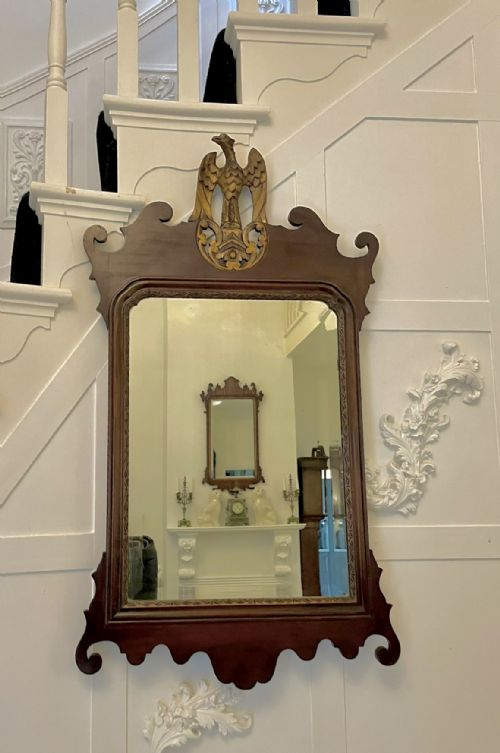
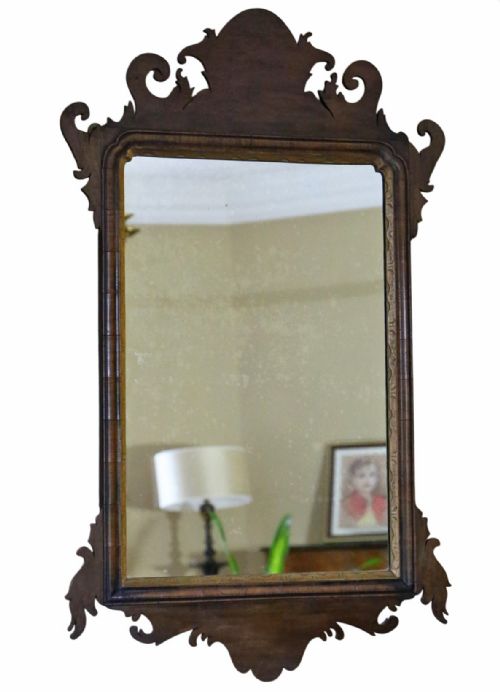

Fretwork Wood Mirror
A fretwork wood mirror brings lightness and intricate silhouette to a room, using open woodwork and polished plate to catch the light.
Fretwork Wood Mirror
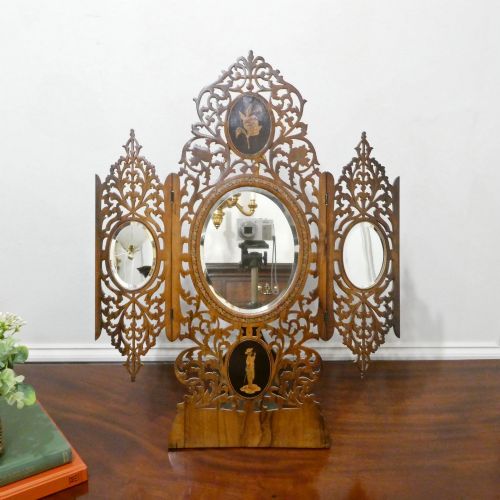
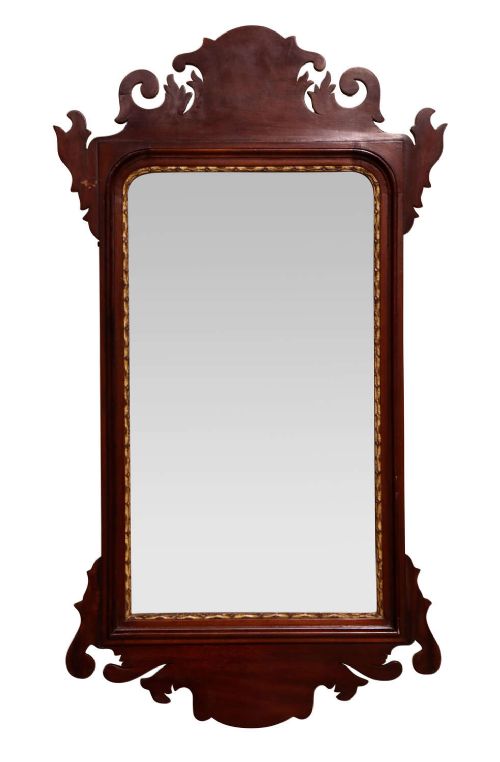
A fretwork wood mirror relies on pierced and scrolled timber frames to create geometric or floral patterns, offering a decorative profile that has remained popular across multiple centuries. When searching for a fretwork wood mirror, buyers encounter both genuine 18th-century examples and later revivals from the Victorian, Edwardian, and 1920s periods.
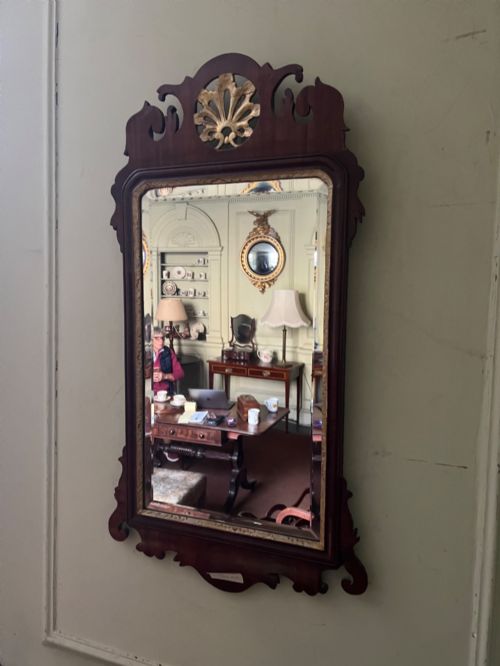
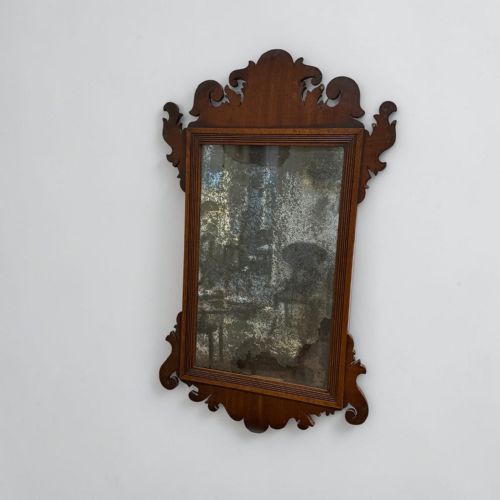
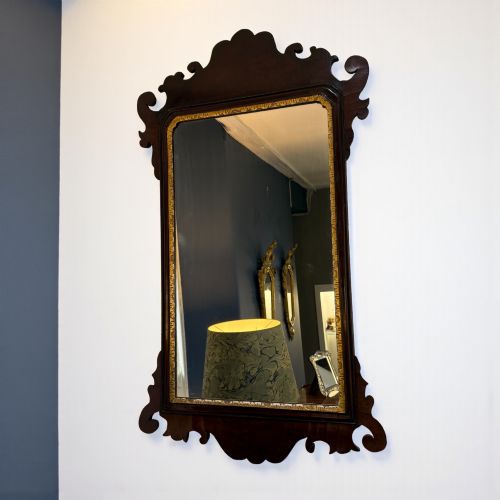
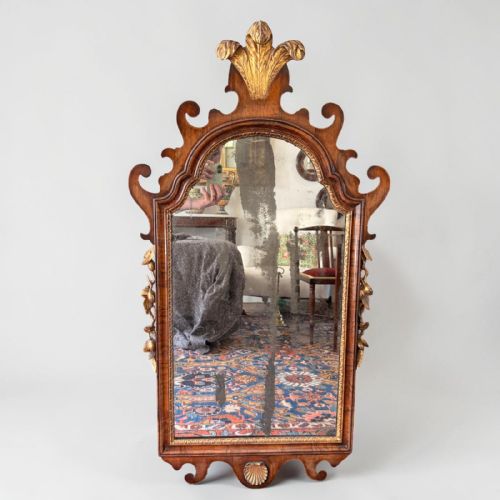
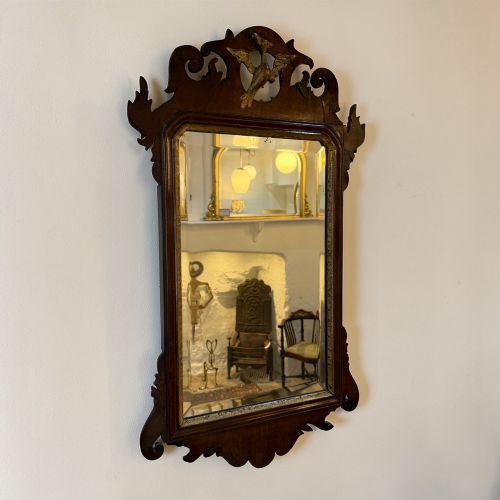
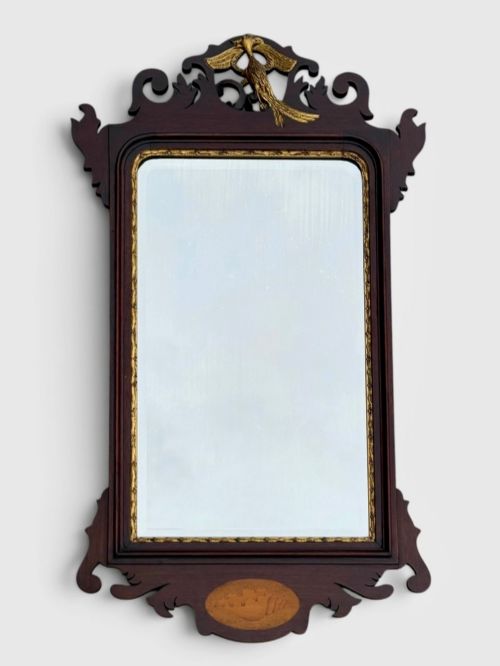
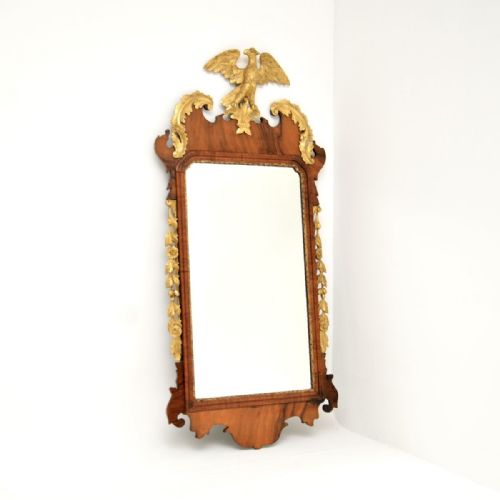
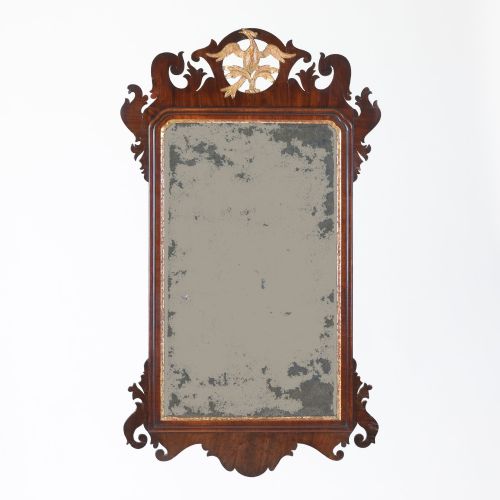
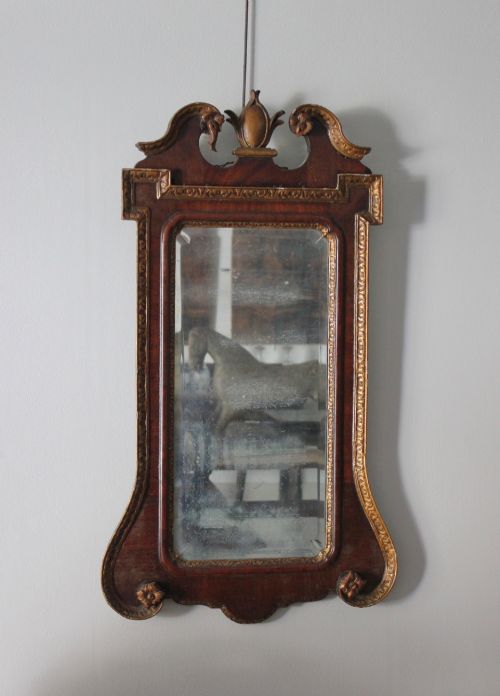
The most common forms on this page include wall mirrors and dressing table mirrors fashioned from mahogany or walnut. Many draw heavily on Chippendale designs, often featuring scrolling ears, gilded accents, and carved bird crestings at the top.
Origins span across English workshops and later continental interpretations, with styles ranging from understated Georgian simplicity to elaborate revival interpretations. These pieces function equally well as focal points above a mantelpiece or as refined accents in a hallway.
Materials and construction methods
Cabinetmakers constructed these frames primarily using dense hardwoods such as mahogany and walnut, which tolerated fine fret-cutting without splitting along the grain. Timber veneers were frequently applied to structural pine or secondary woods to achieve figured surfaces with rich grain patterns.
Intricate profiles were achieved using a fretsaw to pierce the timber, followed by hand-carving to add depth to leafy scrolls and crests. Parcel-gilt details and gold leaf were often applied to raised mouldings or carved motifs to create contrast against the dark wood.
Mirror plates in older examples were frequently secured with panelled backs held by original wooden pins, whilst glass plates themselves varied from early bevel-edged sheets to Vauxhall plates with distinct bevels.
Fretwork Wood Mirror Retail Price Guide 2026
Typical asking prices for fretwork wood mirror among the pieces listed under this phrase on Sellingantiques today, from the lower quarter to the upper quarter. They describe what is for sale here now, not the wider market.
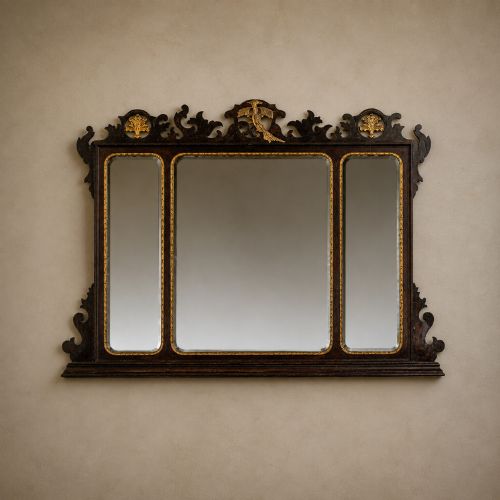
The selection includes both compact dressing table mirrors and large triptych overmantel formats with carved crestings.
Judging quality and craftsmanship
The sophistication of the fret-cut outline largely determines the calibre of the piece, with sharper internal corners and crisp, undercut carving separating finer examples from simpler production. The choice of timber also dictates quality, as highly figured burr walnut or dense, richly toned mahogany commands greater appreciation than plain secondary woods.
The integration of parcel-gilt highlights and the survival of original mirror plates or crestings contribute significantly to the integrity of the object. Pieces that retain their early surface patination without aggressive modern refinishing demonstrate a higher degree of preservation.
The Fretwork Wood Mirror Glossary
- Fretwork
- Ornamental design created by cutting patterns through thin wood using a fretsaw. This technique allows for light, intricate silhouettes along the outer edges of the frame.
- Parcel-gilt
- Partially gilded with gold leaf or metallic paint. This treatment highlights specific carved details against a dark wooden background.
- Ho-Ho Bird
- A stylized Chinese phoenix motif frequently carved onto the crests of Chippendale-style mirrors. It became a popular decorative element in mid-18th-century English furniture design.
- Vauxhall plate
- An early type of mirror glass featuring a distinctive bevelled edge. These plates were originally produced at the famous London glasshouse.
- Pier mirror
- A tall mirror designed to hang on the wall between two windows, often placed above a matching pier table.
Fretwork Wood Mirror: Frequently Asked Questions
How do I date a fretwork wood mirror?
Dating relies on examining the timber species, the style of the fret-cut border, and the construction of the wooden backboards. Older examples utilise native walnuts or early mahoganies with hand-cut screws or pegged joints.
Later Victorian and Edwardian revivals often feature machine-cut precision, modern plywood backings, or distinct inlay work characteristic of the 1900s.
What is a Chippendale style mirror?
A Chippendale style mirror reflects the rococo, Chinese, and Gothic designs published by Thomas Chippendale in the 18th century. These frames are characterised by asymmetrical scrolls, pierced fretwork, and gilded crests.
Revival versions from the 19th and 20th centuries replicate these classic proportions using period woodworking techniques.
Where should I hang a wall mirror?
These mirrors suit spaces where reflected light can brighten a room, such as above a mantelpiece, a sideboard, or a console table. Their decorative silhouettes make them effective as standalone art pieces on plain walls.
Ensure the wall fixings match the weight of the hardwood frame and glass plate safely.
Are the mirror plates original?
Many surviving pieces retain their original glass, which often exhibits minor foxing, dark spots, or gentle waviness caused by historical manufacturing methods. These signs of age confirm the authenticity of the piece.
Replacement glass is sometimes fitted during restoration to improve reflection clarity.