





Fretted Wood Frames
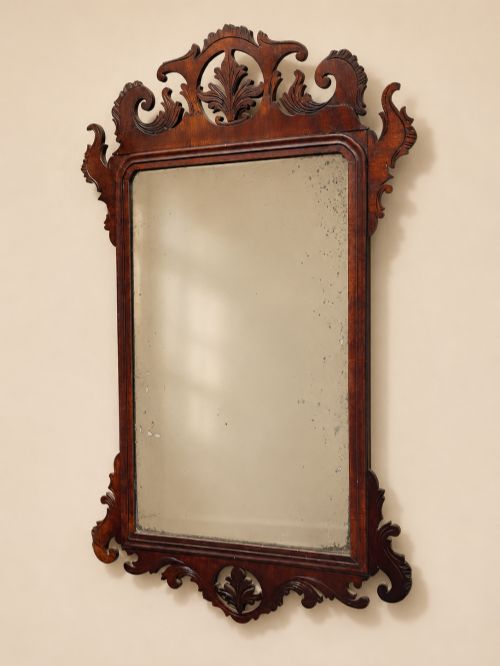
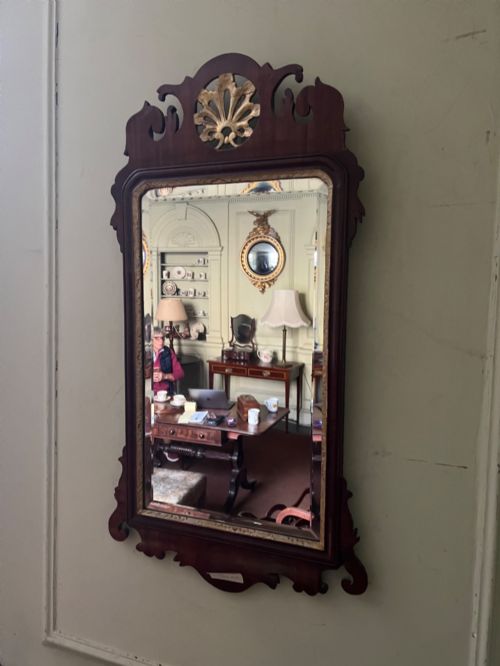
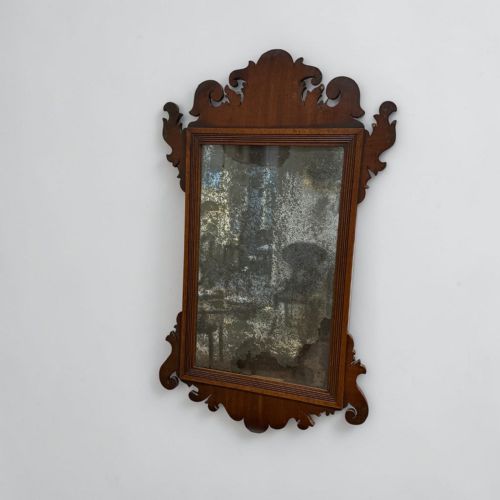
These fretted wood frames are Georgian and revival wall mirrors designed to catch the light and anchor a room.
Fretted Wood Frames
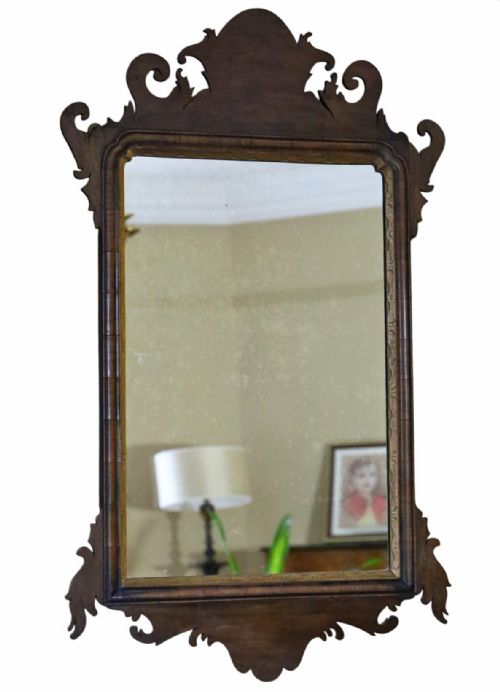
When you search for fretted wood frames, you are looking at wall mirrors defined by pierced wooden outlines shaped by hand with a fretsaw. These pieces appear in forms ranging from eighteenth-century originals to later Georgian Revival interpretations from the Edwardian era and the nineteen-twenties.
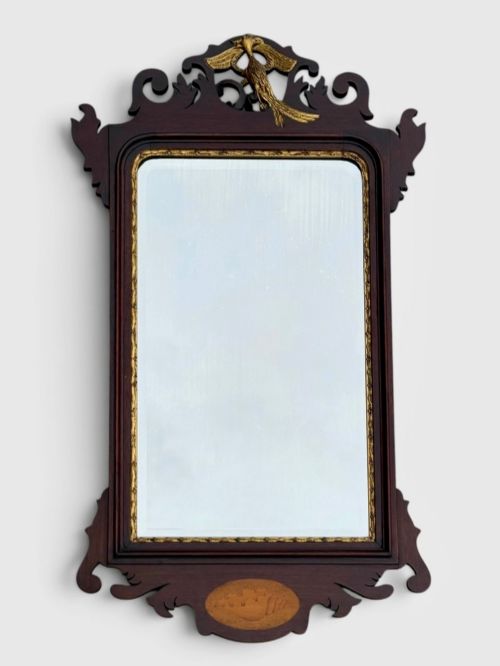
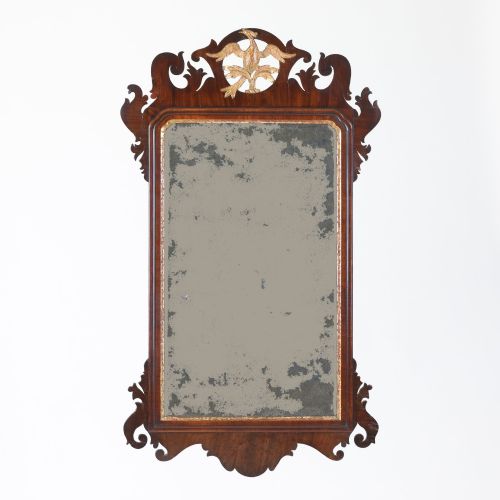
The dominant form on this page is the vertical wall mirror, often incorporating architectural scrollwork, ear pieces, and occasionally a cresting bird. You will encounter both genuine eighteenth-century walnut examples and later mahogany or gilt-accented revivals that replicate the classic Georgian Chippendale vocabulary.
How they were made
Cabinetmakers constructed these frames using dense hardwoods like mahogany and walnut, frequently accented with gilt wood details, mirror glass, and subtle wood inlay or satinwood inlay. The characteristic fret-cut silhouette was achieved by piercing the timber along a drawn line, requiring steady skill to avoid splitting the grain on intricate scrolls.
Surfaces were finished with traditional polish or gilding applied to carved elements such as the Ho Ho bird crests. Glass plates were typically set from the rear into stepped rebates, held by thin wooden slips.
Fretted Wood Frames Retail Price Guide 2026
Typical asking prices for fretted wood frames among the pieces listed under this phrase on Sellingantiques today, from the lower quarter to the upper quarter. They describe what is for sale here now, not the wider market.
Several mirrors include a crested Ho Ho bird, keeping a watchful, wooden eye over your hallway.
What varies in quality
Quality in these mirrors rests on the sharpness of the fret-cutting and the selection of timber figure, such as richly grained walnut or figured mahogany. Finer examples display crisply articulated scrollwork and harmonious proportions, whereas lesser pieces show blunt edges and heavier, less graceful outlines.
The integration of decorative elements like gilt wood and inlay separates standard production from superior work. Original mirror glass and well-preserved gilding elevate a piece significantly above examples with later replacements.
The Fretted Wood Frames Glossary
- Fret-cut
- Pierced woodwork created by cutting decorative patterns through a thin board using a fretsaw. This technique defines the characteristic silhouette of these frames.
- Ho Ho bird
- A stylized Chinese phoenix motif frequently carved onto the crest of eighteenth-century and revival wall mirrors. It appears prominently on many Georgian Chippendale style examples.
- Giltwood
- Timber that has been coated with fine gold leaf or gilt paint. It is often used selectively to highlight architectural details and carved ears on mirror frames.
- Walnut
- A dense, dark timber prized for its rich grain and utilised extensively in eighteenth-century cabinetmaking. It forms the primary material for several early wall mirrors here.
- Satinwood inlay
- Contrasting pale timber inserted into a darker wood surface to create geometric or botanical patterns. This decorative technique appears on Edwardian interpretations.
Fretted Wood Frames: Frequently Asked Questions
Are these mirrors eighteenth century?
The selection spans genuine eighteenth-century pieces alongside later Georgian Revival interpretations from the Edwardian period and nineteen-twenties.
Examining the timber construction, backing boards, and glass helps distinguish original period pieces from later revivals.
What is a Ho Ho bird?
The Ho Ho bird is a mythical Chinese phoenix figure commonly carved into the crest of Georgian style mirrors.
It adds an exotic flourish that was highly fashionable during the eighteenth-century Chinoiserie craze.
How do I clean the frame?
Dust the fretted woodwork gently with a soft, dry brush to prevent dirt settling in the intricate pierced scrolls.
Avoid liquid cleaners or polishes that might damage historic wood finishes or delicate gilt accents.