

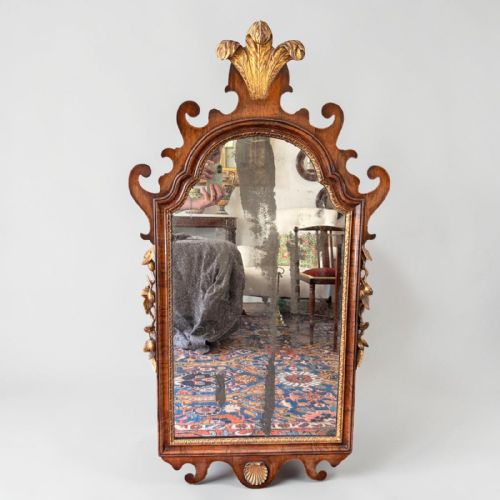
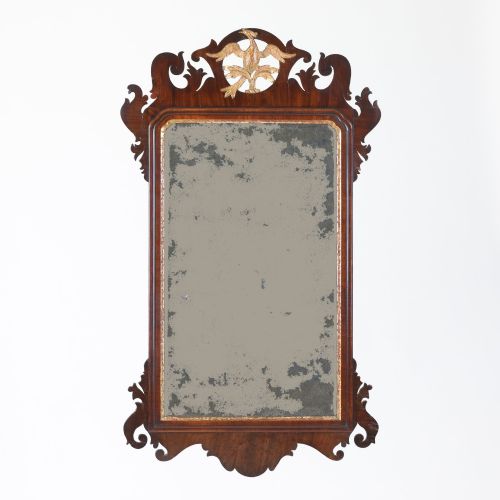
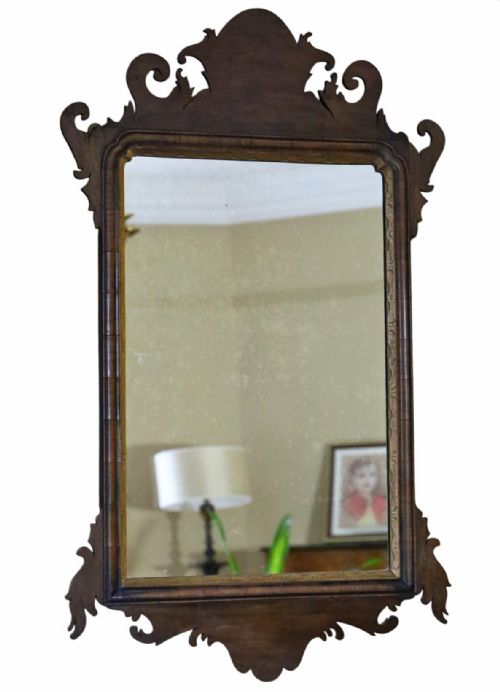
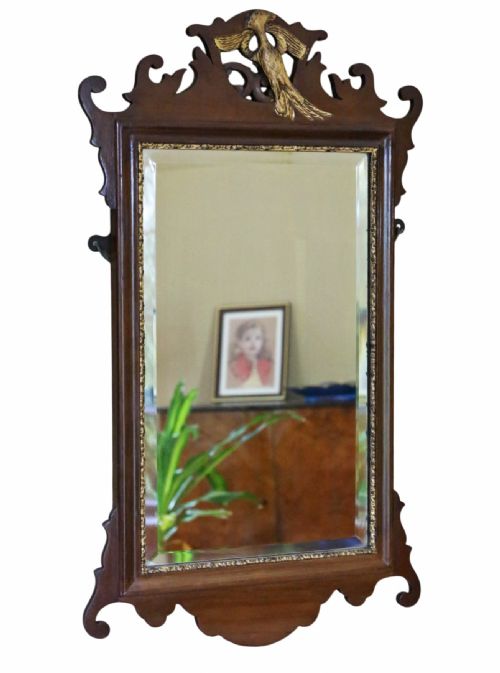


Fret Cut Wood Mirror
These fret cut wood mirror examples bring genuine architectural line to a room, driven by the clean silhouettes of eighteenth-century design.
Fret Cut Wood Mirror
When you search for a fret cut wood mirror, you are looking at wall mirrors defined by pierced, jigsaw-cut wooden frames. The versions you are most likely to meet on this page span the eighteenth century as well as later twentieth-century revivals.
The dominant forms are wall mirrors framed in walnut, mahogany, and giltwood, often featuring the scrolling ears and carved birds associated with Georgian style. These pieces range from authentic eighteenth-century examples to Georgian Revival interpretations produced around nineteen hundred and nineteen-twenty.
How they were made
The makers of a fret cut wood mirror worked primarily with mahogany and walnut, shaping the timber using piercing techniques to achieve delicate scrolls and silhouettes. Giltwood and gilded wood treatments were also applied to highlight specific carved details within the frame.
Mirror glass, including bevel-edged glass, was set into the timber backplates, supported by secondary woods. Bleached wood finishes appear alongside traditional dark polished surfaces, reflecting changing tastes across the periods represented.
Fret Cut Wood Mirror Retail Price Guide 2026
Typical asking prices for fret cut wood mirror among the pieces listed under this phrase on Sellingantiques today, from the lower quarter to the upper quarter. They describe what is for sale here now, not the wider market.
Every object represented across these listings functions strictly as a wall mirror format.
What varies in quality
Quality in a fret cut wood mirror rests on the crispness of the pierced fretwork and the depth of the carving. Finer examples show sharp, deliberate cuts and well-proportioned scrolling ears rather than soft or rounded edges.
The choice of timber grain and the application of gilding further separate the better examples from standard production. Original mirror glass and well-preserved timber surfaces elevate the overall integrity of the piece.
The Fret Cut Wood Mirror Glossary
- Fret cut
- A method of piercing timber using a fine saw to create decorative openwork patterns. This technique defines the silhouette of the frame.
- Giltwood
- Timber treated with gold leaf or gesso to create a lustrous surface. It is frequently seen on eighteenth-century and revival frames.
- Georgian Revival
- A design movement popular around nineteen hundred that reinterpreted eighteenth-century aesthetics. Pieces from this era often emulate earlier carving styles.
- Bevel-edged glass
- Mirror glass with angled edges that catch the light. This treatment adds depth to the reflection.
Fret Cut Wood Mirror: Frequently Asked Questions
What is a fret cut wood mirror?
A fret cut wood mirror is a wall mirror featuring a wooden frame shaped through pierced, jigsaw-cut ornamentation. These pieces typically draw on eighteenth-century Georgian design principles.
They appear in timbers such as mahogany and walnut, often ornamented with scrolling details and occasionally gilded accents.
How do I date a fret cut wood mirror?
Dating involves examining the timber species, the sharpness of the fretwork, and the characteristics of the glass. Eighteenth-century originals display distinct age in the wood and plate, while nineteen-hundred revivals show cleaner, more uniform construction.
Revival pieces often utilise machine-cut precision that differs from hand-pierced antique work.
Where should I hang these mirrors?
These mirrors suit spaces where their vertical proportions and decorative frames can be appreciated as focal points. They function well above mantelpieces or in entrance halls.
Ensure the wall fixings can support the weight of the timber and glass frame safely.
What styles are common?
The dominant style is Georgian, characterised by symmetrical scrolls, pierced crests, and architectural framing. Georgian Revival pieces from the early twentieth century faithfully copy these historic aesthetics.
Variations include gilded details, bleached wood finishes, and specific carved motifs like birds.