




French Wooden Sofa Table
These french wooden sofa table options bring practical surface space and distinct period character to a room.
French Wooden Sofa Table
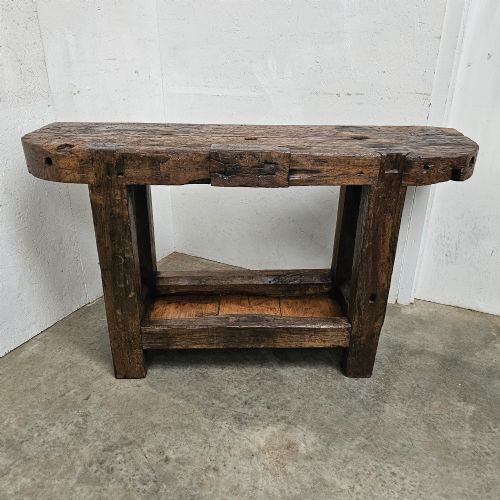
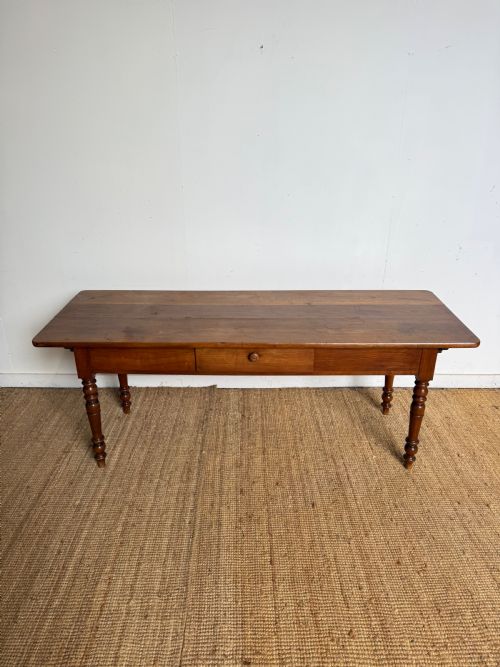
A french wooden sofa table selection encompasses various occasional, console, and centre forms rooted in nineteenth century and early twentieth century traditions. Buyers searching for a french wooden sofa table frequently encounter console tables, trestle formats, and occasional lamp tables alongside specialised workbenches and serving surfaces.
The aesthetic leans heavily toward provincial, country, and revival styles such as Empire, Rococo, and Neoclassical iterations. Pieces originate across different decades, ranging from mid nineteenth century examples to later Edwardian and 1930s interpretations.
How they were made
Construction relies primarily on traditional timber varieties including oak, cherrywood, pine, elm, and walnut. Artisans utilised solid woods, sometimes incorporating marquetry inlay, burr veneers, ebonisation, and painted or bleached surface treatments.
Metal accents appear via brass fittings, while specific examples integrate marble tops or structural trestle bases. Joinery reflects period workshop practices suited to domestic utility and decorative console placement.
Listings feature periods spanning from the mid nineteenth century through the 1930s, constructed in oak, cherrywood, elm, walnut, and pine.
What varies in quality
Quality differences emerge through the selection of timber figures, such as burr elm and burr birch, compared to standard pine or plain oak. Superior examples exhibit refined carving, careful marquetry, or intact period painted finishes rather than simple utilitarian construction.
The integrity of surface treatments, from bleached oak to ebonised and gilt work, dictates visual depth. Heavier structural elements like trestle joints and marble inserts further distinguish standard regional pieces from decorative salon forms.
The French Wooden Sofa Table Glossary
- Console table
- A table designed to stand against a wall, frequently featuring decorative legs or brackets. These pieces often served decorative roles in nineteenth century interiors.
- Trestle table
- A table structure composed of two or more trestles supporting a long horizontal top. This form provides stable support and appears frequently in provincial french formats.
- Marquetry
- Decorative veneer work arranged in geometric or pictorial patterns across a wooden surface. Craftsmen used various contrasting timbers to create detailed tabletop designs.
- Ebonised wood
- Timber treated to imitate the dark, dense appearance of ebony. This finish was popular for achieving formal contrast in nineteenth century furniture.
- Potboard
- A lower open shelf built between the legs of a table, traditionally used for storing pots and kitchen utensils. It anchors the structural base of country tables.
French Wooden Sofa Table: Frequently Asked Questions
Where should I place a console table?
Console tables function best against hallway walls, in entryways, or positioned behind living room seating arrangements where surface space is needed.
Their shallow depth allows them to fit into narrow circulation areas without obstructing movement through a room.
What is a trestle table used for?
Trestle tables provide sturdy wooden surfaces suited for dining, working, or serving food within domestic spaces.
The structural design places the legs near the ends, which maximises legroom along the length of the table.
How do I identify a bleached oak finish?
Bleached oak exhibits a lighter, desaturated tone that strips away the traditional dark golden or brown hues of untreated timber.
This treatment highlights the natural grain pattern while offering a softer visual presence in contemporary interiors.
What distinguishes a centre table?
Centre tables are finished on all sides to stand free in the middle of a room rather than pressed against a wall.
They frequently feature decorative carving, marquetry, or gilt detailing suited for viewing from any angle.