


French Wooden Mannequin
A french wooden mannequin brings sculptural presence and studio history to a room, valued for its articulated form and period craftsmanship.
French Wooden Mannequin
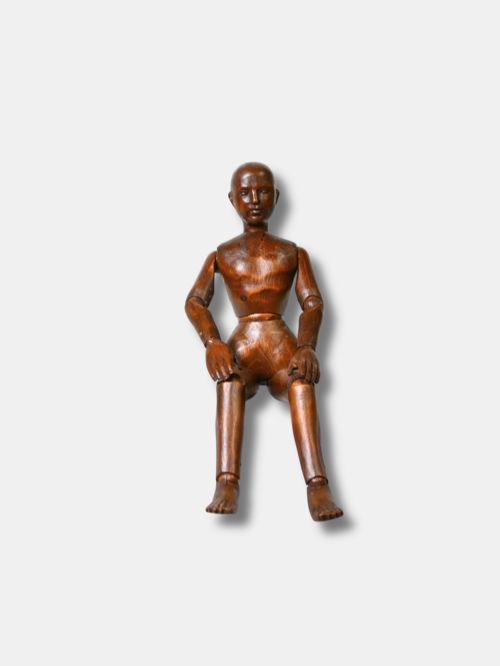
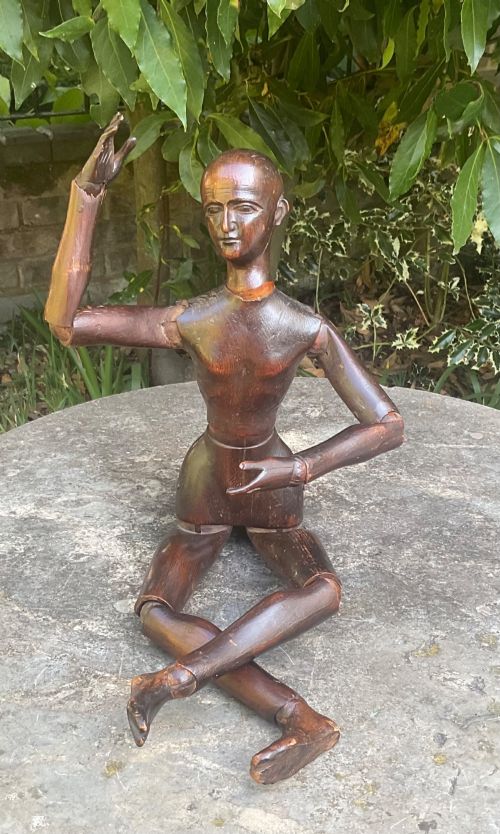
A french wooden mannequin is a sculptural form used historically by artists and makers to study drapery, posture, and human anatomy. The pieces gathered under this phrase span from the eighteenth century to the early twentieth century, taking the form of miniature artist lay figures, life-size display pieces, and shop dummies.
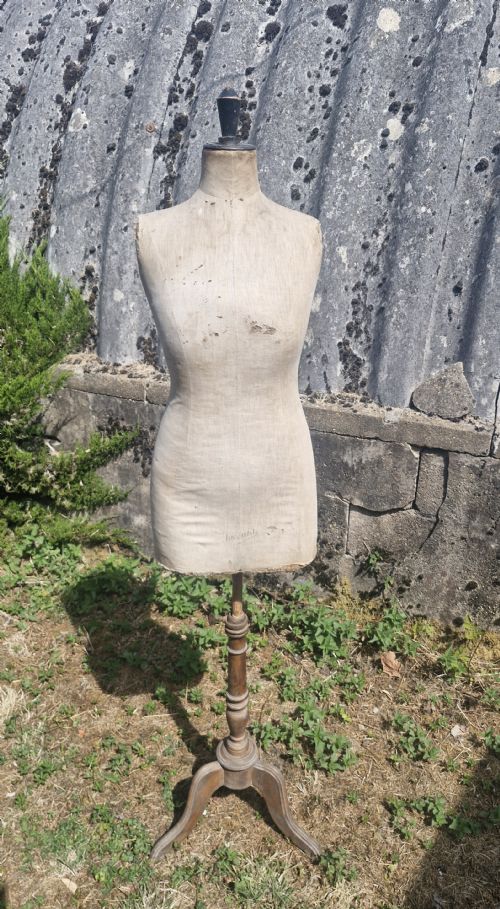
Most examples encountered here belong to the nineteenth and early twentieth centuries, reflecting French workshop traditions in carved timber and fabric. They range from small tabletop artist models with fully articulated joints to full-scale shop displays bearing Paris maker stamps.
Collectors seek these objects for their architectural lines and tactile surfaces rather than commercial utility. Each piece records the specific demands of studio practice or retail display from its original period.
How they were made
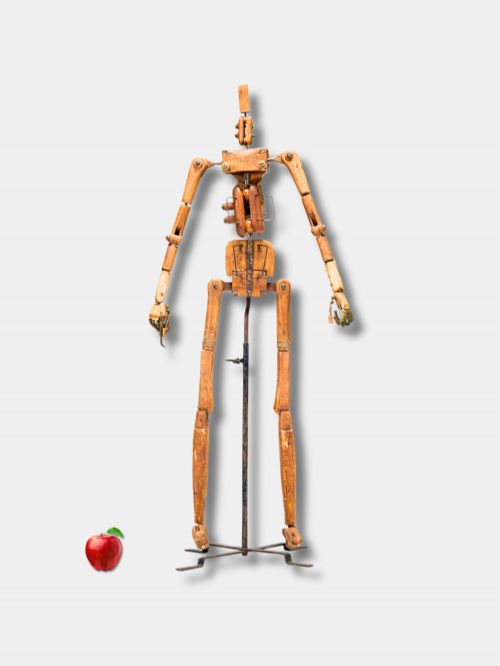
Makers shaped these figures from hardwoods and softer timbers, utilising traditional carving and turning techniques to create segmented limbs and torso blocks. Metal pins, brass joints, and iron internal supports allowed the wooden sections to move and hold various poses.
Surface finishes involved linen, canvas, or terracotta coverings stretched over the structural core, sometimes paired with metal stands or weighted bases. Workshop execution prioritized durability and articulation, ensuring the figures could withstand regular studio handling.
Some nineteenth-century artist models retain tiny wooden fingers carved with enough precision to hold a miniature paintbrush.
What varies in quality
Quality in a french wooden mannequin lies in the precision of the carved articulation and the integrity of the timber. Finer examples show careful attention to joint movement, balanced proportions, and retained original surface finishes without excessive later alteration.
The sophistication of the mechanical joints and the presence of maker details or stamp marks distinguish standard workshop production from exceptional studio pieces. Superior specimens maintain their original integration of wood, metal hardware, and textile coverings.
Francois-pierre Guillois·Paris Stockman
The French Wooden Mannequin Glossary
- Lay Figure
- A wooden articulated mannequin used by artists to arrange drapery and study human form. These figures possess pegged joints allowing realistic positioning.
- Articulated
- Jointed to permit movement and repositioning of limbs. This mechanical feature allows the figure to hold specific gestures.
- Stockman
- A traditional trade name associated with Parisian mannequin manufacture. These forms served tailoring and retail display functions.
French Wooden Mannequin: Frequently Asked Questions
What is an artist lay figure?
An artist lay figure is a jointed wooden model designed to assist painters and sculptors with perspective, posture, and clothing folds. These pieces served as reliable stand-ins for human models in the studio.
They feature pegged or pinned joints that move at the shoulders, elbows, hips, and knees. This mechanical adaptability made them essential tools in nineteenth-century academies.
How do I date a wooden mannequin?
Dating relies on stylistic clues, manufacturing methods, and materials such as the type of wood, metal hardware, and textile coverings. Eighteenth and nineteenth-century pieces often display hand-carving and simpler iron pins.
Later twentieth-century examples incorporate standardised turning and commercial maker stamps. Examining the joints and internal structure helps establish the period of manufacture.
Were these used for art or tailoring?
Both purposes generated these objects, though their construction reveals their original intent. Artist figures emphasise articulation and movement, whereas tailors dummies focus on torso shape and fabric pinning surfaces.
Shop mannequins often include metal stands and durable canvas or terracotta finishes suited for commercial display windows in Paris.
How do I care for antique wood and canvas?
Preservation requires stable indoor humidity away from direct sunlight and heat sources to prevent timber splitting and fabric degradation. Dusting with a soft, dry cloth is sufficient for maintenance.
Moisture and harsh cleaning agents should be avoided entirely to protect original painted surfaces, metal pins, and historic textiles.