



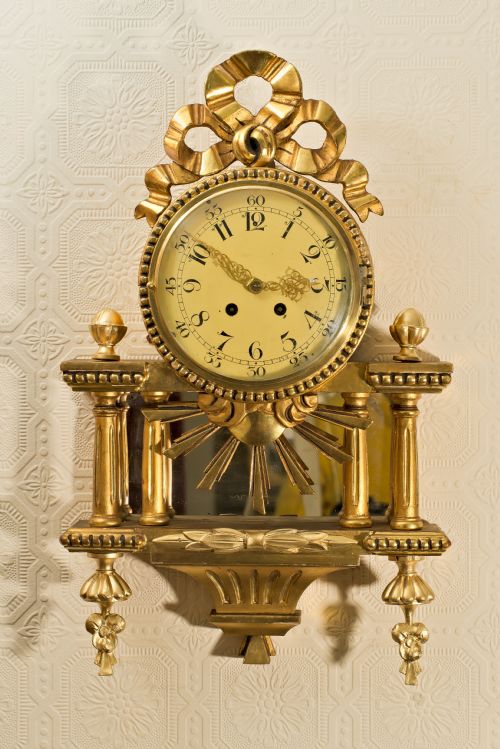


French Wood Clock
A french wood clock brings warmth and architectural presence to a room, ranging from grand portico designs to delicate carved wall pieces.
French Wood Clock
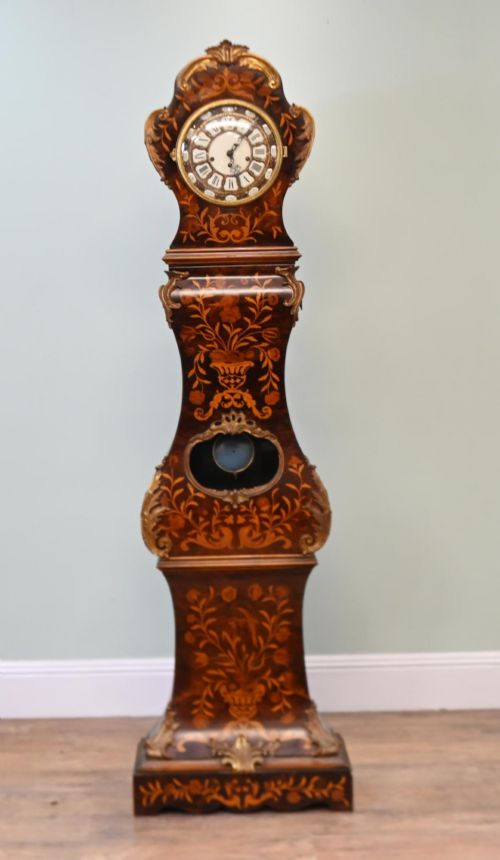
A french wood clock encompasses mantel pieces, wall brackets, and grander grandfather formats originating from continental workshops. Buyers encounter specimens spanning the nineteenth century, including distinct Charles X and Belle Epoque aesthetic phases.
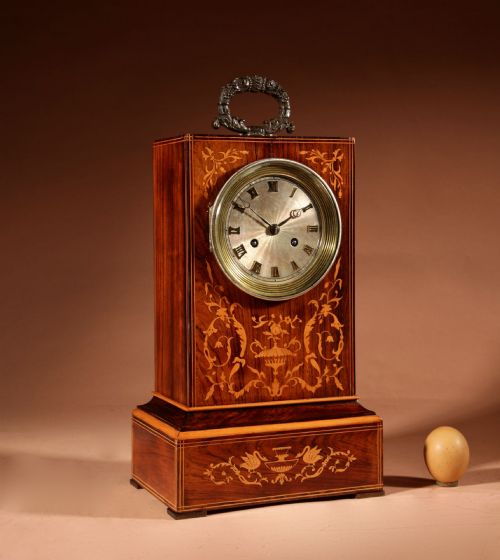
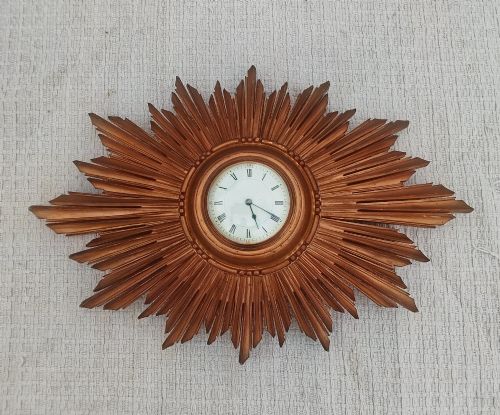
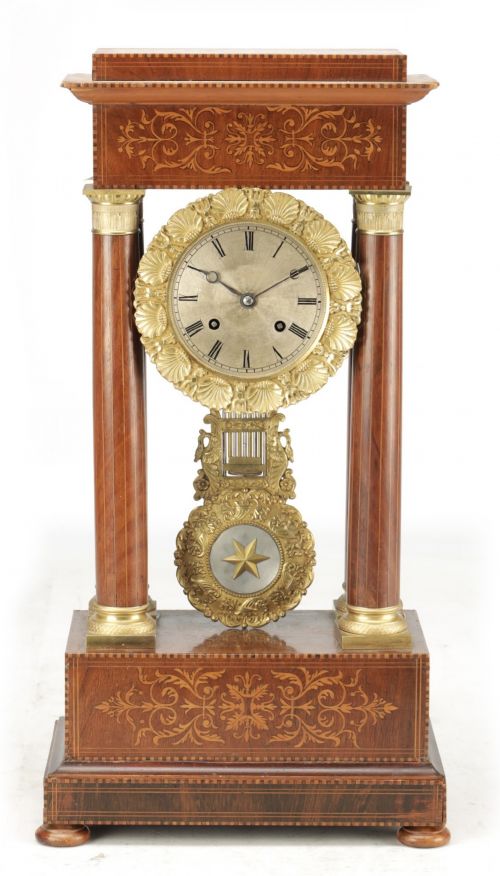
The material vocabulary relies heavily on dense timbers such as rosewood, mahogany, and ebonised wood, frequently paired with giltwood or brass mounts. Mantel clocks dominate the selection, alongside striking wall-mounted cartel variations and architectural portico structures.
Originating largely from French centres of horology, these timepieces display regional preferences for marquetry, floral inlay, and hand-carved details. Each object marries domestic utility with decorative cabinetry, reflecting the prevailing design currents of its decade.
Construction and Materials
Cabinetmakers constructed the foundational carcasses using seasoned rosewood, mahogany, and oak, applying fine veneers and contrasting stringing such as lemon wood or satinwood. Ormolu mounts and cast brass bezels provided structural highlights and decorative framing for the enamel dials.
Carving techniques ranged from geometric floral inlays to elaborate giltwood sunburst and starburst wall frames. Ebonised finishes and faux tortoiseshell treatments offered alternative surfaces that emulated more costly exotic materials.
French Wood Clock Retail Price Guide 2026
Typical asking prices for french wood clock among the pieces listed under this phrase on Sellingantiques today, from the lower quarter to the upper quarter. They describe what is for sale here now, not the wider market.
Some nineteenth-century French makers hid mechanical automata inside their wooden clock cases to surprise viewers when the hour struck.
Evaluating Quality
Superior examples demonstrate meticulous precision in the timber marquetry and the crispness of hand-carved giltwood ornamentation. The integration of complex movements, such as quarter striking or pinwheel escapements by known makers, elevates a piece significantly.
Proportion and the preservation of original ormolu mounts dictate visual success, where restrained neoclassical balance distinguishes the finest portico clocks from simpler production models.
Wetterstrands·Henry Marc·Paul Garnier·Charles Frodsham·Henri Dasson
The French Wood Clock Glossary
- Portico clock
- A mantel clock featuring a architectural frame supported by four or more columns, popular during the Charles X period. This layout creates deep visual perspective around the central dial.
- Ormolu
- Gilding technique involving the application of finely ground high-carat gold to a bronze or brass object. It provides durable metallic highlights against dark wood cases.
- Marquetry
- Decorative veneer work arranged in intricate patterns or pictorial scenes using various coloured woods. Craftsmen applied these thin sheets to the structural carcase of the clock.
French Wood Clock: Frequently Asked Questions
What is a french wood clock?
A french wood clock is a timepiece housed in a wooden cabinet, typically featuring mahogany, rosewood, or giltwood finishes from various nineteenth-century periods.
These pieces combine mechanical timekeeping with decorative cabinetry traditions ranging from simple mantel designs to grand architectural portico structures.
How do I wind a mantel clock?
Winding requires inserting the appropriate key into the dial winding holes and turning gently until resistance meets you. Care must be taken not to overwind the mainspring.
Most traditional movements run for eight days and require a stable, level surface to maintain accurate timekeeping without disturbing the pendulum.
Where were these clocks placed?
Mantel clocks traditionally sat upon drawing room fireplaces, serving as central decorative fixtures on the mantelpiece. Wall brackets and cartel clocks hung directly on parlour walls to utilise vertical space.
Larger grandfather or longcase formats stood in hallways and main living areas where their striking mechanisms echoed through the home.
How do I identify the period?
Stylistic clues such as Charles X architectural columns, Belle Epoque mahogany cases, or Victorian floral inlays help narrow down the date of manufacture. Wood choices and dial typography provide further chronological markers.
Comparing cabinet construction methods against known regional trends confirms the era in which the clock was built.