



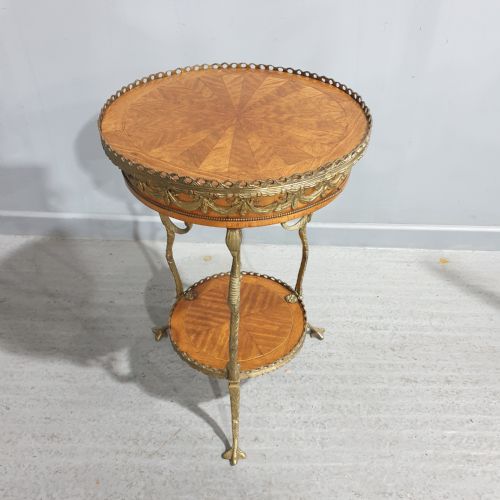

French Walnut Gueridon
A French walnut gueridon is a round occasional table that brings striking European elegance and practical surface space to any room.
French Walnut Gueridon
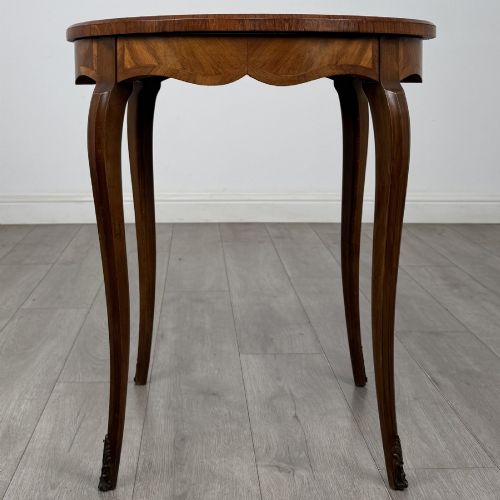
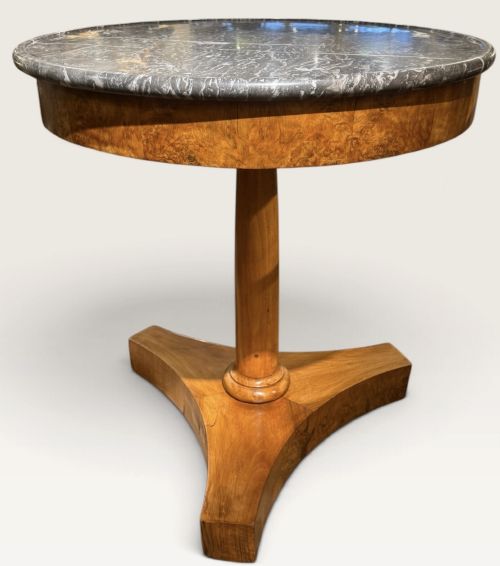
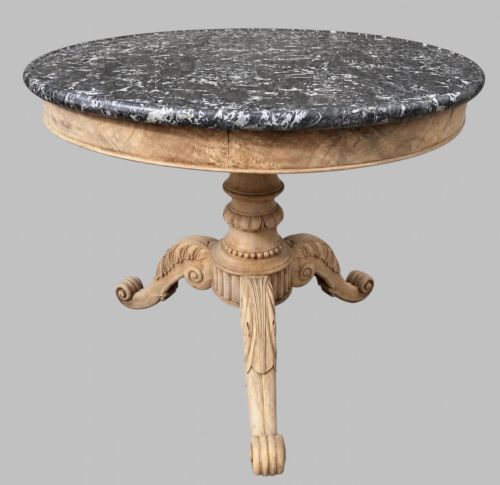
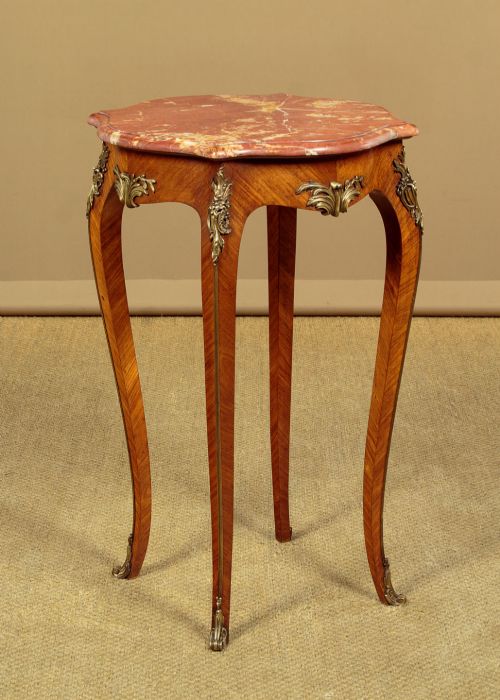
A French walnut gueridon is a circular table designed to stand freely in a room rather than against a wall. The pieces appearing here span from the nineteenth century through to the Art Deco period of the 1930s.
Most examples function as side tables, wine tables, or centre tables, supported by a central pillar or slender legs. Walnut is the principal timber, often paired with contrasting marquetry or parquetry details.
Makers drew on historical design languages, producing pieces styled after the French Empire, Louis XV, and Louis XVI periods. Later twentieth-century interpretations lean towards simpler modernist lines while retaining the classic circular format.
Materials and construction methods
Cabinetmakers utilised solid walnut and figured walnut veneers over secondary timbers to achieve rich surface patterns. Tops frequently feature inset white or coloured marble, onyx, or finely matched wood veneers bordered by raised brass galleries.
Ormolu and gilt bronze mounts appear on Empire and revival pieces, accentuating the structural lines of the pedestal or legs. Inlaid marquetry and parquetry geometric patterns demonstrate the high level of joinery skill applied to these tables.
French Walnut Gueridon Retail Price Guide 2026
Typical asking prices for french walnut gueridon among the pieces listed under this phrase on Sellingantiques today, from the lower quarter to the upper quarter. They describe what is for sale here now, not the wider market.
Some tables include hidden pull-out candle slides, reminding us that even a simple side table once moonlighted as a lighting station.
Assessing craftsmanship and finish
Quality rests upon the selection of the walnut veneer and the precision of the underlying timber joinery. Finer tables display exceptional figuration in the grain and seamless integration of parquetry or inlaid motifs.
The choice of top material also defines the tier of the piece, with heavy marble or onyx slabs and detailed cast ormolu mounts indicating superior workshop production. The crispness of carved details on revival pieces distinguishes master cabinetmakers from standard commercial producers.
L.Martin of Paris·Michel Dufet
The French Walnut Gueridon Glossary
- Gueridon
- A small French round table, typically supported by a central column or three to four legs. The form originated in the seventeenth century and remained popular through successive design revivals.
- Ormolu
- Gilt bronze mounts applied to furniture for decorative effect. The technique involves coating bronze in a finely ground gold-mercury amalgam and firing it.
- Parquetry
- Geometric wood inlay forming patterned surfaces on tabletops. Artisans cut small pieces of contrasting timbers to fit together precisely.
- Gallery
- A raised rim, often pierced brass or delicate woodwork, encircling the edge of a table top. Its purpose is to prevent items from sliding off the surface.
- Burr walnut
- Wood taken from a tree growth or burl, yielding swirling, highly decorative grain patterns. Cabinetmakers reserve this prized material for prominent display surfaces.
French Walnut Gueridon: Frequently Asked Questions
What is a gueridon table used for?
These tables serve primarily as occasional surfaces for lamps, drinks, or decorative objects. Their compact circular footprint allows them to fit easily beside seating or in the centre of a room.
Historically, larger versions stood in entrance halls or salons as centre tables. Smaller variants functioned as wine tables or bedside stands.
How do I date a French walnut gueridon?
Dating relies on stylistic cues, construction methods, and materials. Nineteenth-century examples often incorporate revival motifs from the Louis XV or Empire periods.
Tables from the 1920s and 1930s show simpler modernist lines or cleaner Art Deco geometry. Examining the underside and joinery helps confirm the period of manufacture.
Are marble tops original to these tables?
Many nineteenth-century and early twentieth-century tables were designed specifically to hold inset marble or onyx slabs. These heavy tops provided a stable, durable surface for daily use.
Replacement marble is sometimes found on older pieces, so inspecting the fit and edge finish helps determine originality.
How should I care for a walnut and ormolu table?
Walnut requires regular dusting with a soft cloth and occasional waxing to nourish the timber. Avoid placing the table in direct sunlight or near heat sources to prevent veneer cracking.
Ormolu mounts should be cleaned gently without abrasive polishes to preserve the original gilding.