

French Wall Light Brackets
French wall light brackets bring interior illumination to a room, offering period character through metalwork and glass.
French Wall Light Brackets
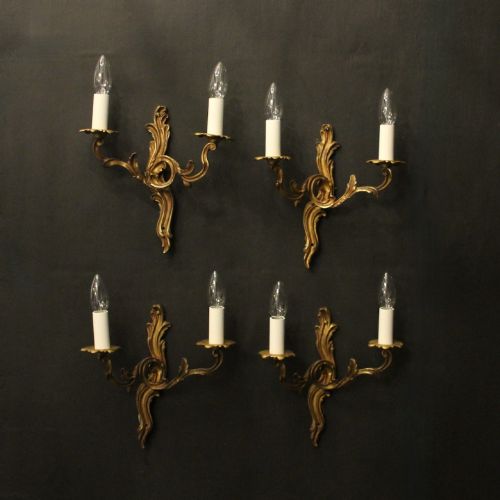
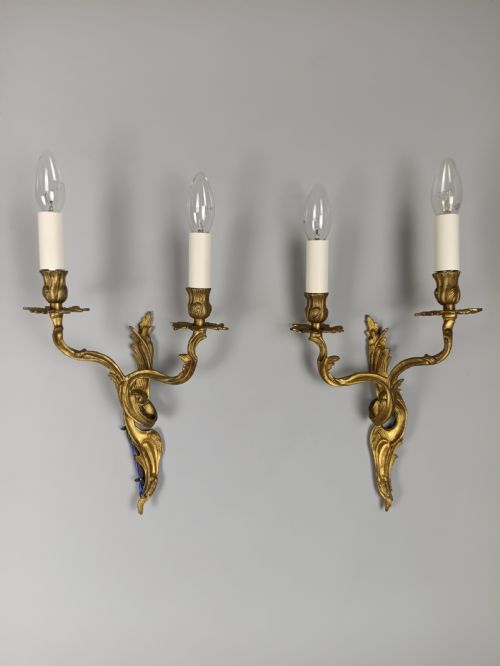
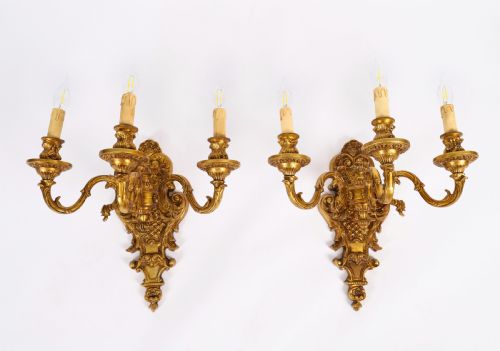
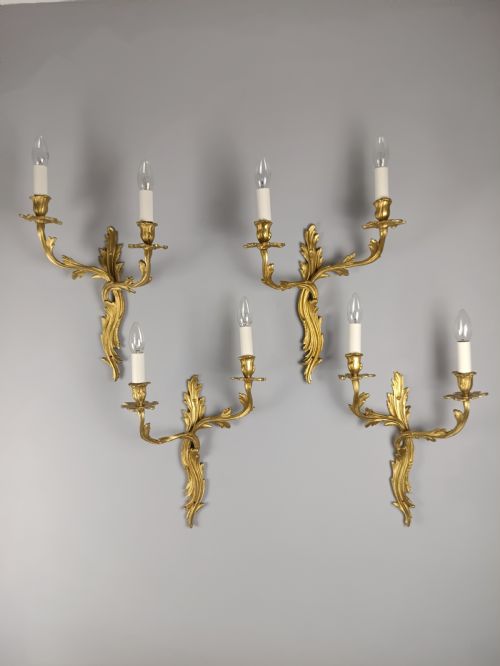
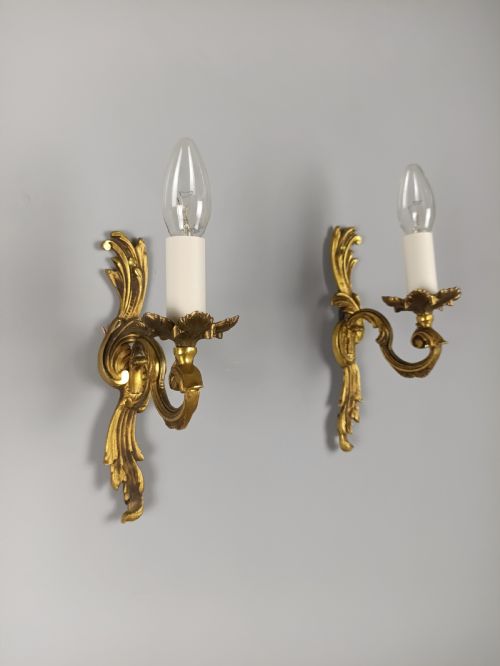
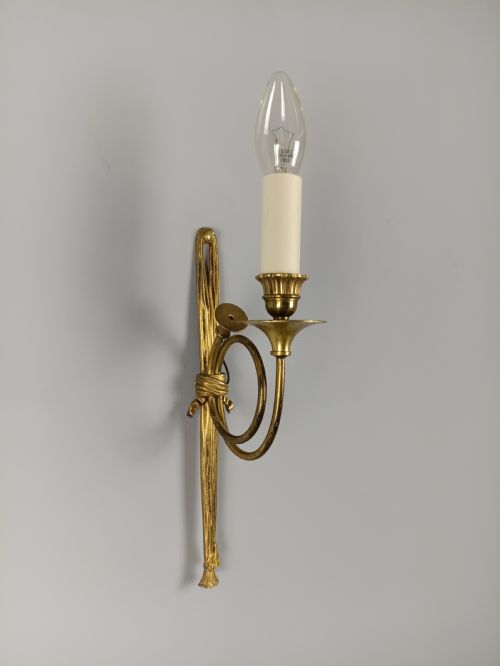
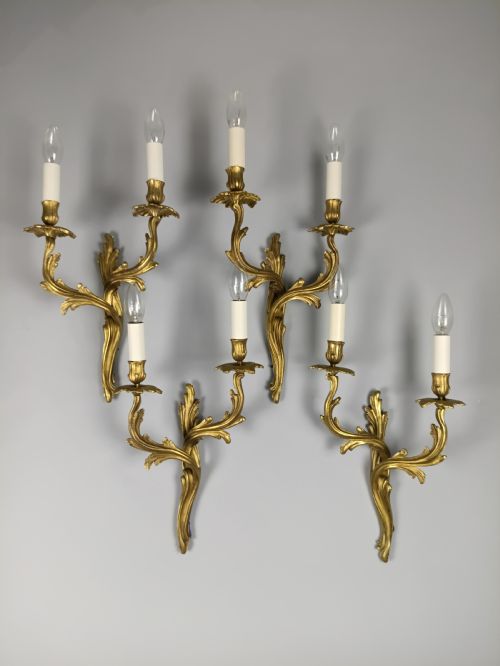
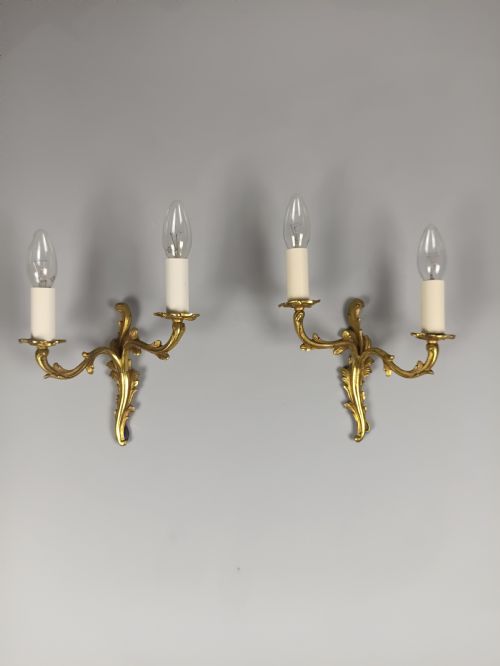
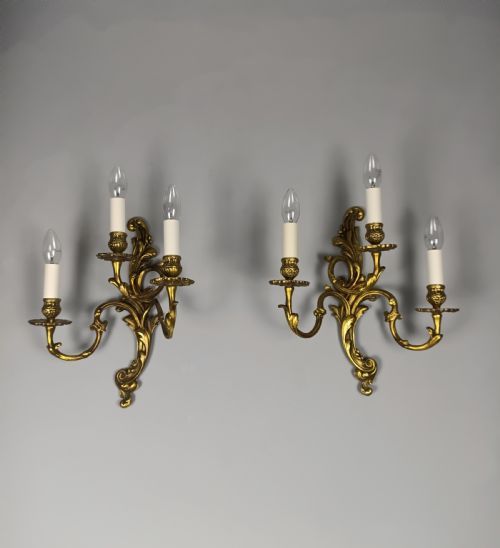
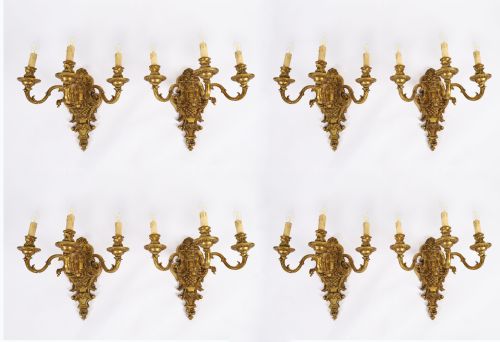
When searching for french wall light brackets, buyers encounter fixtures designed to mount directly onto vertical surfaces for interior illumination. These pieces appear in single-arm formats as well as multi-arm configurations holding two or three branches.
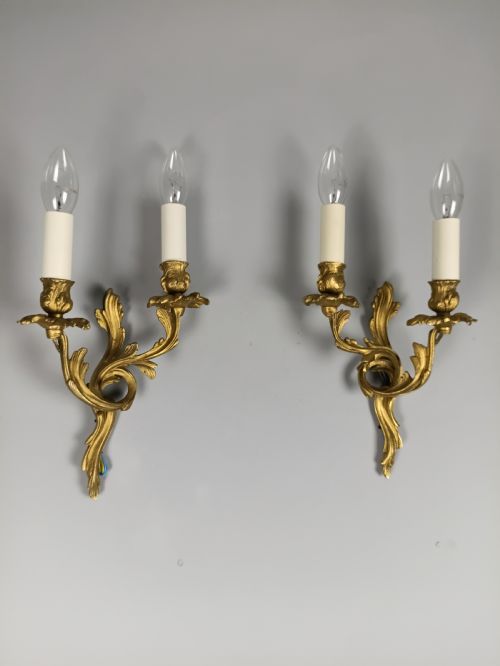
The selections span the nineteenth century through the art deco era of the early twentieth century. Common forms include twin-arm girandoles and matching sconces influenced by rococo revival, louis xvi, and neoclassical design movements.
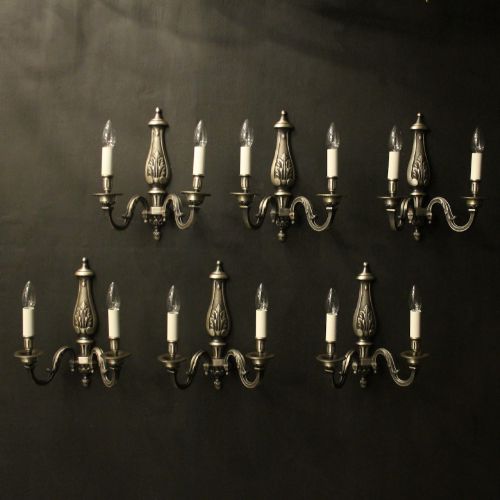
Most items originate from continental workshops and utilise standard domestic wiring adaptations suitable for modern installation. Pairs and larger sets dominate the current selection, alongside occasional single fixtures.
Materials and construction methods
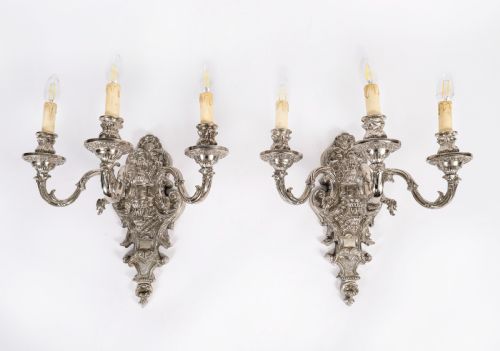
Metal forms the foundation of these pieces, utilising cast brass, bronze, gilt bronze, ormolu, and silver-gilded brass. Artisans also employed carved giltwood for specialised wooden backplates and frames.
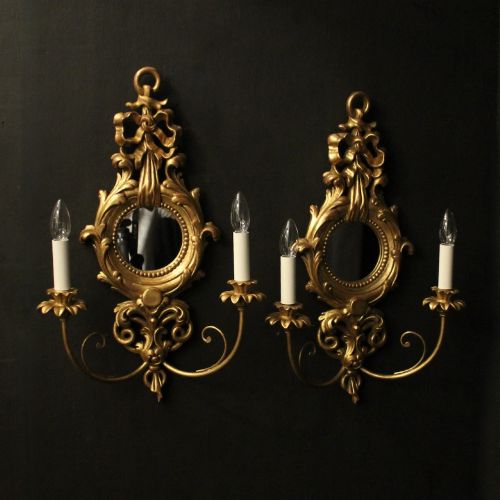
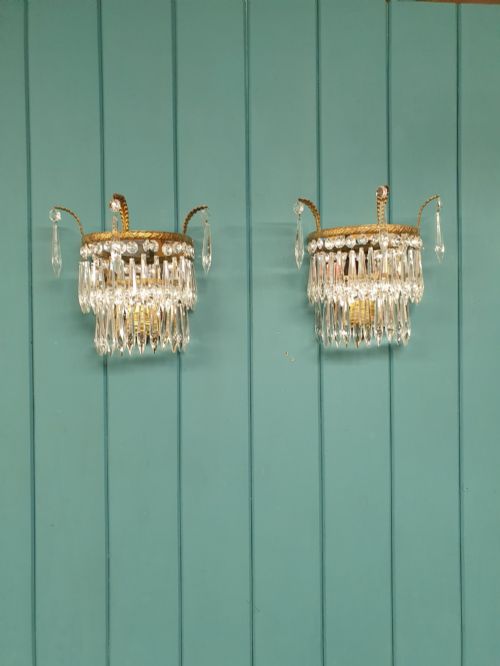
Surface decoration frequently involves heavy gilding, silver plating, or patination applied to cast metal. Details such as porcelain inserts, crystal drops, and glass elements integrate into the structural arms and bobeches.
Cast cherubs regularly peer from behind candle arms, keeping a watchful eye on the evening parlor.
Factors determining quality
The crispness of the cast metal ornamentation distinguishes superior examples from simpler productions. Deep relief work on rococo scrolls, acanthus leaves, and figural cherub motifs demonstrates skilled chasing and finishing by the maker.
The weight and consistency of the bronze or brass alloy affect the structural integrity of multi-arm branches. Heavier gauge metal supports multiple candle arms securely without flexing under the weight of glass or porcelain components.
The French Wall Light Brackets Glossary
- Ormolu
- A gilded bronze technique utilising finely ground gold mercury amalgam applied to a cast bronze base. This finish produces a warm, durable golden lustre characteristic of fine nineteenth-century lighting.
- Girandole
- An ornamental branched wall light or sconce, frequently incorporating reflective backplates or mirrors. These fixtures multiply the ambient illumination from candles or early electric bulbs.
- Bobeche
- The drip pan fitted beneath the candle holder to catch wax. On these brackets, this component often matches the surrounding cast metal decoration.
- Louis XVI
- A neoclassical design style defined by symmetry, straight lines, and classical motifs such as urns and swags. Pieces from this stylistic revival favour restrained geometric balance over exuberant curves.
- Rococo Revival
- A nineteenth-century artistic movement reviving asymmetric scrolls, C-curves, and naturalistic plant forms. Lighting fixtures in this style feature fluid, organic silhouettes.
French Wall Light Brackets: Frequently Asked Questions
How do I install antique wall lights?
Most antique fixtures require professional electrical installation onto standard wall junction boxes. Wiring is typically updated to meet current safety standards prior to mounting.
Securing the backplate to adequate wall anchors ensures the fixture supports the weight of metal arms and glass components safely.
Are these lights supplied with bulbs?
Fixtures generally ship without lightbulbs, allowing owners to select appropriate candle-style LED or incandescent lamps. Standard SES small Edison screw fittings are common in European lighting.
Checking the holder type ensures compatibility with local domestic voltage and bulb bases.
How do I clean gilded brass?
Dusting gently with a soft dry cloth maintains the surface without disturbing delicate gilt layers. Avoid abrasive cleaning compounds or harsh chemical polishes that strip thin gold finishes.
Professional restoration is recommended if deep cleaning or rewiring becomes necessary over time.
How do I identify the period?
Stylistic indicators such as neoclassical symmetry or rococo asymmetry provide initial clues to the design era. Material composition, casting quality, and mounting hardware further clarify the manufacturing decade.
Comparative analysis with documented nineteenth and early twentieth-century designs aids accurate dating.