



French Vanity Chest
These french vanity chest examples bring together marble, mahogany, and mirrored glass for personal grooming.
French Vanity Chest
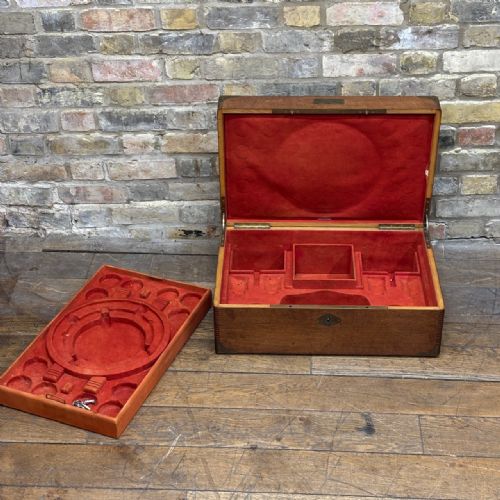
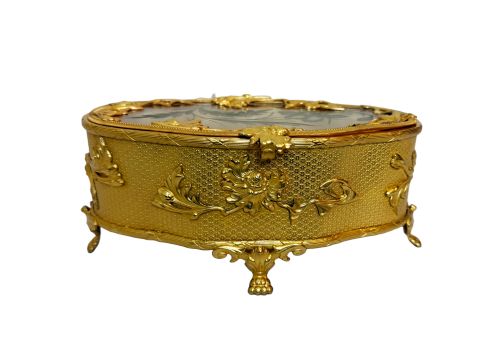
A french vanity chest combines the storage of a drawer unit with the surface requirements of a dressing table or washstand. Pieces on this page span the nineteenth century through the 1930s, encompassing dressing cases, jewellery boxes, and larger furniture forms.
Makers utilised various regional interpretations including French Provincial, Art Deco, and Victorian faux bamboo or rococo revival styles. Buyers encounter both robust carved oak furniture and refined rosewood or mahogany pieces fitted with brass and marble.
The utility of these items ranges from bedside jewellery storage to full dressing table arrangements with integrated mirrors and marble surfaces. Each variation reflects the changing domestic habits and interior tastes of nineteenth and early twentieth-century households.
Construction and Materials
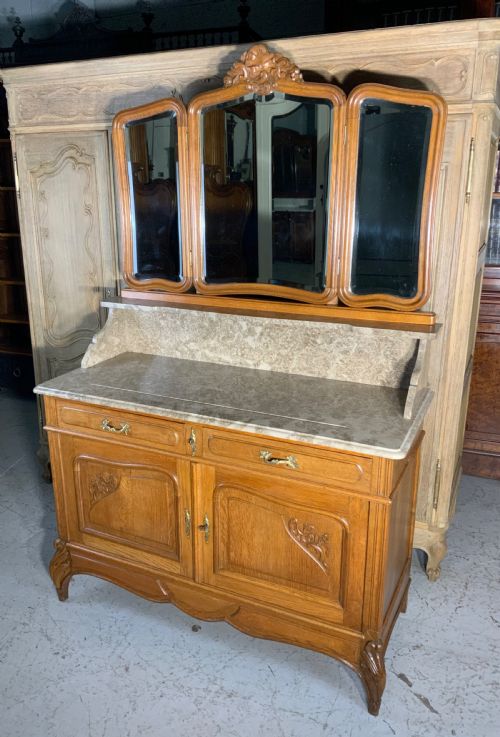
Construction relies upon solid hardwoods like oak, mahogany, and rosewood, often shaped into carved panels or inlaid with brass work. Carved oak washstands demonstrate heavy timber framing suited to daily washing routines.
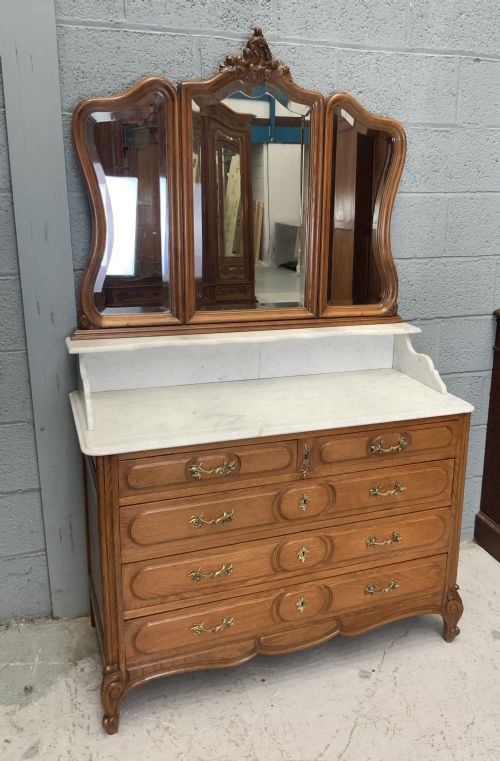
Surface treatments incorporate polished marble tops and mirrored glass panels, frequently paired with cast brass mounts and velvet linings inside smaller boxes. These combined materials provide both the water resistance needed for washing and the decorative finish expected in a bedroom.
French Vanity Chest Retail Price Guide 2026
Typical asking prices for french vanity chest among the pieces listed under this phrase on Sellingantiques today, from the lower quarter to the upper quarter. They describe what is for sale here now, not the wider market.
Listings on this site span multiple decades from the Victorian era through the 1930s, incorporating oak, mahogany, rosewood, glass, and marble.
Assessing Quality
Quality depends upon the selection of timber and the precision of decorative elements such as brass inlay, cast mounts, and carved woodwork. Dense mahogany and figured rosewood distinguish finer dressing chests from simpler utility pieces.
The integration of heavy elements like marble slabs and mirrored glass requires stable joinery to maintain structural integrity across decades of use. Superior examples demonstrate careful attention to hardware details and harmonious proportions between wood, metal, and stone.
The French Vanity Chest Glossary
- Faux bamboo
- A decorative finish where solid timber is carved and painted to resemble natural bamboo stalks. This style gained popularity during the Victorian period.
- Campaign dressing chest
- Portable furniture constructed in sections with recessed brass handles for ease of transport during military travel. Such pieces utilise sturdy hardwoods to withstand frequent movement.
- Rococo revival
- A nineteenth-century design style drawing on eighteenth-century French motifs with asymmetric curves, naturalistic scrolling, and deep carving. It appears frequently on Victorian washstands and dressing tables.
- Marble top
- A polished stone slab fitted to the upper surface of a washstand or dressing table to protect the wood from water. This feature provides a durable and cool workspace for grooming.
- Art Deco
- A design movement prominent in the 1920s and 1930s favouring streamlined geometric forms and mirrored glass surfaces. Pieces from this era discard heavy Victorian carving in favour of clean architectural lines.
French Vanity Chest: Frequently Asked Questions
What is a french vanity chest?
A french vanity chest is a piece of furniture or a fitted box designed for personal grooming, dressing, and the storage of jewellery or cosmetics.
These items range from small brass-inlaid dressing boxes to large mahogany and oak dressing tables featuring integrated mirrors and marble surfaces.
How were washstands used?
Washstands provided a dedicated bedroom station for morning ablutions before plumbed bathrooms became standard in every home.
The marble tops offered a water-resistant surface to hold basins and ewers, while the drawers and cupboards stored linens and washing accessories.
How do I date a dressing chest?
Dating relies on observing the prevailing styles, timber choices, and manufacturing techniques recorded across the periods.
Nineteenth-century examples often feature heavy mahogany or faux bamboo carving, whereas pieces from the 1920s and 1930s adopt geometric Art Deco lines and mirrored glass.
What woods were used?
Cabinetmakers utilised durable hardwoods including oak, mahogany, and rosewood for the main frames and drawer structures.
These timbers were chosen for their strength and grain patterns, frequently enhanced with brass inlay or carved decorative details.