


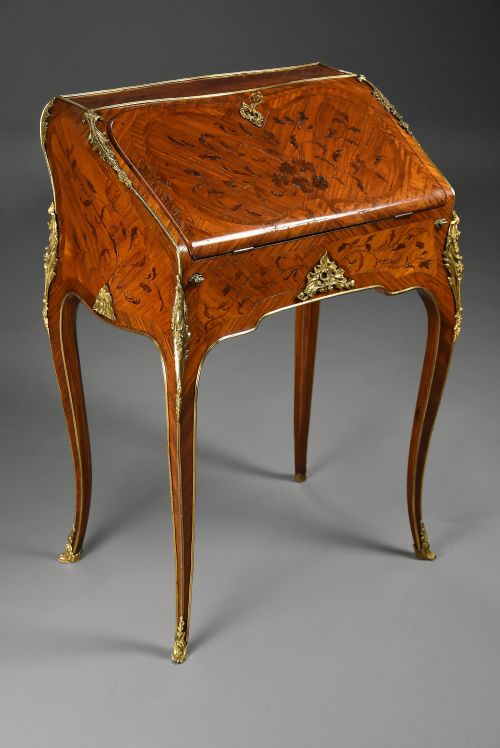


French Tulipwood Table
A French tulipwood table brings warmth through its striped timber and brilliance through ormolu mounts, bridging the mid eighteenth century and the late nineteenth century.
French Tulipwood Table
A French tulipwood table spans practical writing desks, petite bedside cabinets, and dressing tables designed for the bedroom or salon. When you search for a French tulipwood table, you encounter forms ranging from serpentine bedside stands to large bureau plats and games tables.
The nineteenth century dominates the current selection, drawing heavily on Louis XV and Louis XVI revivals alongside Napoleon III and Louis Philippe periods. Pieces often feature crossbanded veneers arranged to show off the striking grain of the timber.
Smaller occasional tables and side tables appear alongside fitted ladies writing desks and poudreuses. These forms reflect the refined domestic habits of French cabinet makers and their British counterparts who adopted the continental style.
Materials and construction
Cabinet makers utilised tulipwood veneers laid over carcases of walnut, kingwood, or rosewood, creating geometric parquetry and intricate floral marquetry. The contrasting grain colours of the timber produce natural stripes that define the surface decoration.
Ormolu and gilt bronze mounts were cast, chased, and fire gilt before being fitted to protect corners, frame drawers, and accentuate the cabriole legs. Brass hardware and leather writing surfaces complete the construction of desks and writing tables.
French Tulipwood Table Retail Price Guide 2026
Typical asking prices for french tulipwood table among the pieces listed under this phrase on Sellingantiques today, from the lower quarter to the upper quarter. They describe what is for sale here now, not the wider market.
Listings feature periods from the mid eighteenth century up to nineteen hundred, including Victorian interpretations and Napoleon III designs.
Quality and craftsmanship
The refinement of the ormolu mounts separates standard production from exceptional pieces, as finely chased bronze displays crisp detail and heavy gilding. Castings that appear sharp and deep indicate superior workshop standards.
The precision of the marquetry and parquetry layout dictates the visual harmony of the top and sides. Master cabinet makers aligned the tulipwood grain meticulously across drawers and panels to create balanced optical patterns.
Maison Pretot Paris·Gillows
The French Tulipwood Table Glossary
- Ormolu
- Gilt bronze mounts used extensively on furniture during the eighteenth and nineteenth centuries. The technique involves applying a gold amalgam to cast bronze before heating.
- Marquetry
- Decorative veneer work forming pictorial or geometric designs using various coloured woods. Craftsmen cut thin slices of timber and fit them together precisely.
- Parquetry
- Geometric patterns formed by wood veneers arranged in regular grids or diagonal bands. Squares and lozenges are typical motifs seen on table tops.
- Poudreuse
- A French dressing table fitted with folding lids, internal mirrors, and compartments for cosmetics. These pieces date principally from the eighteenth and nineteenth centuries.
- Bureau Plat
- A freestanding writing desk with a flat top and drawers integrated into the frieze. They are typically finished on all sides so they can sit away from the wall.
French Tulipwood Table: Frequently Asked Questions
Where were these tables used?
These tables served various domestic functions in boudoirs, reception rooms, and bedrooms across grand homes. Desks and writing tables furnished studies, while bedside cabinets stood beside sleeping quarters.
Smaller occasional and games tables moved easily around salons for card playing or serving refreshments. Poudreuses occupied private dressing rooms for morning routines.
How do I date a piece?
Examine the secondary woods inside the drawers and the construction methods used for the carcase joints. Eighteenth-century examples display hand-cut joinery and native European timbers beneath the veneers.
Nineteenth-century revival pieces often incorporate machine-sawn elements and distinct nineteenth-century lock mechanisms. Ormolu casting styles also shift from the naturalistic rococo forms of Louis XV to the tighter symmetry of the Louis XVI revival.
Are the mounts solid gold?
The mounts are cast bronze that has undergone a fire gilding process using a mercury and gold amalgam. This technique produces a durable, rich metallic finish rather than solid gold.
Chasing work was performed by hand after casting to sharpen details in the foliage and scrollwork. Over time, the underlying bronze may peek through where handling has softened the gilding.