



French Timber Commode
A French timber commode brings continental storage and substantial presence into a room, offering deep drawers and fine decorative surfaces.
French Timber Commode
A French timber commode is primarily a chest of drawers or side cabinet originating from or styled after French furniture traditions. These pieces function as substantial storage units while providing a decorative surface for display in a bedroom or reception room.
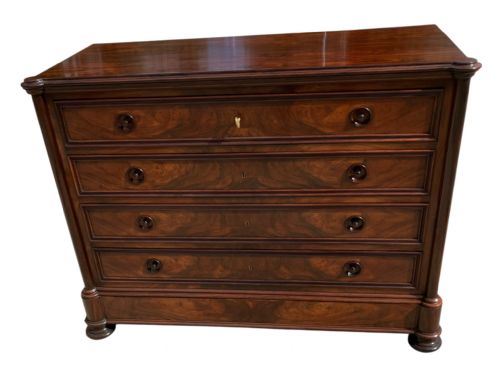
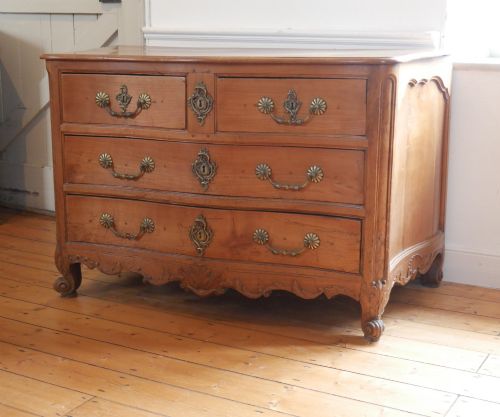
The versions most commonly met on this page span the eighteenth and nineteenth centuries, taking forms such as provincial painted softwood chests, serpentine rosewood commodes, and walnut cabinets. Makers from various periods adapted these designs using regional timbers and decorative finishes.
Meticulous attention to form distinguishes these pieces, whether through the curved lines of a serpentine front or the simple utility of a two-drawer painted chest. Buyers encounter diverse stylistic influences, including Regency, French Provincial, and Victorian Rococo Revival.
How they were made
Construction relies heavily on traditional timber framing using woods such as walnut, rosewood, oak, mahogany, and pine. Cabinetmakers selected these hardwoods and softwoods for their structural stability and suitability for carving or veneering.
Surface decoration frequently involves painted finishes, marquetry, and brass inlays. Artisans applied paint to softwood and hardwood bodies, whilst others utilised intricate wood veneers and metal mounts to enrich the visual appeal.
French Timber Commode Retail Price Guide 2026
Typical asking prices for french timber commode among the pieces listed under this phrase on Sellingantiques today, from the lower quarter to the upper quarter. They describe what is for sale here now, not the wider market.
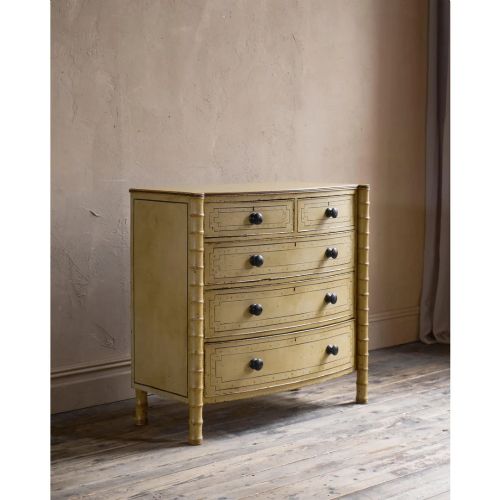
One unexpected nineteenth-century maker channeled exotic flora by crafting a chest of drawers entirely to mimic bamboo.
What varies in quality
The refinement of the timber preparation and the intricacy of the surface decoration distinguish finer examples from simpler provincial work. Skilled execution in marquetry and the precise fitting of brass mounts indicate higher standards of craftsmanship.
Proportion and the handling of curved elements, such as serpentine fronts, dictate the visual success of the piece. Superior cabinetmaking achieves balanced lines and harmonious integration of structural drawers with decorative facades.
The French Timber Commode Glossary
- Commode
- A low chest of drawers, typically decorative in design. These items became central to domestic storage in French interiors.
- Serpentine
- A furniture front curving outward at the centre and inward at the sides. This contour requires advanced woodworking skill to execute properly.
- Marquetry
- The art of applying pieces of veneer to a structure to form decorative patterns. Craftsmen use various coloured woods to create pictorial or geometric designs.
- Faux Bamboo
- Wood turned and carved to resemble natural bamboo stalks. This decorative technique gained popularity during the nineteenth century.
French Timber Commode: Frequently Asked Questions
What is a French timber commode used for?
These pieces serve primarily as functional chests of drawers for storing clothing or linens in domestic spaces.
Their decorative tops and facades also allow them to function as surface displays in hallways and reception rooms.
How do I identify an 18th-century commode?
Eighteenth-century examples often feature solid walnut or painted softwood construction with hand-carved details typical of provincial workshops.
Construction methods, such as hand-cut dovetails in the drawer boxes, help confirm the period of manufacture.
Where should I place a commode at home?
A commode works well against a primary wall in a bedroom, offering both surface space and deep drawer storage.
They also suit dining rooms or living areas where a substantial wooden cabinet adds architectural weight to the interior.
What styles are common among these cabinets?
The selection includes French Provincial, French Restoration, Regency, and Victorian Rococo Revival interpretations.
These styles range from simple painted country pieces to highly ornamented urban furniture with brass inlays.