


French Style Daybed
A french style daybed brings Continental elegance to a room, offering a reclining form designed for daytime lounging.
French Style Daybed
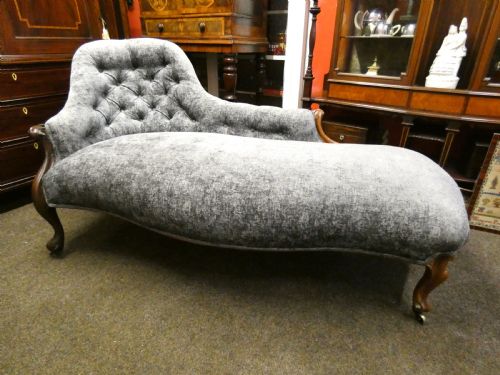
A french style daybed encompasses varied reclining and seating forms, ranging from nineteenth century iron frames to twentieth century painted cane day beds. Buyers searching for a french style daybed encounter pieces reflecting Louis XV and Louis XVI aesthetics, often designated as duchesse brisée or canapé corbeille.
The objects recorded in these listings span the nineteenth century and early twentieth century, incorporating related forms such as chaise longues and settees. Walnut, giltwood, and fabric upholstery dominate the variations found across this selection.
What varies in quality
Quality differentiates by the crispness of the carving on wooden and giltwood frames and the preservation of original paint or gilt surfaces. Finer examples maintain integrated multi-piece duchesse brisée configurations or well-preserved caning.
Materials dictate much of the distinction, with solid walnut or giltwood framing marking a different tier of craftsmanship compared to cast iron or simpler painted pine structures. The integrity of original upholstery methods and fabric choice further separate individual pieces.
Several pieces arrive wearing their original paint, proving that even daybeds appreciate a reliable coat that stands the test of time.
The French Style Daybed Glossary
- Duchesse brisée
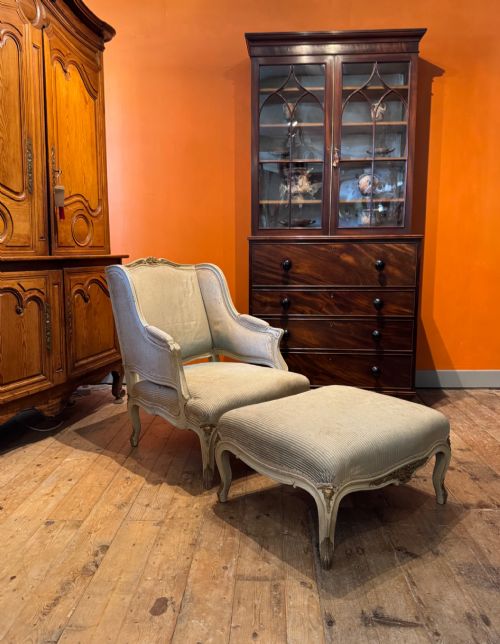
- A multi-piece chaise longue comprising a chair and one or two footstools, or a divided daybed designed for reclining. This form allows the user to extend their legs fully while maintaining an upholstered backrest.
- Canapé corbeille
- A basket-shaped settee or day bed featuring a rounded, enveloping back that curves continuously into the armrests. It typically appears in French revival styles of the late nineteenth and early twentieth centuries.
- Giltwood
- Timber treated with a thin layer of gold leaf applied over a prepared gesso and bole surface. It provides the reflective, ornate finish seen on many high-status French style daybeds.
- Cane
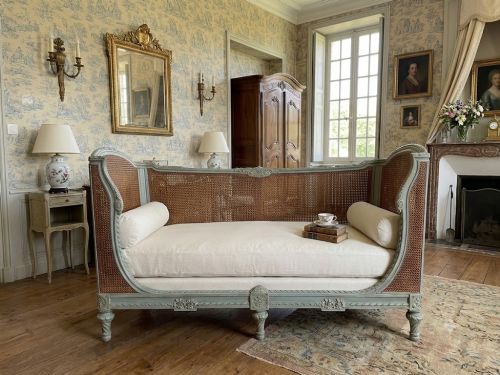
- Material woven from peeled rattan or bamboo split into thin strips, used to form light, patterned panels for chair backs and daybed ends. It offers both flexibility and visual lightness to wooden frames.
- Napoleon III style
- A nineteenth century eclectic design movement drawing heavily on Louis XIV, Louis XV, and Louis XVI precedents. Pieces from this period often feature elaborate buttoned velvet upholstery and curved wooden forms.
French Style Daybed: Frequently Asked Questions
Where should I place a french style daybed?
A french style daybed suits larger living spaces, bedrooms, or reading rooms where its decorative frame and reclining length can function as a central feature.
Positioning the piece away from direct sunlight protects delicate fabrics and preserves original painted or gilt surfaces over time.
How do I identify a Louis XVI style daybed?
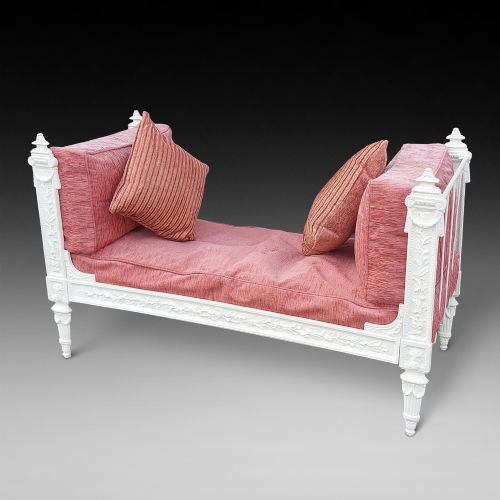
Louis XVI style daybeds are distinguished by straight, fluted legs, symmetrical rectangular proportions, and neoclassical carving motifs such as ribbons or acanthus leaves.
In contrast to the flowing curves of Louis XV pieces, these day beds emphasise architectural restraint and geometric balance.
Can these daybeds be used for sleeping?
Daybeds and duchesse brisée forms were historically designed for daytime resting, lounging, and reading rather than primary nighttime sleeping.
While some single bed variants and day beds accommodate a standard mattress length, checking the internal dimensions remains essential for overnight use.
What is a duchesse brisee?
A duchesse brisée is a broken duchess, separating into a chair with an elongated seat and a matching footstool, or into three distinct modular sections.
This configuration allows the lounger to adjust the overall length of the daybed according to personal preference.