


French Style Chaise Lounge
A French style chaise lounge brings relaxed elegance to a room, offering a reclining seat rooted in continental design history.
French Style Chaise Lounge
A French style chaise lounge combines extended seating with upholstered comfort, designed for reclining in a formal or private room. The selection here encompasses varied iterations from the nineteenth century onwards, alongside related forms such as daybeds and armchairs.
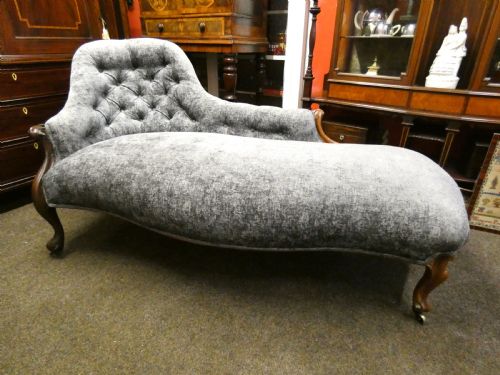
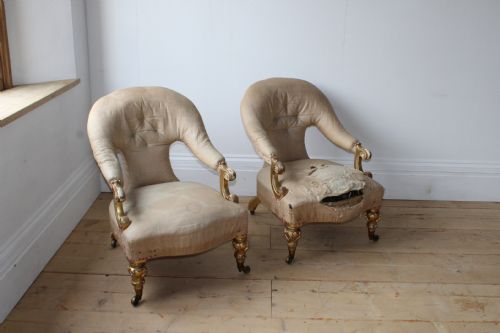
Makers drew on historical continental aesthetics, producing pieces that range from elaborate giltwood duchesse brisée sets to walnut frames with buttoned velvet upholstery. Victorian interpretations also appear alongside pieces bearing Louis XV and Louis XVI revival influences.
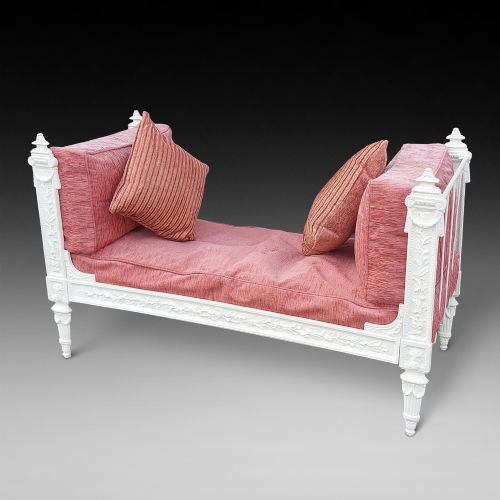
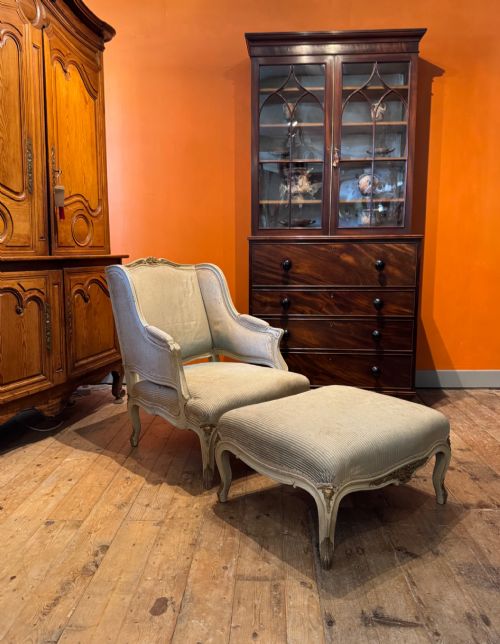
Forms vary from single-ended chaise longues to multi-piece daybeds and matched chair and footstool combinations. Buyers frequently encounter nineteenth century walnut and cast iron constructions among these listings.
Materials and construction methods
Timber frames form the structural core of these pieces, with walnut, mahogany, beech, and giltwood providing sturdy foundations for decorative carving. Artisans shaped these woods into sweeping curves characteristic of French rococo and revival styles.
Upholstery relies on traditional fabric coverings, frequently finished with buttoning to secure the interior padding. Brass details and cast iron components also feature in specific daybed and seating variations across the inventory.
Styles across the inventory range from Victorian and Napoleon III to Louis XV style and French chateau aesthetics.
Distinguishing quality across pieces
The refinement of the carved woodwork and the retention of original surface treatments dictate the visual standing of a piece. Original paint or untouched giltwood finishes elevate the character of duchesse brisée examples compared to later alterations.
The integrity of the frame and the quality of the timber, such as figured walnut or solid mahogany, set finer pieces apart. Upholstery finish, including the precision of buttoning and the choice of fabric, further distinguishes standard production from superior craftsmanship.
The French Style Chaise Lounge Glossary
- Duchesse brisée
- A multi-part chaise longue comprising a chair and one or two footstools that lock together to form a continuous resting surface. This style originates from eighteenth century French interior design.
- Giltwood
- Timber coated with a thin layer of gold leaf or gilt finish to simulate solid gold ornamentation. It appears frequently on decorative nineteenth century French revival frames.
- Napoleon III
- A nineteenth century eclectic design period blending various historical French styles, known for opulent upholstery and curved silhouettes. Pieces from this era often feature rich fabric coverings.
- Rococo
- An ornate design style characterised by asymmetry, scrollwork, and naturalistic plant motifs. French interpretations of this aesthetic heavily influenced nineteenth century seating forms.
French Style Chaise Lounge: Frequently Asked Questions
How do I style a chaise lounge at home?
A French style chaise lounge works well positioned at an angle in a spacious bedroom or anchoring a quiet corner of a living room. It functions primarily as a statement seating piece rather than standard sofa seating.
Pair the piece with complementary armchairs or low tables to create a dedicated relaxation area. Ensure adequate surrounding floor space to let the curved silhouette stand out without crowding other furniture.
How do I identify a Victorian piece?
Victorian seating often employs dark hardwoods like walnut or mahogany, combined with deep buttoned upholstery and robust framing. These pieces reflect mid to late nineteenth century British domestic tastes.
Look for structural solidity alongside characteristic upholstery techniques such as velvet covering. Makers of the period frequently adapted continental French aesthetics for British homes.
Can these pieces be used daily?
These antique and vintage seats are suitable for regular use provided they receive careful treatment. The internal framing and upholstery support everyday sitting and reclining.
Consider the condition of the fabric and underlying structure before committing to heavy daily lounging. Gentle placement away from direct sunlight preserves the timber and textile finishes.