




French Style Cane Armchairs
French style cane armchairs bring effortless elegance to a room, offering classic seating crafted from natural materials and shaped by historical revival designs.
French Style Cane Armchairs
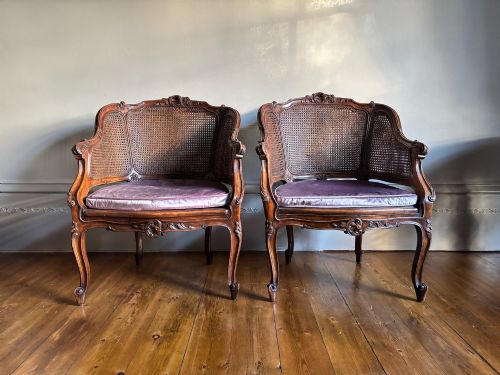
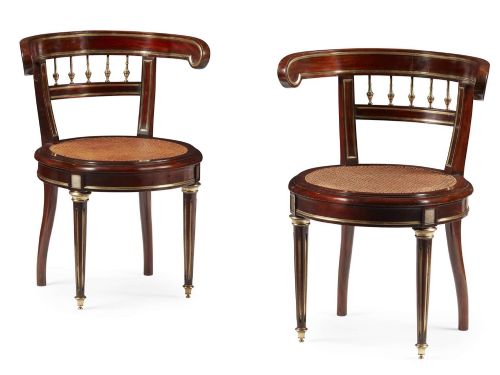
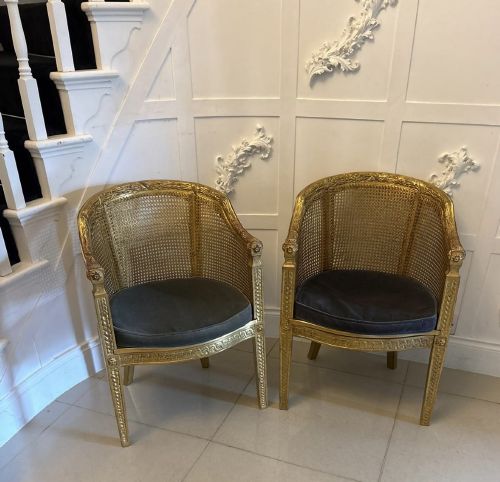
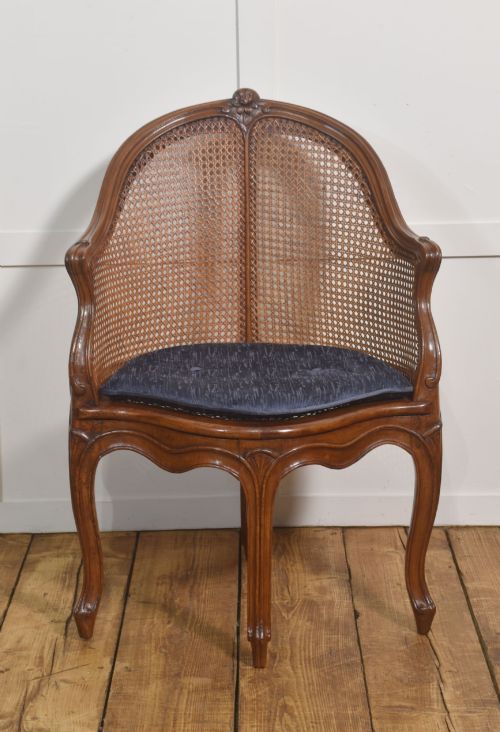
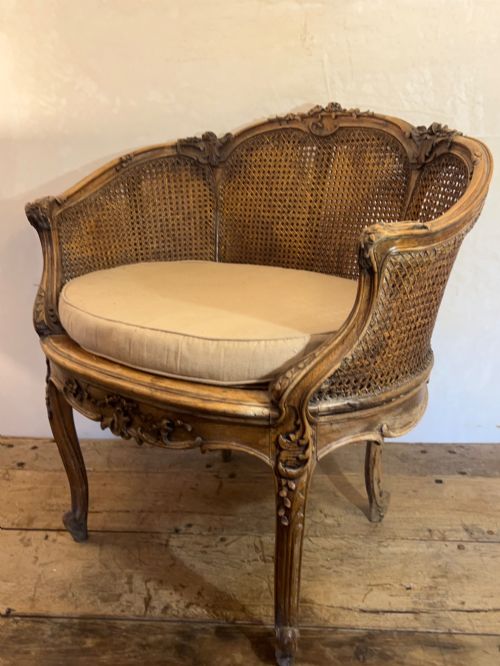
French style cane armchairs encompass seating options such as bergères, salon chairs, tub chairs, and library armchairs designed with woven cane panels. These pieces draw heavily on historical aesthetics, with Louis XV, Louis XVI, and French Empire influences shaping their distinctive profiles.
You are most likely to encounter nineteenth-century and early twentieth-century examples on this page, particularly pieces from the eighteen-fifties through to the nineteen-twenties. Walnut, beech, and mahogany frames dominate the selection, often complemented by painted or giltwood finishes.
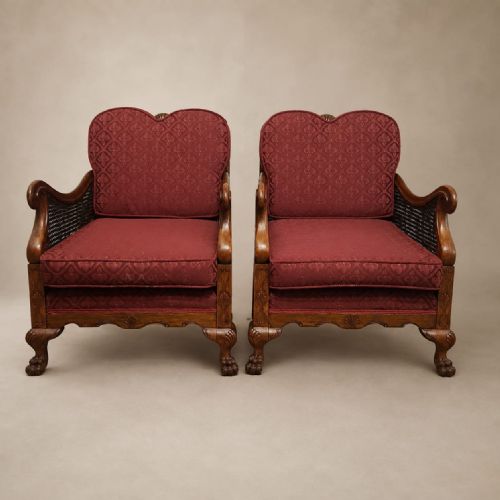
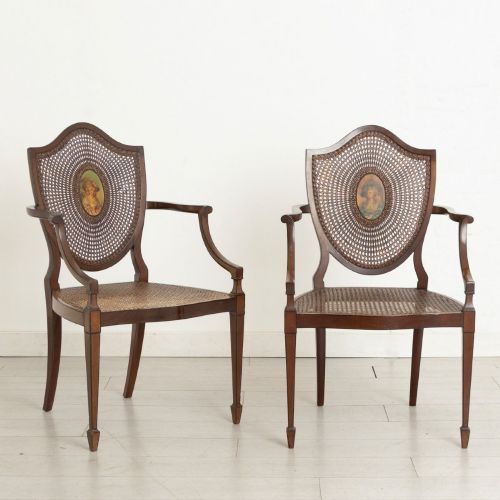
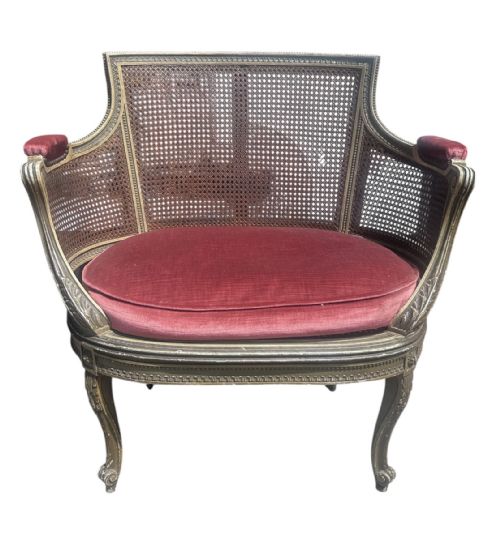
The forms range from grand salon seating to compact childs chairs and drawing room sets. Many retain their original open arm structures, while others feature enclosed upholstered elements alongside traditional split cane work.
Materials and construction methods
Makers utilised solid hardwoods like walnut, beech, mahogany, and oak to construct the supportive structural frames of these armchairs. These timbers were expertly carved with flowing lines, floral motifs, and classical detailing characteristic of revival periods.
Cane and rattan cane were woven by hand to form flexible, breathable panels for the backs and seats of the chairs. Additional luxury was introduced through the application of giltwood, paint, and upholstery materials such as velvet and fabric.
French Style Cane Armchairs Retail Price Guide 2026
Typical asking prices for french style cane armchairs among the pieces listed under this phrase on Sellingantiques today, from the lower quarter to the upper quarter. They describe what is for sale here now, not the wider market.
Listings feature walnut, beech, and mahogany frames alongside natural cane, rattan cane, velvet, paint, and giltwood.
Distinctions in quality and execution
The refinement of the wood carving sets finer examples apart, distinguishing crisp, deeply carved scrollwork and moulded frames from simpler, softer execution. Master carvers achieved fluid, balanced lines that define the true aesthetic of the period.
The integrity and tightness of the cane work indicate superior craftsmanship, with neatly pierced holes and uniform weaving standing above loose or uneven panels. Furthermore, the selection of the primary timber, whether richly figured walnut or finely gilded wood, dictates the overall stature of the piece.
The French Style Cane Armchairs Glossary
- Bergère
- An enclosed upholstered armchair with wooden framing and typically a cane back and sides. This form originated in France during the eighteenth century.
- Cane
- Material made from the peeled bark of rattan palms, woven into decorative and supportive mesh patterns. It provides a lightweight yet durable surface for chair backs and seats.
- Giltwood
- Timber coated with a thin layer of gold leaf or gold paint to impart a brilliant metallic finish. It was frequently used on formal salon and drawing room furniture.
- Louis XV Style
- A revival design movement characterised by asymmetrical curves, cabriole legs, and naturalistic floral carvings. It draws inspiration from the mid-eighteenth-century French court.
- Tub Chair
- An armchair featuring a continuous curved back and arms forming a rounded enclosure. These pieces often incorporate cane paneling around the seating barrel.
French Style Cane Armchairs: Frequently Asked Questions
How do I identify a French style cane armchair?
Look closely at the wooden frame for characteristic revival details such as cabriole legs, carved floral motifs, and curved armrests. The presence of woven cane panels on the back or sides is another primary indicator.
Material choices also offer clues, as walnut, beech, and giltwood appear frequently across these historical seating forms. Examining the construction style helps connect the piece to periods like the nineteenth century or early twentieth century.
Are these chairs comfortable for daily use?
Many of these armchairs are designed with deep seats and supportive upholstered cushions or squabs. The woven cane provides a flexible and breathable backrest that adapts slightly to the body.
Library armchairs and bergères from this selection were specifically built for extended sitting and relaxed drawing room use. Adding appropriate cushions enhances daily comfort while preserving the historic frame.
How should I care for cane panels?
Keep cane panels clean by gently dusting them with a soft brush or vacuuming with a low-suction attachment. Avoid placing the chairs in direct sunlight or overly dry environments to prevent the natural material from becoming brittle.
Applying a small amount of moisture with a damp cloth periodically can help maintain the flexibility of the rattan. Proper humidity control ensures the woven mesh remains taut and supportive over time.
Can these chairs be re-upholstered?
Many of these armchairs feature removable squab cushions or upholstered elements that can be recovered to suit modern interiors. Some listings even offer sets specifically intended for re-upholstery.
When updating fabric, select materials that complement the existing wood finish, whether giltwood, painted surfaces, or polished walnut. Professional upholstery ensures the structural integrity of the frame and internal webbing remains undisturbed.