
French Style Cabinet Table
When you search for french style cabinet table, you uncover a distinct group of foundational furniture pieces that blend storage with surface utility.
French Style Cabinet Table
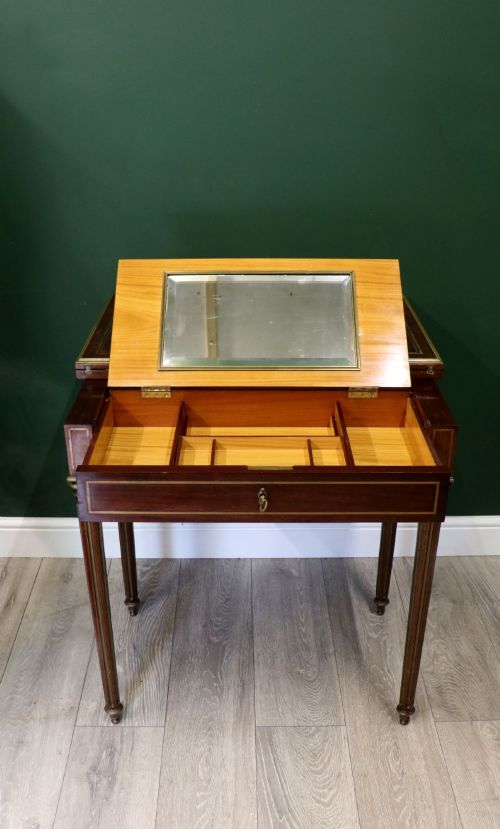
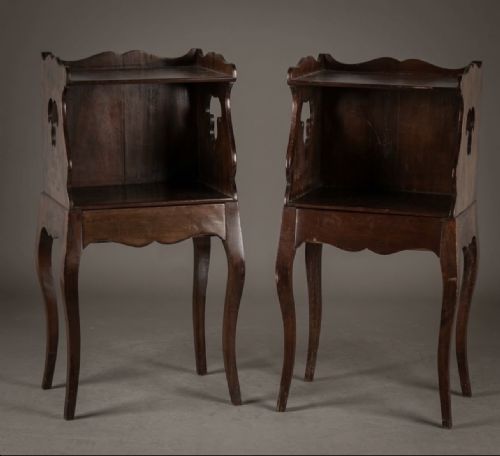
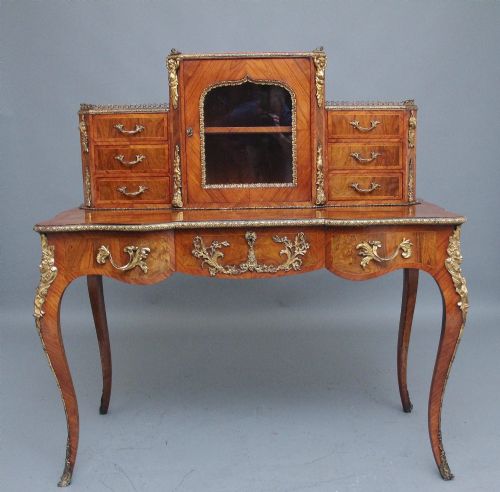
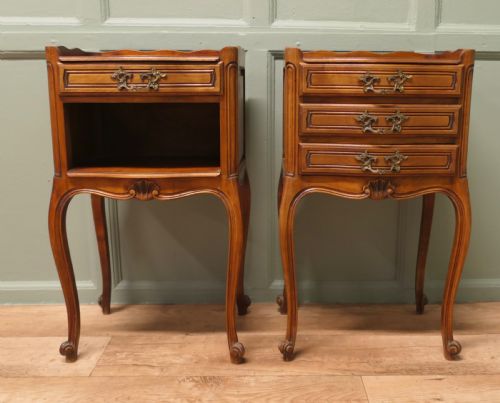
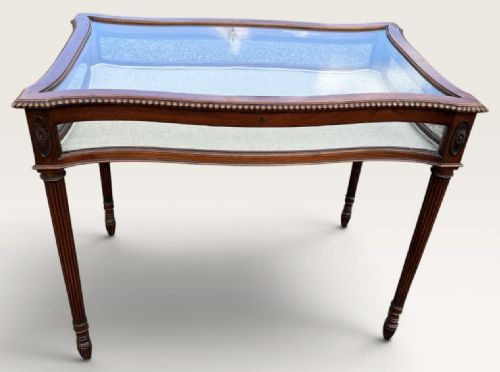
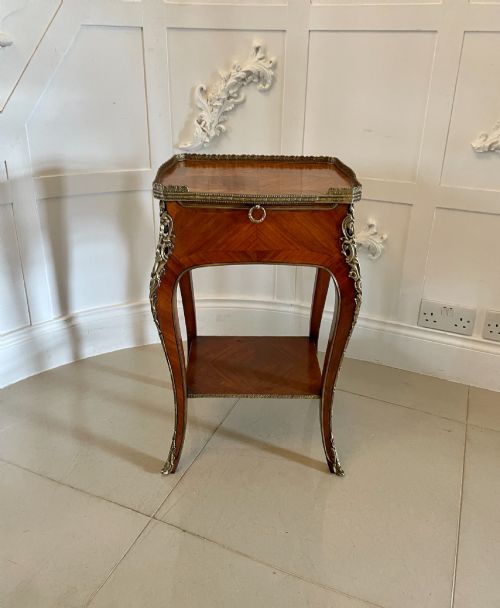
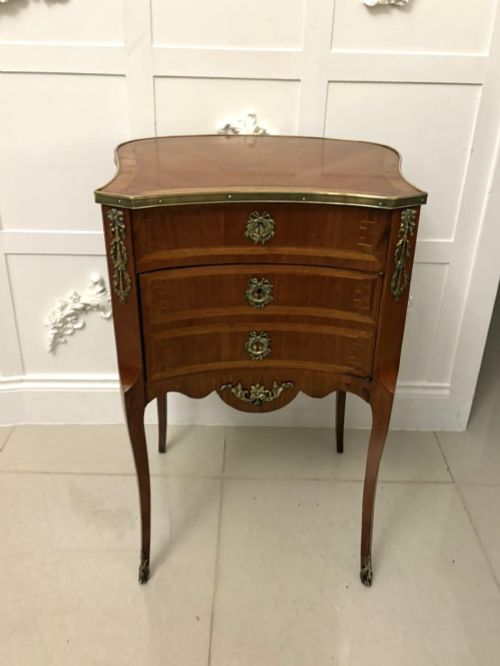
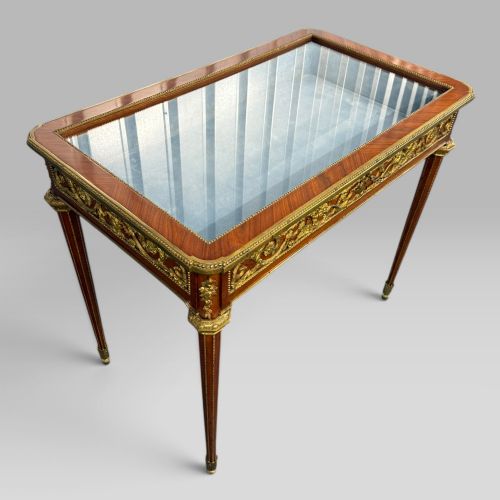
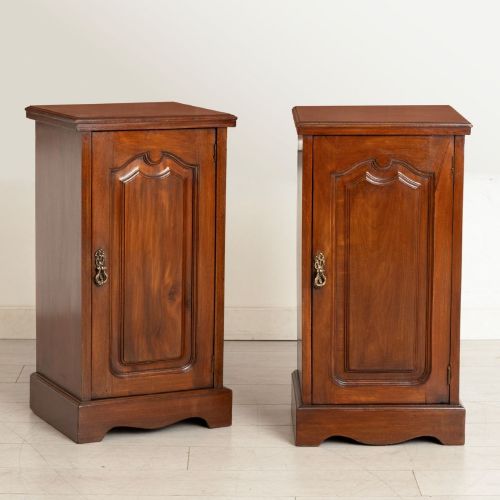
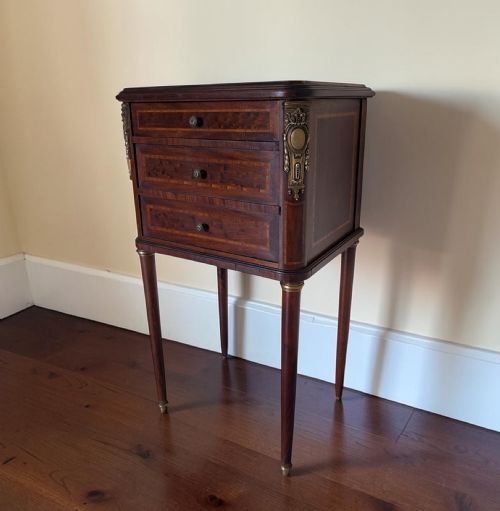
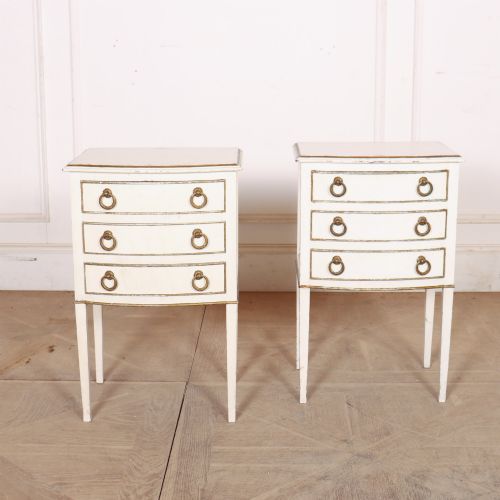
A French style cabinet table combines the closed storage of a bedside or side cabinet with the surface utility of a small table, often drawing on Louis XV and Louis XVI Revival aesthetics. These forms encompass bedside chests, lamp tables, bijouterie vitrines, and compact writing desks.
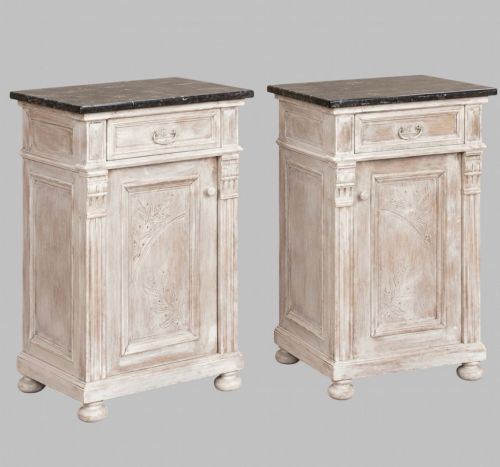
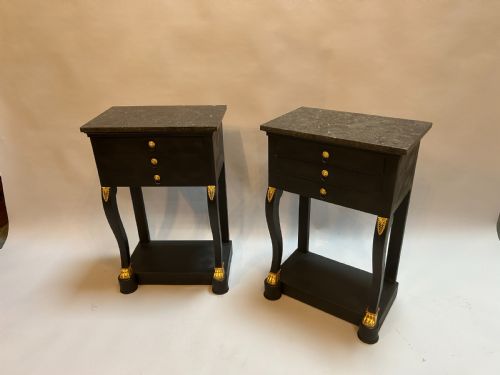
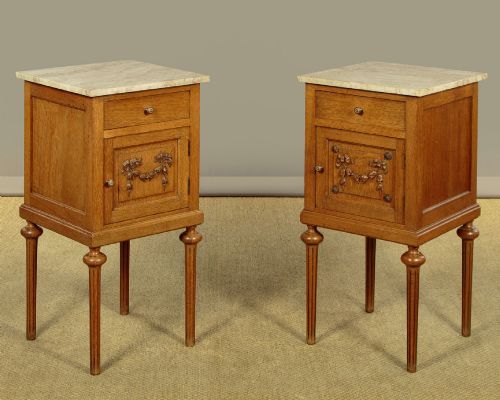
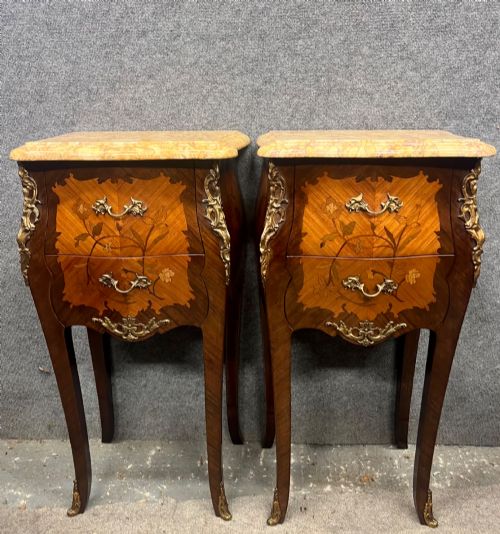
The pieces appearing here span the nineteenth century into the early twentieth century, showing influences from French provincial workshops to grander chateau aesthetics. Buyers frequently encounter bedside cabinets and small lamp tables featuring marble tops or marquetry surfaces.
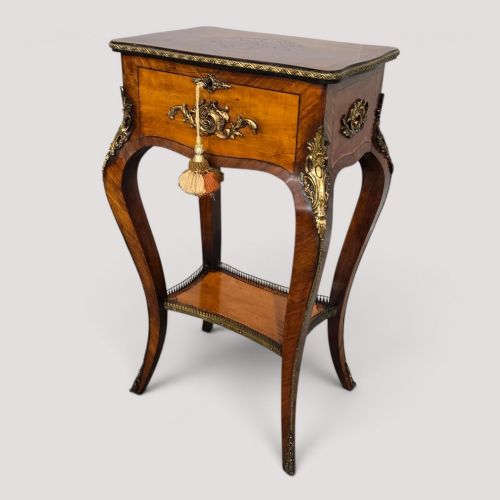
Makers utilised diverse woods including walnut, mahogany, kingwood, rosewood, and satinwood, frequently augmenting the timber with ormolu mounts and brass details. These items functioned historically as intimate bedroom or parlour furniture, designed to hold personal objects or display precious items.
How they were made
Cabinet makers constructed carcass frames from timbers such as mahogany, oak, and walnut, applying delicate veneers of kingwood, rosewood, and satinwood in geometric or pictorial marquetry patterns. Craftspeople shaped serpentine and bombé forms through steam bending and careful sawing.
Metalworkers cast and chased brass and ormolu mounts to accent corners, legs, and drawer edges, securing them with threaded pins. Marble tops, selected for durability and grain, were cut and polished to fit tightly over shaped wooden rims.
Surfaces received hand-applied French polish or lacquer, particularly evident on pieces bearing chinoiserie decoration or Vernis Martin panels. Joinery techniques relied on traditional dovetail joints for drawers and mortise and tenon frames for structural support.
Listings feature nineteenth and early twentieth century periods, encompassing Louis XV Revival, Louis XVI Revival, and French Provincial styles.
What varies in quality
The calibre of a piece rests heavily on the precision of its marquetry and the crispness of its cast ormolu mounts. Finer examples display meticulously fitted veneers where grain patterns mirror symmetrically across the surface, rather than relying on painted substitutions.
Structural integrity reveals itself in the weight and thickness of the marble top and the smooth operation of drawer runners. Better workshops employed heavier gauge brass and richer timbers such as kingwood and amboyna, resulting in substantial weight and balanced proportions.
François Linke·Sormani
The French Style Cabinet Table Glossary
- Ormolu
- Gilded bronze mounts applied to furniture edges and feet. This technique involved dipping cast bronze into a gold amalgam.
- Marquetry
- Decorative patterns formed by fitting thin pieces of wood veneer onto a structural carcass. Craftsmen used various exotic timbers to create contrasting pictorial designs.
- Bijouterie
- A display table or cabinet featuring a glass top and glazed sides. These pieces were designed for showing small valuables and jewellery.
- Chevet
- A French term for a bedside table or small nightstand. They often include a combination of a small cupboard and a drawer.
- Bombe
- A swelling, convex contour on the front and sides of a chest or cabinet. This curved shape requires advanced woodworking skill.
French Style Cabinet Table: Frequently Asked Questions
Where did people use these tables?
These cabinet tables originated primarily for bedrooms as nightstands or boudoirs for holding personal items. They also served in drawing rooms as lamp tables or small display surfaces.
Their compact scale allowed them to fit easily beside seating or next to beds while offering enclosed storage.
How do I identify a marble top?
Marble tops on these tables are solid stone cut to follow the specific serpentine or rectangular contour of the wooden base. They sit unattached or pinned lightly within a raised wooden lip.
Inspect the underside to see the natural veining and rougher quarry finish characteristic of period stone work.
What is the difference between a commode and a chevet?
A commode is a larger chest of drawers designed as a principal room feature with substantial storage capacity. A chevet functions as a smaller bedside companion piece.
Chevets typically combine a single drawer with a small cupboard door beneath, suited for night-time essentials.
How do I care for polished wood surfaces?
Maintain polished wood and marquetry by keeping them away from direct sunlight and sudden temperature shifts. Dust gently with a soft dry cloth.
Avoid silicone sprays and excessive moisture, which can degrade traditional French polish finishes over time.