



French Style Bergere Chairs
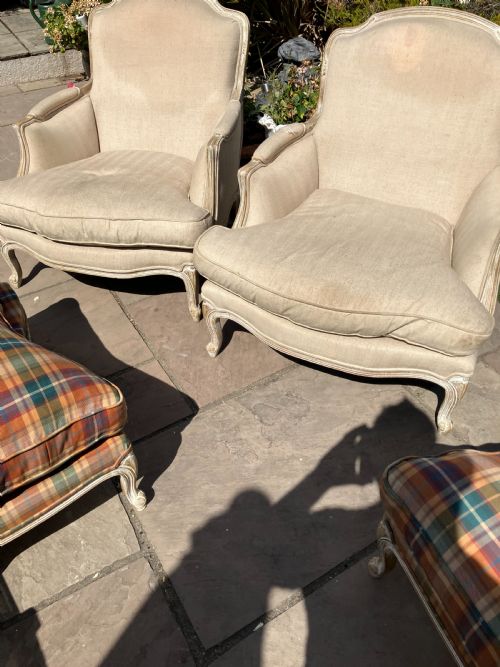
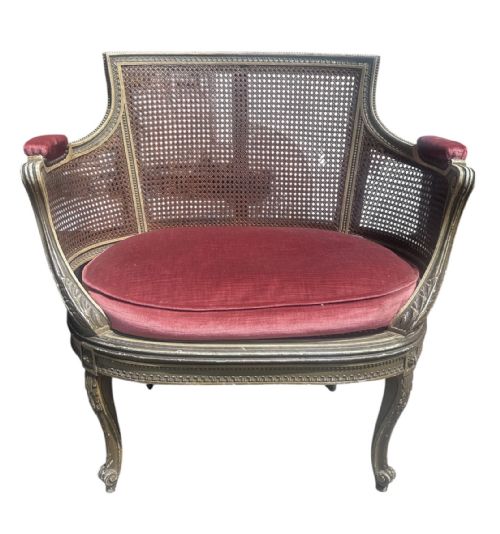
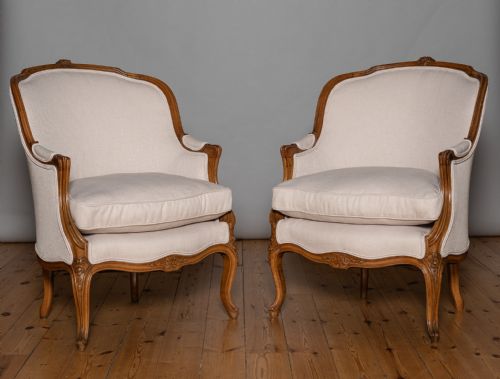
French style bergere chairs are deep, enclosed armchairs with cane or upholstered panels, offering a blend of formal elegance and relaxed comfort.
French Style Bergere Chairs
When you search for french style bergere chairs, you encounter deep, upholstered or caned seats originating across the nineteenth and twentieth centuries.
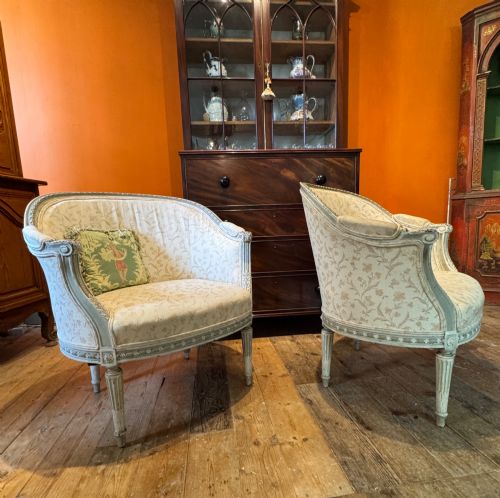
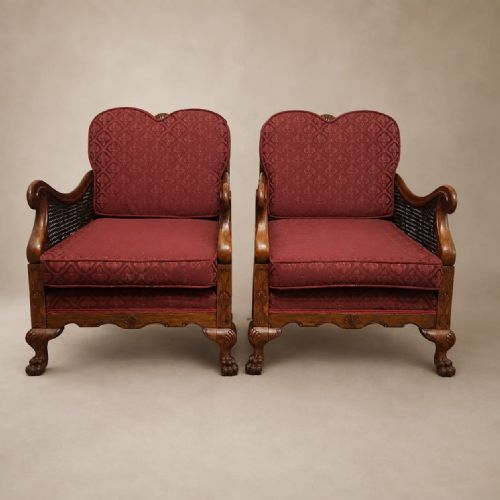
The selections span distinct forms including armchairs, tub chairs, library chairs, and occasional window seats or daybeds.
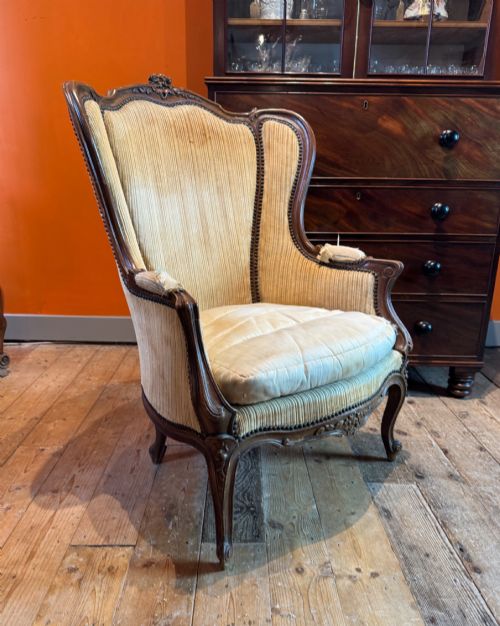
Designs lean heavily on Louis XV and Louis XVI revivals, expressing either flowing rococo curves or restrained neoclassical geometry.
Materials and Construction
Frames rely on sturdy timbers such as walnut, oak, beech, and mahogany, often shaped through detailed carving.
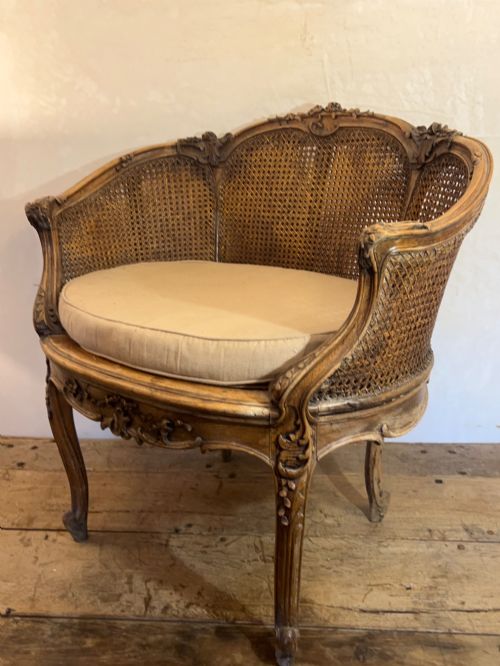
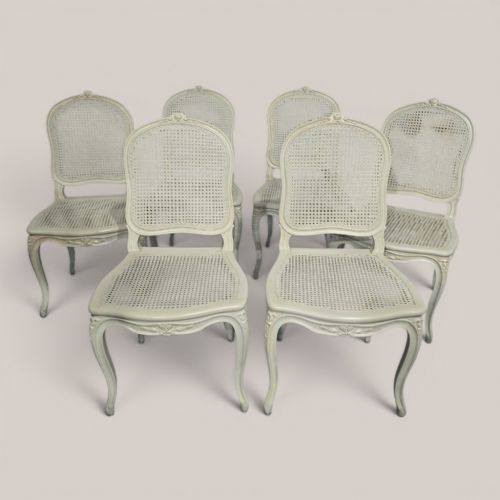
Many examples incorporate split cane or rattan panels into the back and sides for structural lightness.
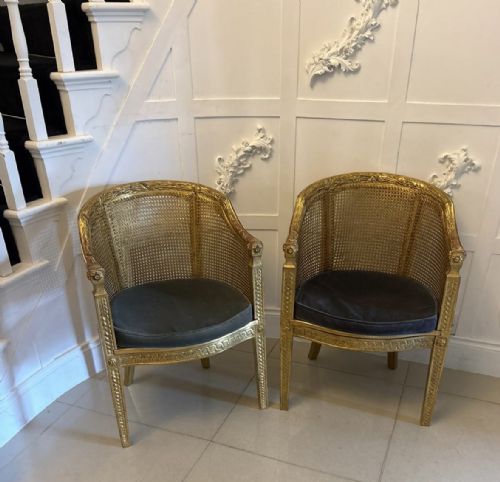
Finish treatments range from exposed natural wood and original paint to giltwood and parcel-gilt highlights, paired with silk, velvet, fabric, or leather upholstery.
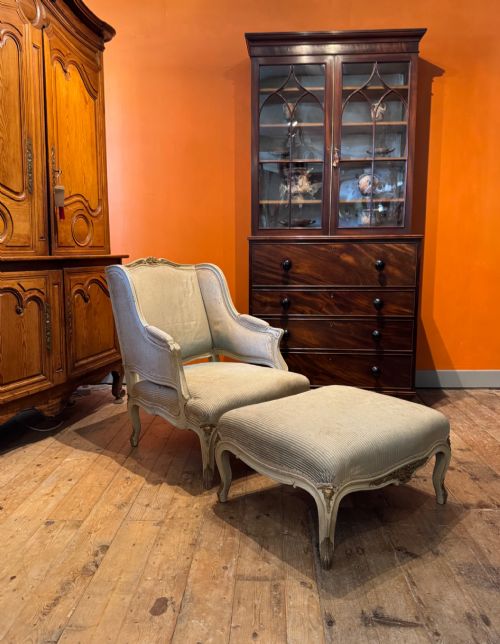
Several armchairs come paired with matching footstools or built-in library steps for maximum eighteenth-century lounging.
Assessing Craftsmanship
Quality rests in the crispness of the hand-carved woodwork and the structural integrity of the frame joints.
The tightness and regularity of the woven cane panels distinguish finer seating from ordinary production.
The survival of original surface treatments, whether historic paint or gold leaf, elevates the character of the piece.
The French Style Bergere Chairs Glossary
- Bergere
- An enclosed armchair featuring upholstered or caned sides and a built-in seat cushion. This form gained popularity in eighteenth-century France and inspired numerous later revivals.
- Giltwood
- Timber coated with a thin layer of gold leaf or gilt finish. This treatment creates a brilliant reflective surface often seen on formal salon seating.
- Cane
- Woven rattan material used to form breathable backrests and side panels. Split cane requires skilled hand-weaving to ensure long-term durability.
- Louis XV Style
- A design aesthetic characterised by asymmetrical curves, cabriole legs, and organic scrollwork. It reflects the rococo tastes of the mid-eighteenth century.
- Louis XVI Style
- A neoclassical design vocabulary defined by straight tapered legs, fluting, and geometric symmetry. It marks a shift towards classical restraint.
French Style Bergere Chairs: Frequently Asked Questions
What is a bergere chair?
A bergere is a traditional French armchair characterised by closed upholstered sides and a loose seat cushion. These seats combine the formality of a reception chair with deep, enclosed comfort.
Historically designed for indoor leisure, they provide a supportive enclosure that sets them apart from open-framed armchairs.
How do I identify Louis XV and Louis XVI styles?
Louis XV style pieces display flowing curves, cabriole legs, and naturalistic carved motifs like foliage and flowers. The overall silhouette is organic and fluid.
Louis XVI pieces introduce straight lines, fluted columns, and symmetrical geometric forms inspired by classical antiquity.
Are these chairs comfortable for daily use?
These armchairs are built with deep proportions and supportive backrests designed for extended periods of reading or conversation. The inclusion of upholstered cushions or tight padding adds to their relaxed seating posture.
Placing them in a study, library, or drawing room offers a practical seating option with historic character.
What does original paint mean on an antique chair?
Original paint refers to the historic decorative surface applied to the wooden frame, which has survived without modern repainting. This layer often shows authentic wear, softening the visual impact of the colour.
Collectors prize original paint or gilt finishes because they preserve the true age and decorative history of the furniture.