



French Sevres Urns
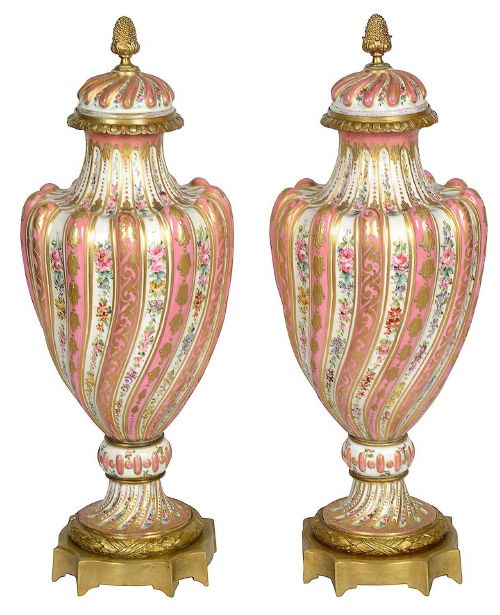
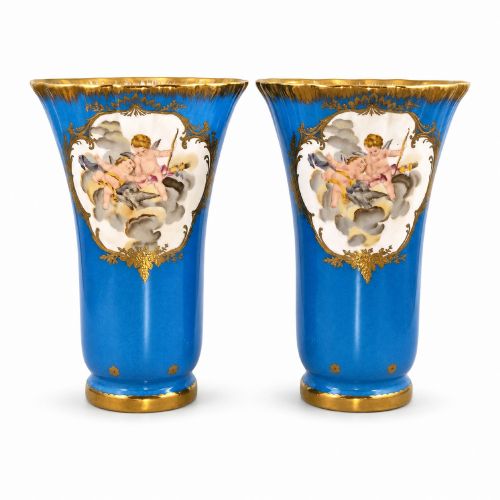
French sevres urns bring heavy nineteenth-century ormolu mounts and hand-painted porcelain panels into a room.
French Sevres Urns
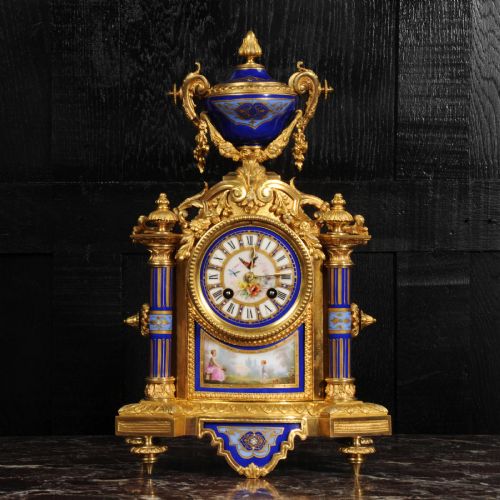
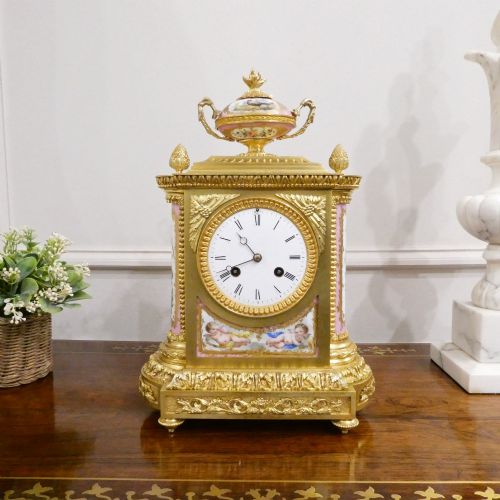
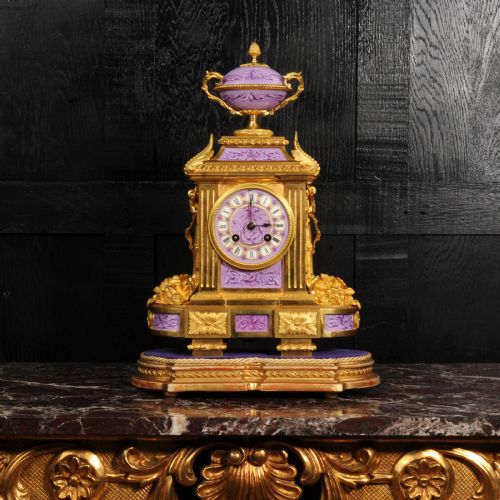
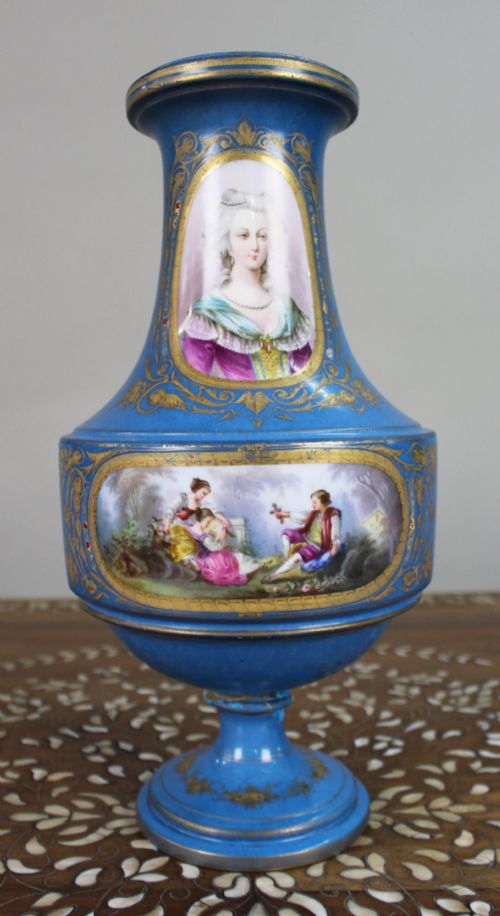
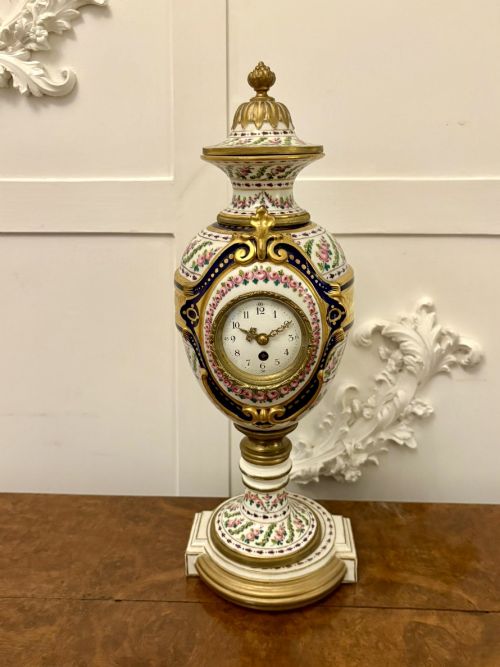
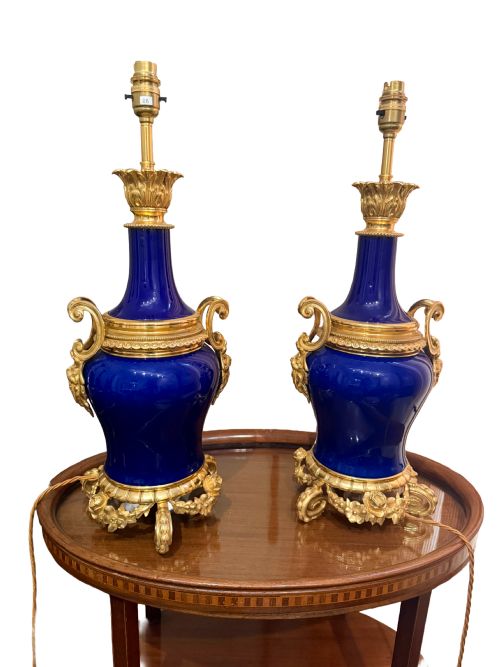
When you search for french sevres urns, you encounter nineteenth-century decorative pieces that take the form of lidded vases, mantel clocks, and garniture sets. These objects originate from French workshops producing work in the Louis XVI style and the Napoleon III period, often utilising blue ceramic or bleu céleste porcelain.
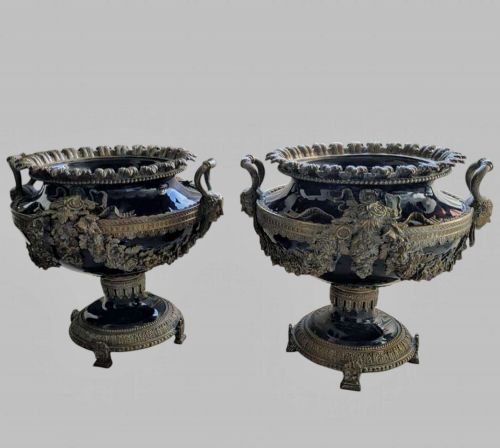
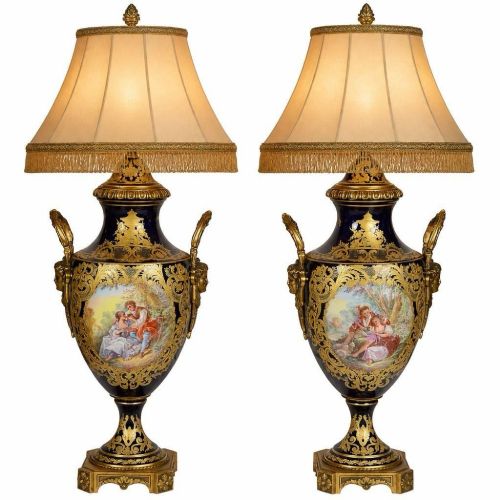
You meet pairs of tall lidded vases alongside single monumental pieces mounted in gilt bronze or ormolu. The forms reflect nineteenth-century revivals of Rococo and classical taste, executed with hand-painted details on porcelain bodies.
Materials and Technique
The construction combines porcelain bodies with cast ormolu and gilt bronze mounts, secured with metal hardware. Artisans applied hand-painted pigments over cobalt blue grounds and enamel accents before mounting the ceramic sections into metal frames.
Makers shaped the porcelain into urns, vases, and clock cases, then integrated brass, gold leaf, and glass domes for garniture sets. The combination of ceramic firing and metal chasing required multiple specialist workshops to complete a single piece.
French Sevres Urns Retail Price Guide 2026
Typical asking prices for french sevres urns among the pieces listed under this phrase on Sellingantiques today, from the lower quarter to the upper quarter. They describe what is for sale here now, not the wider market.
Listings feature pieces spanning the nineteenth century, with clock movements by makers such as Japy Freres and Vincenti of Paris.
Standards of Execution
Quality rests in the crispness of the gilt bronze or ormolu mounts and the finesse of the hand-painted porcelain panels. Heavier, more deeply chased metal mounts and finely articulated hand painting separate ambitious works from simpler commercial output.
The integration between the ceramic body and the metal mounts determines the success of the piece. Superior examples show precise alignment where the porcelain sits within its bronze framework, without awkward gaps or mismatched patination.
Japy Freres·Jean-Baptiste Delettrez·Achille Brocot·Samson Paris·Vincenti of Paris
The French Sevres Urns Glossary
- Ormolu
- Gilded bronze mounts applied to furniture, clocks, and porcelain vessels. The technique uses mercury gilding on cast bronze to create a durable golden finish.
- Bleu Céleste
- A bright sky-blue ceramic ground colour developed in eighteenth-century France and widely imitated during the nineteenth century. It provides a vivid backdrop for painted reserves.
- Garniture
- A set of matching decorative objects, typically a clock flanked by a pair of urns or vases. These sets were designed to sit together on a mantelpiece.
- Jardinière
- An ornamental receptacle designed to hold plants or flowers. In nineteenth-century French ceramics, these often share the colour palettes and mounts of contemporary urns.
French Sevres Urns: Frequently Asked Questions
How were french sevres urns used?
These pieces served primarily as decorative ornaments on mantelpieces, often paired with matching clocks as part of a garniture set. Wealthy households displayed them in reception rooms to demonstrate taste and access to French luxury goods.
While some functioned as vessels with removable lids, their role remained overwhelmingly visual rather than practical. They were positioned to catch the light of lamps and candles through their gilt bronze mounts and painted surfaces.
What is a clock garniture?
A clock garniture is a matched set consisting of a central mantel clock accompanied by two flanking urns or vases. These suites were manufactured as a single decorative unit to create a balanced display on a fireplace mantel.
The pieces share identical materials, such as bleu céleste porcelain and ormolu mounts, ensuring a cohesive visual statement. Surviving sets frequently retain their original arrangement and proportions.
How do you date nineteenth century pieces?
Dating relies on stylistic markers, maker signatures stamped on clock movements, and manufacturing techniques recorded in the piece. Nineteenth-century examples often combine Louis XVI revival forms with Victorian production methods.
Working mechanisms by makers like Japy Freres or Vincenti provide specific production windows. Comparing the style of the gilt bronze mounts and the ceramic body helps narrow the decade of origin.
How do you care for ormolu and porcelain?
Maintenance requires dry dusting with a soft brush to keep dust from settling into the crevices of the ormolu casting. Moisture and commercial metal cleaners should be avoided because they can strip the historic gilding from the bronze.
Porcelain surfaces respond well to gentle cleaning with a dry microfiber cloth. Placing the pieces away from direct sunlight and heat sources protects the painted enamel and hand-applied pigments.