

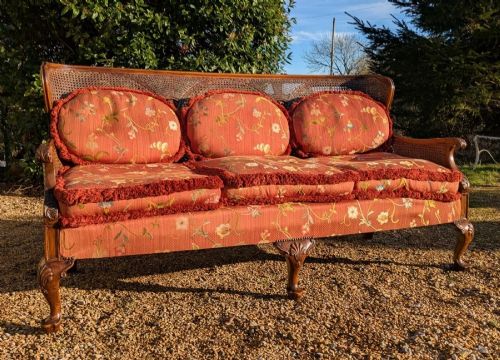


French Settee Couch
A French settee couch brings sculptural woodwork and generous seating to a room, offering the elegance of periods ranging from Napoleon III to Art Deco.
French Settee Couch
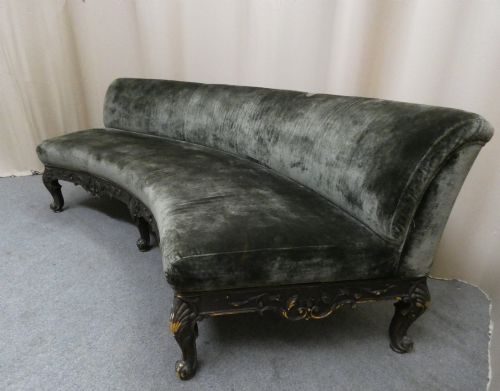
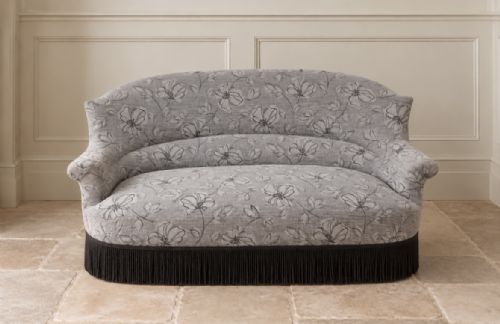
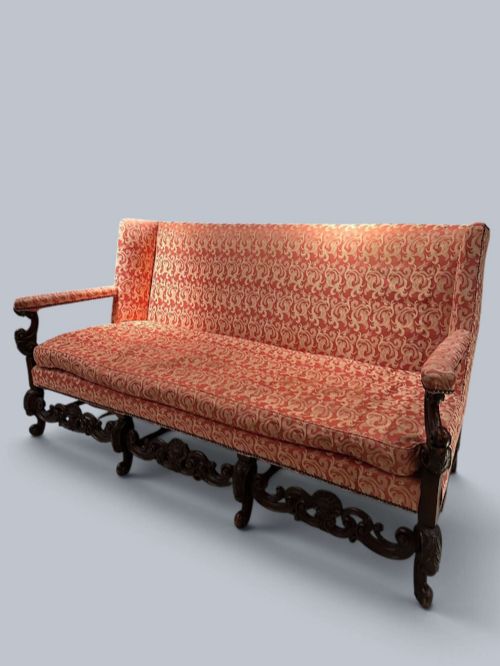
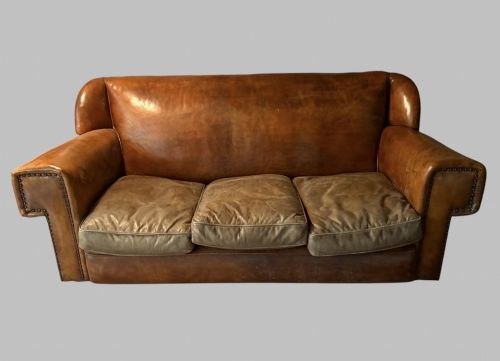
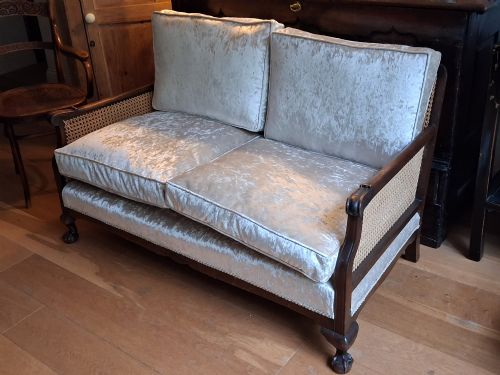
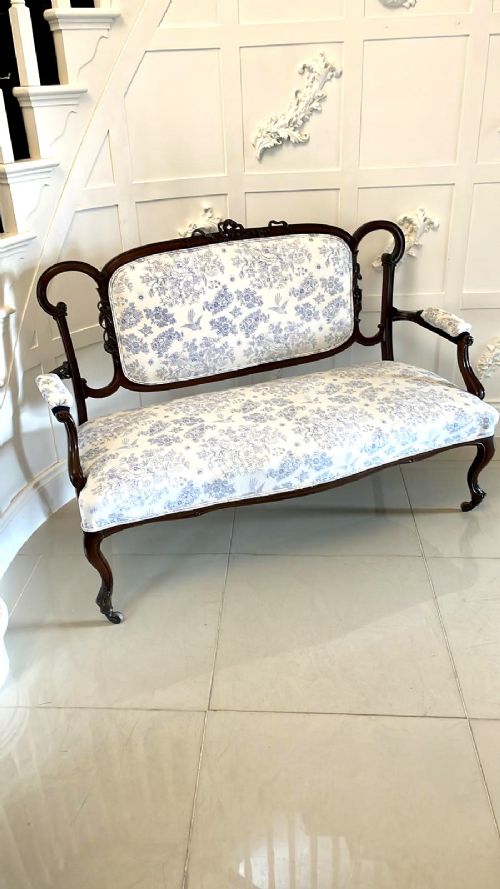
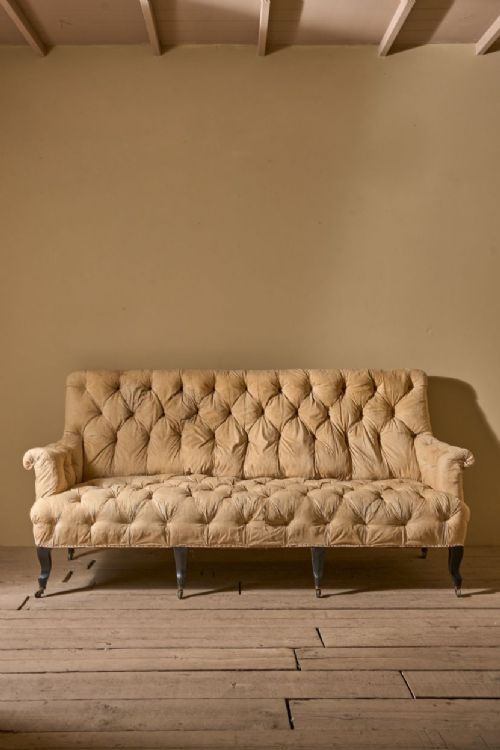
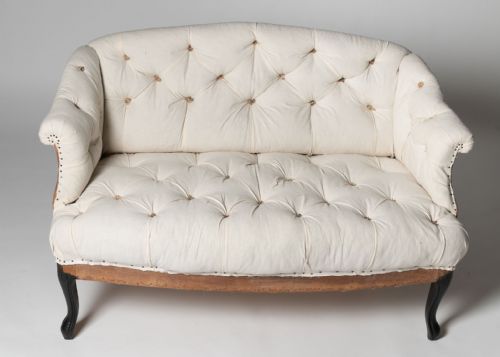
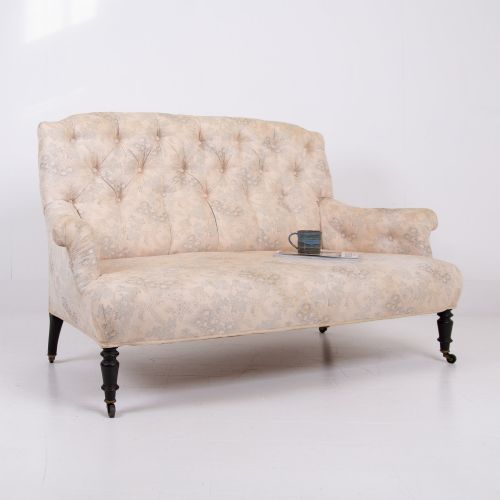
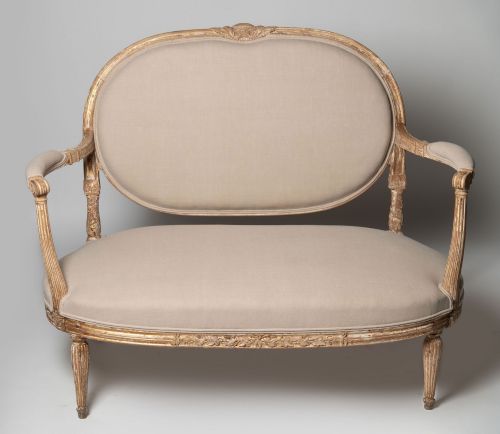
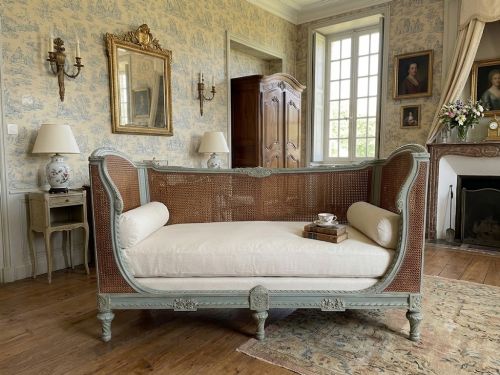
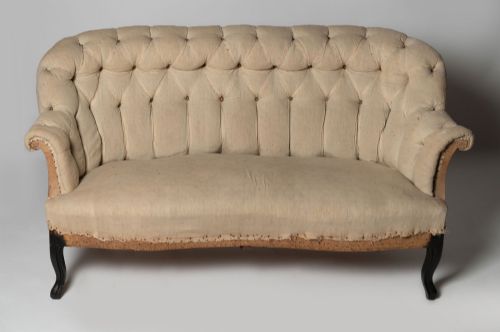
A French settee couch combines seating for multiple people with decorative frames drawn from classical, revival, and modernist design traditions. When searching for a French settee couch, buyers encounter forms that range from carved giltwood salon pieces to cane-panelled bergères and upholstered daybeds.
The pieces appearing on this page span the nineteenth and twentieth centuries, including Victorian, Louis XVI style, and Art Deco interpretations. Walnut, mahogany, and giltwood provide the primary structures, often paired with velvet, silk, or leather upholstery.
Makers adapted traditional seating into distinct regional variants, producing items labelled as canapés, day beds, and boudoir settees. These seating options served formal reception rooms and private chambers alike, adapting to changing domestic routines across decades.
Materials and construction methods
Carpenters shaped frames from solid hardwoods like walnut and mahogany, alongside softer woods prepared for paint or gilt finishes. Ormolu mounts and brass details frequently accent these structures, providing metallic contrast to carved wooden contours.
French Settee Couch Retail Price Guide 2026
Typical asking prices for french settee couch among the pieces listed under this phrase on Sellingantiques today, from the lower quarter to the upper quarter. They describe what is for sale here now, not the wider market.
Listings feature walnut, mahogany, and giltwood frames paired with cane, velvet, and leather across nineteenth and twentieth-century periods.
Assessing craftsmanship and finish
The refinement of the wood carving dictates much of the distinction between examples, separating deeply undercut foliage and crisp mouldings from plain or mechanical shaping. Original gilding and integrated ormolu mounts retain greater visual harmony than later surface alterations.
The integrity of structural elements such as cane panels and joined frames determines durability during daily use. Frames maintaining original upholstery foundations or intact cane work demonstrate the longevity of the original workshop execution.
The French Settee Couch Glossary
- Canapé
- A traditional French term for a long upholstered sofa or settee, often featuring exposed wooden framing and carved details along the crest rail.
- Bergère
- An enclosed upholstered armchair or sofa characterised by solid wooden sides and typically incorporating woven cane panels.
- Giltwood
- Wood that has been coated with a thin layer of gold leaf or gesso, creating a bright metallic surface finish.
- Ormolu
- Gilded bronze used for decorative mounts and furniture hardware, common on neoclassical and revival pieces.
- Palisander
- A dense, dark exotic hardwood often utilised in Art Deco furniture for its strong grain patterns.
French Settee Couch: Frequently Asked Questions
How do I place a French settee couch in a modern room?
These settees work well as freestanding statement pieces in living spaces or bedrooms, where their carved profiles can be viewed from multiple angles. Pairing them with neutral walls allows the historic woodwork and textile colours to stand out.
Positioning the couch away from direct sunlight protects delicate silk or velvet upholstery from fading over time. Adequate clearance around the frame also highlights the distinct silhouettes characteristic of nineteenth and twentieth-century seating.
What is the difference between a settee and a couch?
Historically, a settee denotes a light wooden or upholstered seat designed for two or more people, frequently featuring an exposed structural frame. A couch often implies a more heavily upholstered piece intended for reclining or full relaxation.
In nineteenth-century French furniture, terms like canapé and boudoir settee overlap with modern definitions of sofas and daybeds. Examining the specific arm and back construction reveals the intended function of each individual piece.
Can I use cane furniture daily?
Cane panels constructed from woven rattan provide resilient flexibility when manufactured with tight, uniform strands. Regular use requires maintaining moderate indoor humidity to prevent the natural material from drying out and becoming brittle.
Placing supportive cushions on the seat helps distribute weight evenly across the cane web during extended periods of sitting.