



French Scroll Armchair
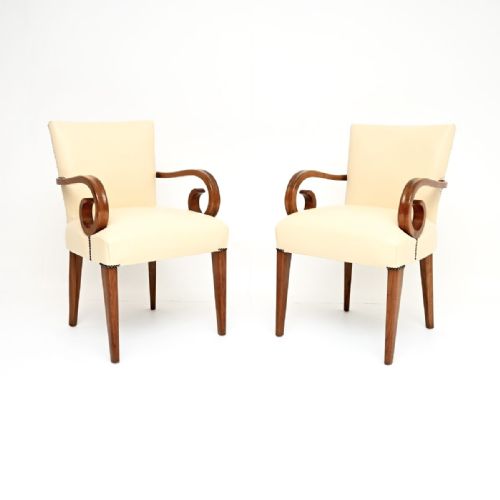
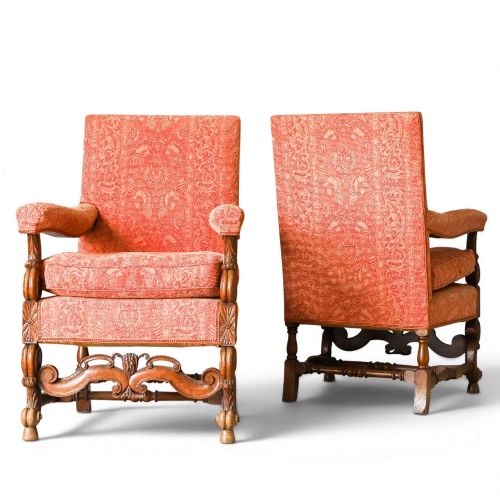
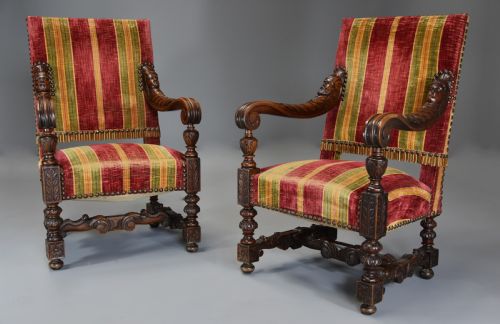
A French scroll armchair brings nineteenth-century seating character into a room through carved walnut, oak, and giltwood frames.
French Scroll Armchair
Buyers seeking a French scroll armchair encounter nineteenth-century seating across several distinct revival styles and regional interpretations. The selection spans the nineteenth century, including specific decades such as 1850, 1870, 1880, 1900, and the broader 19th Century period.
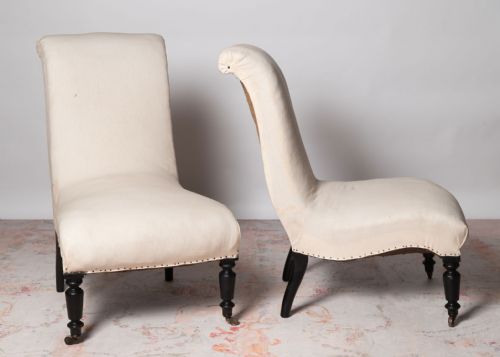
The forms extend beyond standard armchairs to encompass slipper chairs, desk chairs, and occasional chairs with scroll arms. Walnut, oak, rosewood, and giltwood provide the primary structures, paired with upholstery in fabric, linen, and velvet.
Examples on this page draw from French Napoleon III, French Empire, French Renaissance Revival, French Baroque, French Provincial, French Rococo Revival, and French Regence styles. Pairs frequently appear alongside single armchairs and high wing back designs.
Materials and construction methods
Carpenters shaped these frames from solid hardwoods like walnut, oak, and rosewood, applying hand-carved detailing across backs and arms. Giltwood surfaces received thin layers of gold leaf over preparation layers on wood.
Joinery relied on traditional pinned mortise and tenon construction to support weight across open arms and high wing backs. Upholstery techniques incorporated traditional webbing and stuffing beneath top layers of fabric, linen, velvet, and brass tacks.
French Scroll Armchair Retail Price Guide 2026
Typical asking prices for french scroll armchair among the pieces listed under this phrase on Sellingantiques today, from the lower quarter to the upper quarter. They describe what is for sale here now, not the wider market.
Some nineteenth-century chairs arrived on the market explicitly catalogued for recovering, waiting for fresh velvet.
Distinctions in craftsmanship and condition
Depth and crispness of hand-carving separate standard production from superior pieces, particularly in revival styles where relief work defines the silhouette. Timber selection dictates visual weight, with dense walnut and figured rosewood holding sharper profiles than softer woods.
Structural integrity of the frame joints and original gilding or polish condition determine overall preservation. Pieces retaining period upholstery materials or those designated for recovering present different pathways for restoration.
The French Scroll Armchair Glossary
- Scroll arm
- An armrest curving outward or inward in a spiral scroll profile. This shape defines the characteristic silhouette of these nineteenth-century seats.
- Giltwood
- Timber coated with gold leaf or gesso and gilt powder. It appears frequently on formal revival seating.
- Napoleon III style
- A nineteenth-century French design movement reviving diverse historical aesthetics under the Second Empire. Pieces often feature elaborate upholstery and dark woods.
- Renaissance Revival
- A nineteenth-century style borrowing heavy architectural motifs from the sixteenth century. Oak armchairs from this movement display deep relief carving.
- Slipper chair
- A low-seated upholstered chair originally designed for bedrooms. These pieces often feature scroll backs without armrests.
French Scroll Armchair: Frequently Asked Questions
What is a French scroll armchair?
A nineteenth-century seat featuring curved scroll arms, originating in France across various revival styles. These pieces utilise woods such as walnut, oak, and giltwood.
Craftsmen built them as open armchairs, desk chairs, and slipper chairs, often pairing carved frames with fabric or velvet upholstery.
How do I date a French armchair?
Dating relies on stylistic markers from nineteenth-century revival movements, timber choices, and construction methods. The listed pieces span specific decades like 1850, 1870, 1880, and 1900.
Cabinetmakers of different decades favoured distinct vocabulary, moving from Empire formality to Renaissance revival heaviness or Napoleon III eclecticism.
Where should I place a desk chair?
Desk chairs suit studies, libraries, or writing tables where the compact rosewood or walnut frame fits comfortably underneath. Their lower profiles and supportive backs accommodate working environments.
Ensure the height matches the desk surface before positioning the chair within a room.
How do I care for giltwood frames?
Giltwood requires gentle dusting with a soft, dry brush to protect the delicate gold leaf surface from abrasion. Avoid liquid cleaners and direct sunlight to prevent the finish from degrading.
Maintaining stable indoor humidity prevents the underlying wood and gesso from cracking.