




French School Figurative Oil
French school figurative oil paintings capture intimate human moments and grand interiors across centuries of artistic tradition.
French School Figurative Oil
A french school figurative oil brings together centuries of European portraiture, landscape figures, and domestic interior scenes. Buyers seek these canvases for their rich depiction of human subjects, ranging from classical portraits of young ladies to bohemian studio life.
The pieces on this page span from the eighteenth century through to the mid twentieth century, covering movements like impressionism, expressionism, and art deco. You will encounter works executed on canvas, copper, and wood panels, reflecting the varied mediums favoured by continental artists.
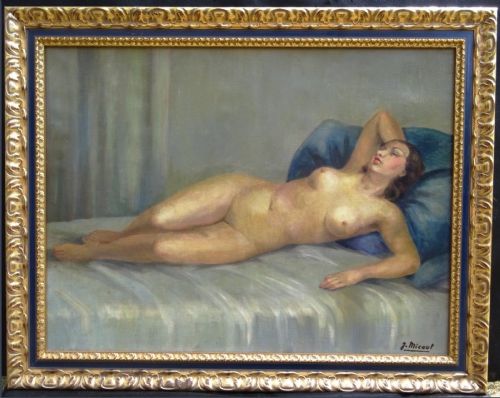
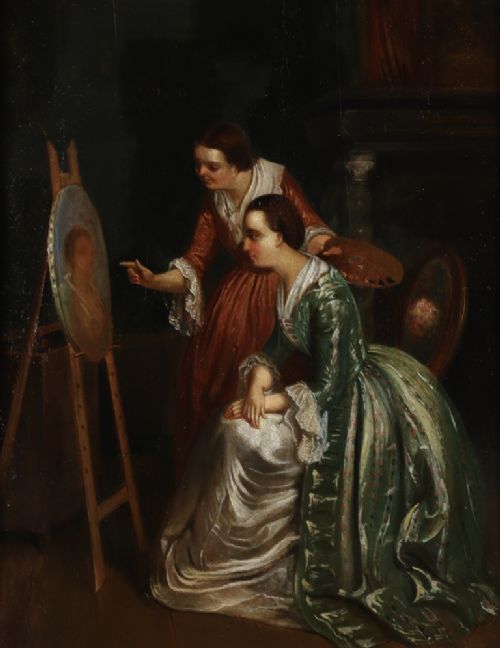
Subjects include solitary female nudes, ballroom gatherings at Versailles, children with animals, and artists with their clients. Each painting records a specific moment in French visual culture, preserved through oil paint.
Materials and Techniques
Artists built these works primarily using oil paint applied to canvas, wood panels, or copper plates. The handling of the medium varies from smooth, academic layering in earlier periods to the looser, textured brushwork characteristic of later impressionist and expressionist output.
Supports range from standard woven canvas stretched over wooden frames to rigid panels of wood and metal. Gilt wood and moulded frames frequently enclose these paintings, augmenting the visual weight of the composition.
Materials in these listings include oil paint, canvas, wood, gilt wood, and copper.
Assessing Quality and Execution
Quality rests in the anatomical confidence of the figurative drawing and the sophistication of the colour palette. Stronger works demonstrate a secure command of light and shadow, particularly in the rendering of flesh tones and fabric textures.
The distinction between standard decorative pieces and finer works lies in the expressive vitality of the brushwork and the psychological depth of the portraiture. Provenance and identifiable studio connections also elevate the standing of a canvas within the range.
Gabriel Dauchot·Pinchus Krémègne·Frederick Bartman·Michel Katzaroff
The French School Figurative Oil Glossary
- Rococo
- An ornate style originating in France characterised by asymmetry, scrollwork, and light pastel palettes. It frequently depicts leisurely aristocratic scenes.
- School of Paris
- A term describing the diverse community of artists who worked in Paris during the early twentieth century. Many foreign and domestic painters contributed to this modern milieu.
- Fauvism
- An early twentieth century movement noted by strong colours and fierce brushwork over representational reality. Painters in this circle liberated colour from its descriptive role.
- Impressionism
- A nineteenth century painting style focusing on light and its shifting qualities. Practitioners prioritised small, thin brush strokes and open composition.
- Provenance
- The chronology of the ownership of a painting. Documented histories substantiate the authenticity and background of a work.
French School Figurative Oil: Frequently Asked Questions
What defines a french school figurative oil?
These works are oil paintings produced by artists trained or working within the French artistic tradition, focusing primarily on human subjects. They encompass portraits, nudes, and narrative genre scenes.
The scope stretches from eighteenth century copper panels to mid twentieth century modernist canvases, capturing the evolution of continental painting techniques.
How do I date an old painting?
Dating relies on stylistic markers, the material of the support, and construction methods of the frame or stretcher bars. Eighteenth century works often appear on copper or heavy linen, whereas twentieth century pieces lean towards modernist abstraction.
Signatures, exhibition labels, and written inscriptions on the reverse provide additional chronological clues.
Where were these paintings displayed?
Historically, these oils hung in Parisian apartments, country chateaux, and artist studios. They served as personal portraits, decorative salon pieces, or experimental studies.
Today, they suit domestic interiors seeking traditional character or mid century artistic depth.
How should I care for an oil painting?
Keep paintings away from direct sunlight, high humidity, and rapid temperature fluctuations to protect the canvas and the oil binder. Dust surfaces gently with a soft, dry brush without applying pressure.
Avoid using water or chemical cleaners on the paint layer or the gilt wood frames.