


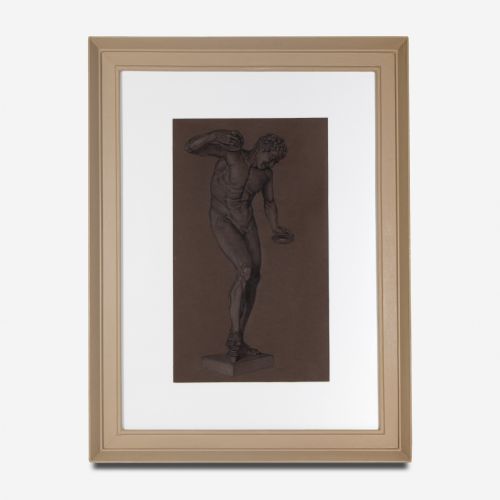


![Pen and Ink Sketch - Female Nudes by William Edward Frost [1810-1877]](https://www.sellingantiques.co.uk/photosnew/dealer_kendallhouse/dealer_kendallhouse_full_1758970795762-8493507346.jpg)


19th Century Nude Artwork
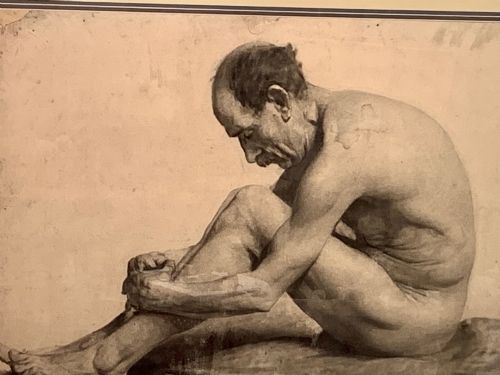
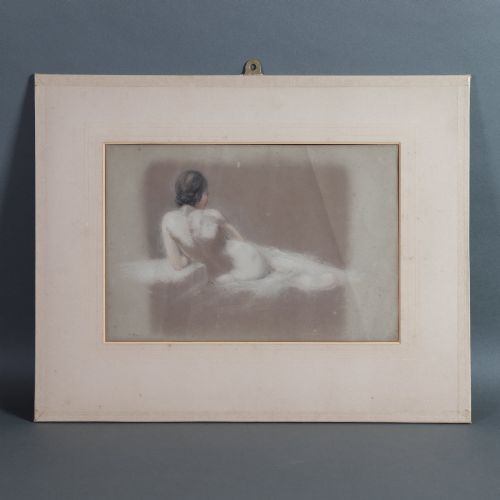
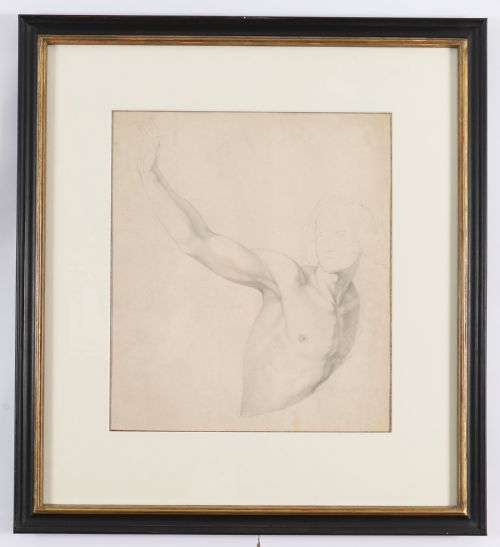
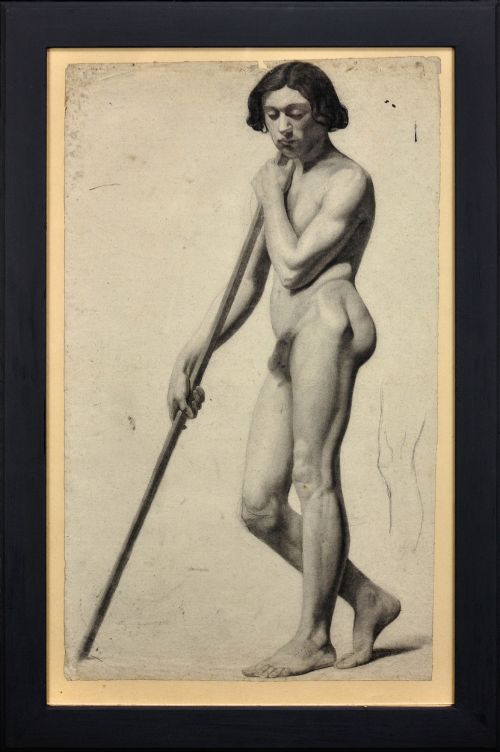
These 19th century nude artwork examples capture the human form through academic life studies, classical engravings, and oil paintings.
19th Century Nude Artwork
When you search for 19th century nude artwork, you encounter figural studies, academic life drawings, and oil paintings created across the nineteenth century. These pieces record the human form through rigorous training methods used in European art schools.
The selection on this page ranges from graphite and charcoal drawings on paper to oil paintings on panel and canvas. You meet works spanning the 1800s, 1850s, and late nineteenth century, reflecting classical traditions and academic realism.
Materials and methods
Artists executed these works using graphite, charcoal, pen and ink, and oil paint applied to paper, wood panels, or canvas. Many pieces originated as life studies in academic settings, capturing musculature and posture through direct observation.
Framed works often incorporate period wooden frames enhanced with gesso and gilt wood details. These traditional mountings support and protect works on paper and delicate oil paintings.
Materials documented in the inventory comprise paper, wood, glass, charcoal, oil paint, graphite, gilt wood, and gesso.
Distinctions in quality
Quality in these artworks depends upon anatomical precision, line confidence, and the handling of light and shadow across the human form. Stronger examples demonstrate an assured grasp of proportion and volume, whether executed in rapid pen sketches or finished oil paintings.
The depth of academic training evident in the draughtsmanship separates routine student exercises from accomplished works by named artists and skilled schools. Materials such as fine oil paint on panel or well-preserved paper also influence the standing of a piece.
William Etty·Henry Arthur Roberts·James Clark·William Edward Frost·Fernand Jean Barbier
The 19th Century Nude Artwork Glossary
- Academic Realism
- A style of painting and drawing produced under the influence of European academies of art. It emphasises strict adherence to classical standards and precise anatomical rendering.
- Life Study
- A drawing or painting created from a live human model. These works served as foundational training for artists learning to capture the human form.
- Neoclassical
- A Western cultural movement drawing inspiration from the art and culture of classical antiquity. It prioritises clarity of form and restrained composition.
- Engraving
- A printmaking technique where an image is incised into a metal plate. The resulting lines hold ink to create the final printed image on paper.
19th Century Nude Artwork: Frequently Asked Questions
What defines a 19th century academic nude study?
An academic nude study is a drawing or painting executed as part of an artist's formal training in anatomy and proportion. These pieces focus strictly on the human form, often recording the pose of a model under studio lighting.
Such works frequently utilise graphite, charcoal, or oil paint on paper or panel. They reveal the rigorous methods taught in nineteenth-century art schools across Europe.
How do I care for works on paper?
Works on paper require protection from direct sunlight and high humidity to prevent fading and paper degradation. Framing behind UV-filtering glass helps preserve charcoal, graphite, and ink mediums.
Keep these artworks in stable indoor environments away from major temperature fluctuations. Proper mounting ensures the paper remains flat and unsupported by harmful adhesives.
What is the difference between an oil painting and a drawing?
Oil paintings utilise pigment suspended in drying oil applied to canvas or wood panels, offering rich colour and layered depth. Drawings employ dry or fluid mediums like graphite, charcoal, ink, or mixed media primarily on paper surfaces.
Drawings often capture immediate preparatory gestures or detailed anatomical studies. Oil paintings represent more finished compositions intended for display.
How are periods within the nineteenth century identified?
Periods are identified through stylistic cues, framing methods, artist signatures, and material characteristics. Academic realism and neoclassical traits typically align with specific decades of production.
Documentation, inscriptions, and historical context provided by the maker or school further clarify the dating. Comparison with dated works in archives supports accurate attribution.