



French Salon Bench
A french salon bench brings ornamental seating into a reception room, offering carved wooden frames and upholstered seats designed for formal entertaining.
French Salon Bench
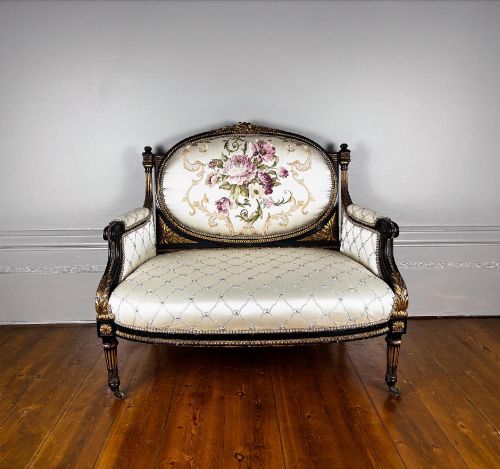
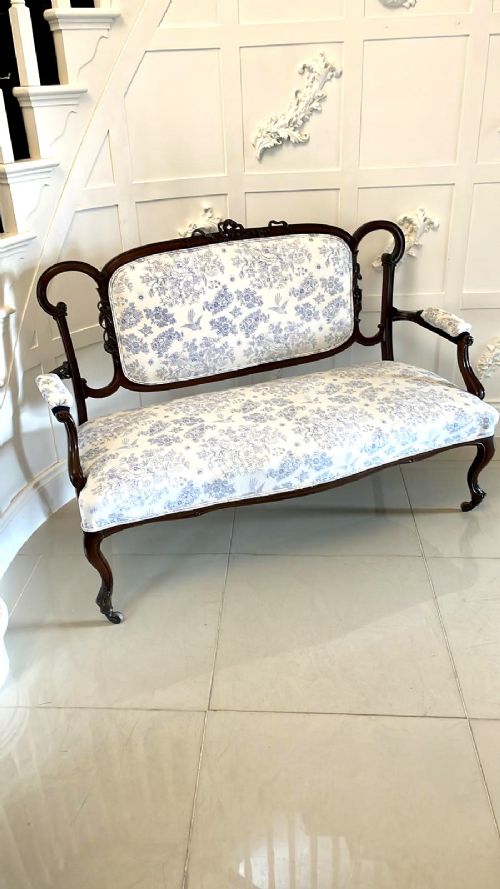
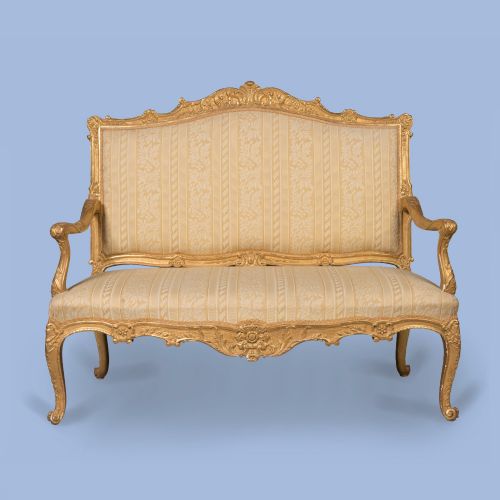
When you search for a french salon bench, you encounter seating forms that range from giltwood canapés to walnut settees and boudoir love seats. These pieces belong primarily to the nineteenth century, with revivals spanning Louis XV, Louis XVI, and Empire styles.
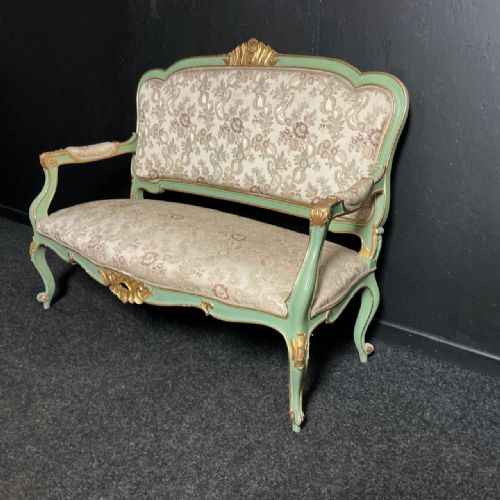
The most common formats on this page are two-seater and three-seater sofas alongside occasional salon stools and ottomans. Frames display carved woodwork, painted surfaces, and occasional parcel gilt highlights.
Originating from formal reception spaces, these seating options combine decorative timber framing with textile upholstery such as silk, velvet, and patterned fabrics.
How they were made
Maker workshops utilised dense hardwoods such as walnut, mahogany, and beech to construct resilient frames capable of supporting intricate hand-carved ornamentation. Giltwood pieces received layers of gold leaf applied over preparation grounds to achieve a reflective metallic finish.
Upholstered sections relied on traditional stuffing methods, securing textiles like silk, velvet, and standard fabrics directly to the wooden framing with brass tacks or piping. Ebonised and painted finishes involved treating the timber base prior to final assembly.
French Salon Bench Retail Price Guide 2026
Typical asking prices for french salon bench among the pieces listed under this phrase on Sellingantiques today, from the lower quarter to the upper quarter. They describe what is for sale here now, not the wider market.
Listings feature nineteenth-century pieces spanning Louis XV Revival, Victorian, and Regency styles utilising giltwood, walnut, and silk.
What varies in quality
The sophistication of the hand-carved detail separates standard production from superior examples, particularly where floral motifs and scrollwork define the wooden frame. Crisp lines in giltwood and well-defined Ormolu mounts indicate careful craftsmanship during production.
The selection of upholstery materials and the integrity of the underlying timber structure dictate the overall standard of the piece. Walnut and mahogany frames retain their structural rigidity more effectively over decades of use.
The French Salon Bench Glossary
- Canapé
- An ornamental sofa featuring an upholstered seat and backrest set within a decorative wooden frame. This form frequently appears in Louis XV and Louis XVI revival schemes.
- Giltwood
- Timber coated with gold leaf or metallic powder to create a bright surface finish. This treatment characterises formal nineteenth-century salon seating.
- Ormolu
- Cast bronze mounted onto furniture frames and finished with gold gilding. This decorative addition appears on Empire revival pieces.
- Ebonised
- Timber treated with a dark stain or finish to resemble ebony. This technique provides a contrasting dark backdrop for parcel gilt highlights.
- Aubusson
- Tapestry weave utilised for upholstery panels on formal French seating. These textiles display pictorial scenes or floral patterns.
French Salon Bench: Frequently Asked Questions
What is a french salon bench?
A french salon bench is an upholstered seating piece designed for formal rooms, encompassing settees, canapés, and padded stools.
These items use carved wooden frames finished in giltwood, paint, or natural walnut.
How were these sofas used?
Owners placed these benches in formal reception spaces and boudoirs to accommodate guests during social gatherings.
Their decorative frames ensured they served as visual focal points within a room.
How do I identify revival styles?
Louis XV and Rococo revival pieces display curving cabriole legs, floral carvings, and asymmetrical lines.
Empire and Regency examples feature neoclassical geometry, stricter symmetry, and darker timber tones.
Are these benches comfortable?
Many salon benches feature padded backrests and upholstered seats designed for seated conversation.
Comfort levels depend on the original stuffing materials and the depth of the seating area.