





French Rush Chairs
French rush chairs bring honest provincial character to a room through woven seats and traditional timber frames.
French Rush Chairs
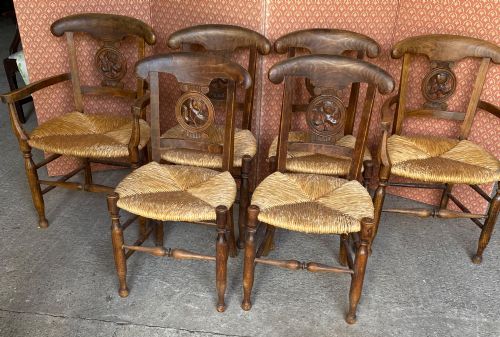
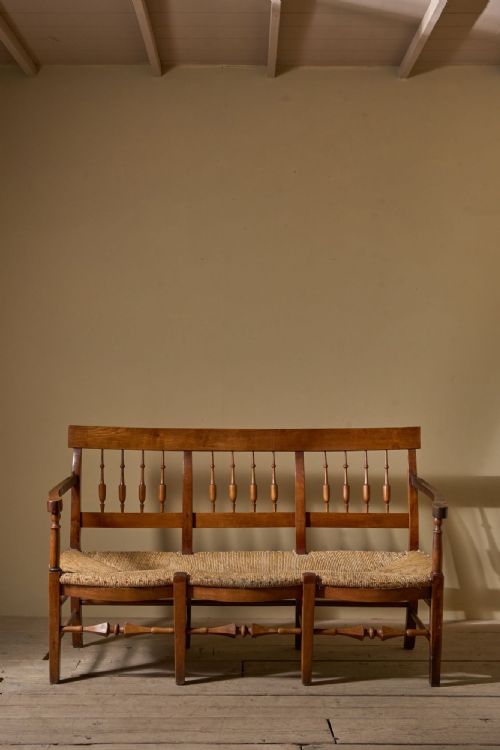
French rush chairs encompass dining chairs, side chairs, and hall benches created in provincial workshops across the nineteenth and early twentieth centuries. These pieces typically arrive in sets, ranging from pairs to groups of eight or twelve, designed for daily domestic use around the farmhouse table.
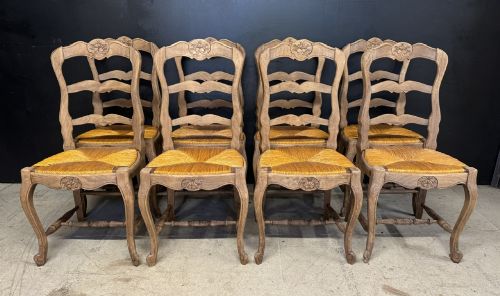
The aesthetic leans heavily toward French provincial, French country, and rustic country traditions, incorporating ladder backs and hoof feet. Surviving examples reflect the unpretentious tastes of rural households, where utility dictated the construction of dining and kitchen seating.
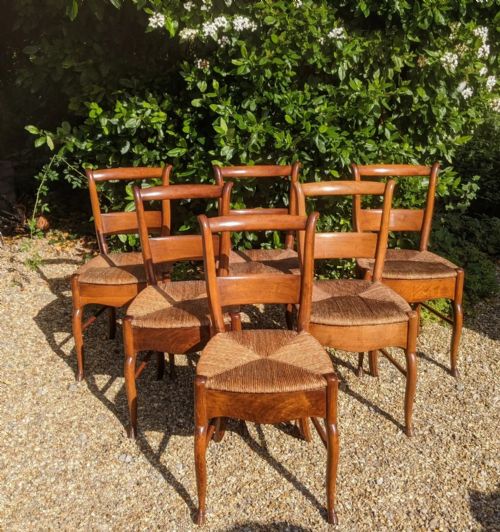
Buyers browsing french rush chairs most frequently encounter sets of six or eight dining chairs dating from around nineteen twenty or the nineteenth century. These configurations demonstrate the enduring appeal of traditional seating for modern and traditional interiors alike.
How they were made
Makers constructed these frames using native timbers including oak, fruitwood, walnut, and various hardwoods, often shaped into ladder backs and fitted with hoof feet. Wood was selected for local availability and durability, providing a sturdy skeleton to support the woven seating.
Seats were tightly woven using natural rush, creating a durable and resilient surface designed to withstand years of sitting. This fibrous material was worked by hand around the wooden rails, resulting in a textured, supportive pad that remains flexible.
French Rush Chairs Retail Price Guide 2026
Typical asking prices for french rush chairs among the pieces listed under this phrase on Sellingantiques today, from the lower quarter to the upper quarter. They describe what is for sale here now, not the wider market.
Some country chairs bear the subtle tooth marks of long-forgotten farmhouse pets on their lower stretchers.
What varies in quality
Quality rests in the harmony of the timber frame and the tightness of the rush weaving, where even tension across the seat ensures longevity and comfort. Superior examples retain their original structural integrity without excessive timber shrinkage or replacement stretchers.
The refinement of the carving on ladder backs and the subtle shaping of hoof feet distinguish finer provincial work from utilitarian pieces. Furthermore, sets that have survived intact without mismatched replacements command greater appreciation among collectors.
The French Rush Chairs Glossary
- Rush
- A marsh plant used in traditional basketry and seating. It is twisted and hand-woven around seat frames to form a durable, textured pad.
- Ladder back
- A chair back featuring horizontal slats between two upright posts. This design appears frequently in provincial seating.
- Hoof feet
- A carved foot style resembling an animal hoof. This decorative detail terminates the legs of certain nineteenth-century country chairs.
- Fruitwood
- Timber harvested from fruit-bearing trees such as cherry or pear. It was commonly utilised in provincial French furniture making for its fine grain and warm tone.
French Rush Chairs: Frequently Asked Questions
How do I care for rush seats?
Keep rush seating away from excessive moisture and direct heat sources to prevent the natural fibres from becoming brittle.
Vacuum gently using a soft brush attachment to remove dust from the woven crevices without damaging the strands.
Are these chairs comfortable for daily dining?
The woven rush conforms slightly to the body, providing a surprisingly supportive seat during long meals.
Adding loose squab cushions can increase comfort while preserving the visible woven texture.
How do I date an antique set?
Examine the timber joints, tool marks, and wear patterns on the feet and stretcher base to determine age.
Nineteenth-century pieces often display hand-cut joinery differences that separate them from later twentieth-century interpretations.
Can mixed sets be used together?
Matching sets remain the standard for formal dining spaces, but similar provincial designs blend harmoniously in a relaxed kitchen setting.
Height and ladder back proportions matter more than exact timber matches when grouping rustic seating.