




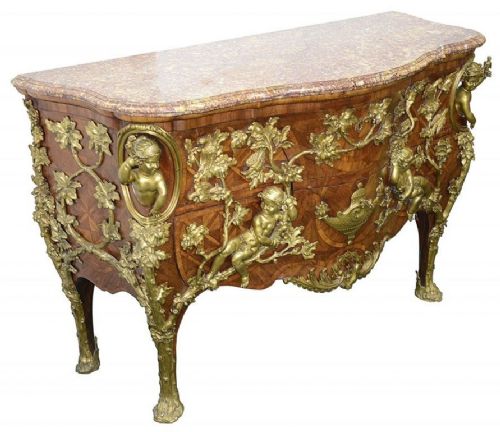

French Rococo Side Chests
French rococo side chests bring undulating curves and opulent mounts into a room, offering both sculptural presence and surface utility.
French Rococo Side Chests
When you search for french rococo side chests, you encounter pieces spanning the eighteenth century through to the revivals of the nineteenth and early twentieth centuries. The selection here leans heavily towards later revivals from the late nineteenth and early decades of the twentieth century, alongside genuine eighteenth-century examples.
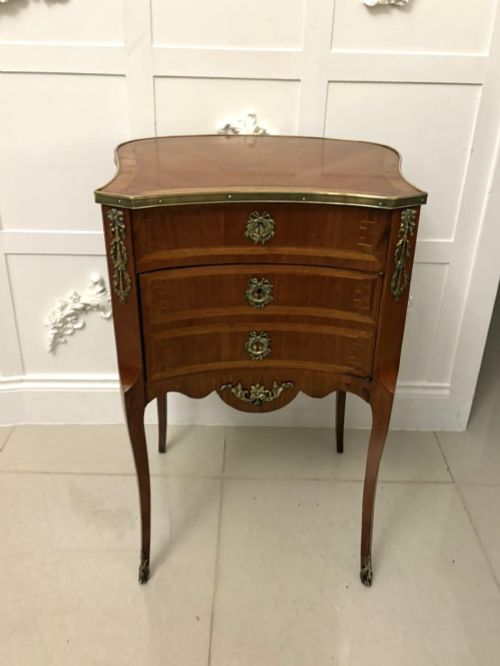
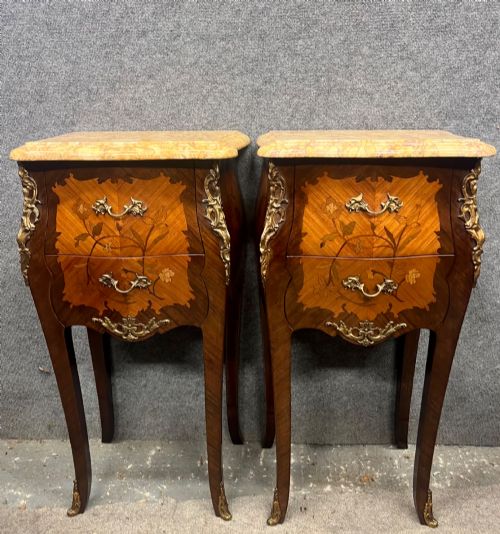
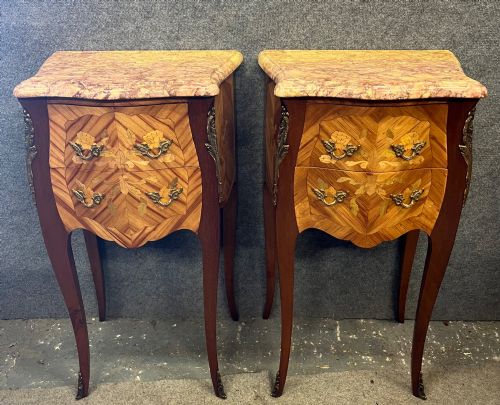
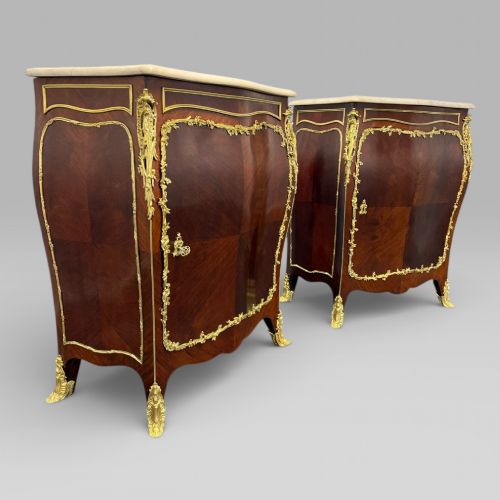
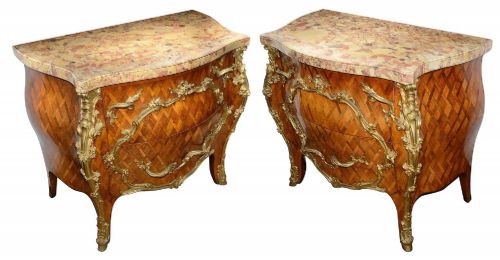
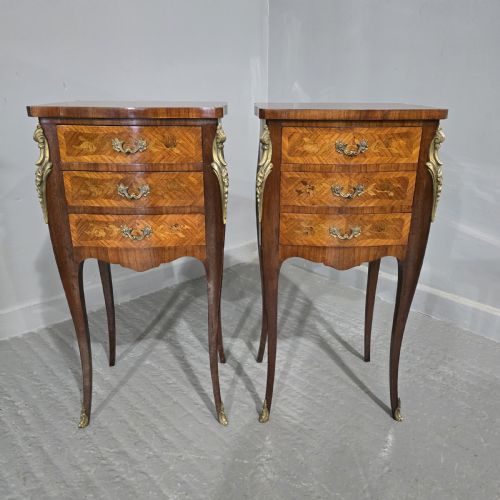
Forms vary from grand commodes and bow-fronted chests of drawers to neat bedside tables, lamp tables, and side cabinets. These pieces often feature serpentine or bombe silhouettes that define the fluid lines of the Louis XV style.
Origins trace directly to French cabinet-making traditions, whether created during the original eighteenth-century period or reproduced with skilled revival craftsmanship in the decades around nineteen hundred.
How they were made
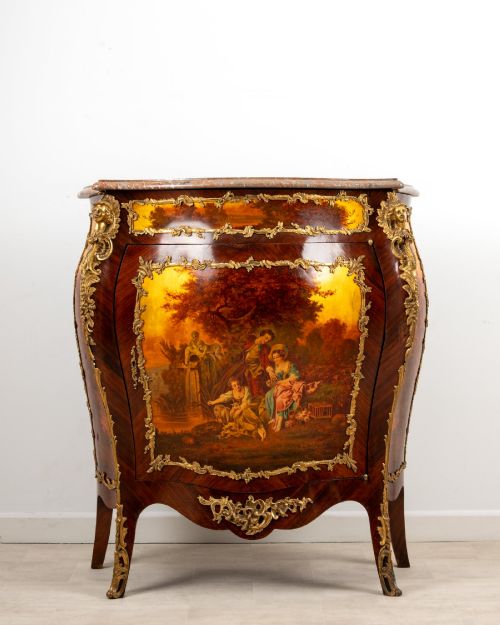
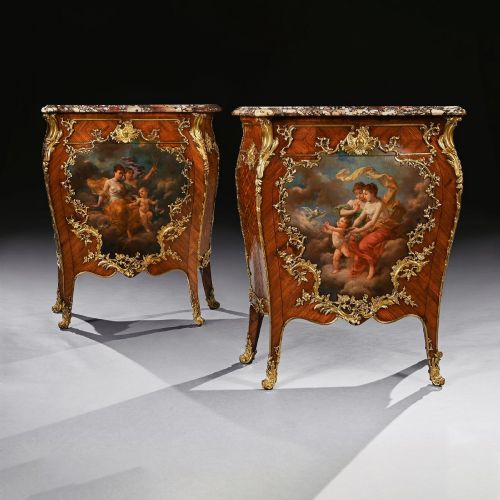
Maker workshops built these carcasses using timbers such as kingwood and walnut, often applying intricate marquetry patterns across the surfaces. Vernis Martin lacquer work also appears, bringing painted decorative scenes to the exteriors.
Carcasses are frequently topped with fitted marble slabs, ranging from standard stone to scagliola. Heavy cast metal mounts in ormulu, gilt bronze, and brass accent the corners, handles, and apron feet.
Listings feature pieces spanning the eighteenth, nineteenth, and early twentieth centuries, incorporating materials like kingwood, marble, ormolu, and lacquer.
What varies in quality
Distinction in these pieces rests upon the crispness of the gilt bronze and ormolu mounts and the precision of the marquetry inlays. Superior examples display fluid, hand-chased metalwork that integrates seamlessly with the timber curves.
The choice and thickness of the marble top and the architectural harmony of the bombe or serpentine proportions further separate standard production from exceptional cabinet-making.
E. Kahn·Charles Cressant
The French Rococo Side Chests Glossary
- Ormolu
- Gilded bronze mounts applied to furniture edges and corners. This technique provides metallic highlight against dark wood veneers.
- Bombé
- A swelling, outward-curving contour found on the front and sides of commodes and cabinets. It requires advanced carpentry to shape timber to these rounded profiles.
- Marquetry
- Fitted pieces of coloured wood veneer assembled to form decorative patterns or pictorial scenes. Craftsmen glue these thin sections onto the main structural carcase.
- Commode
- A low chest of drawers or cabinet originating in France. They typically feature decorative mounts and marble surfaces.
- Vernis Martin
- A simulated Japanese lacquer developed in France during the eighteenth century. It uses multiple resin layers to achieve a glossy, decorative finish.
French Rococo Side Chests: Frequently Asked Questions
Where should I place a side chest?
These chests suit drawing rooms, hallways, or bedrooms where their decorative fronts can be fully appreciated. Their surface tops provide a practical space for lamps or ornamental objects.
Pairs of smaller bedside chests work well flanking a bed, echoing the symmetry popular in traditional interior schemes.
How do I care for marble tops?
Marble surfaces require gentle cleaning with mild soap and water to avoid dulling the polish. Acidic liquids like lemon juice or wine can etch the stone if left unattended.
Using coasters and placemats protects the polished surface from rings and scratches during daily use.
How do I distinguish eighteenth-century pieces from later revivals?
Examining the construction methods, timber shrinkage, and hand-cut joinery helps determine the age of a commode. Eighteenth-century pieces show internal wear and construction techniques consistent with period hand tools.
Revival pieces from the nineteenth and twentieth centuries often utilise machine-sawn elements and standardised hardware while closely copying earlier styles.
What is the difference between a commode and a bedside table?
Commodes are larger chests of drawers designed as principal storage and display items for main rooms. They feature wider proportions and more elaborate mounts.
Bedside tables are scaled down in size to sit comfortably next to a bed, offering compact drawer or cupboard storage.