




French Rococo Revival Settee
A french rococo revival settee brings flamboyant 19th-century curves and ornate carved frames into a modern interior.
French Rococo Revival Settee
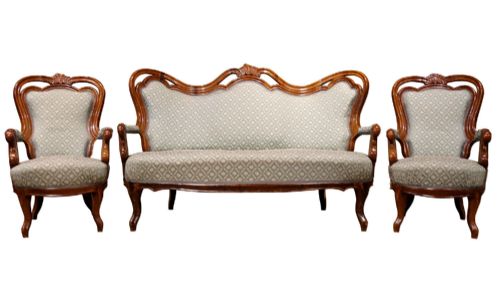
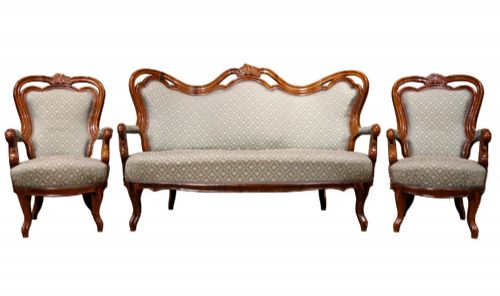
A french rococo revival settee encompasses grand salon suites, carved couches, and double end settees originating across the nineteenth century. These seating options draw heavily on Louis XV style, featuring sweeping lines designed for formal entertaining and opulent domestic spaces.
The selections available here range from compact mahogany two-seater sofas to expansive walnut three-piece salon suites and gilded chaises longues. Makers during the Victorian era and into the early twentieth century reinterpreted continental forms with distinct regional flourishes.
Buyers frequently encounter robust walnut frames alongside mahogany and rosewood structures, often paired with elaborate upholstery fabric or velvet. Each piece reflects the enduring nineteenth-century fascination with exuberant rococo taste and French chateau aesthetics.
How they were made
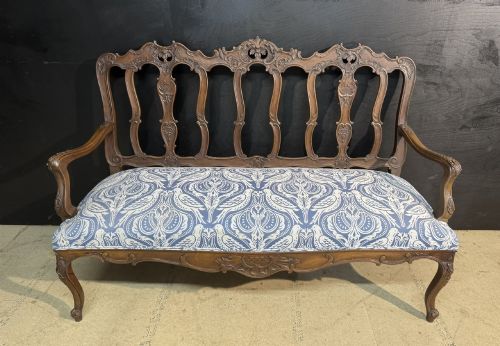
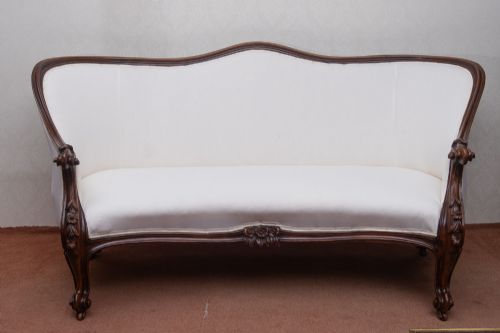
Craftsmen utilised dense hardwoods such as walnut, mahogany, and rosewood to construct sturdy frames capable of supporting intricate, deep relief carving. Giltwood and gold painted finishes appear frequently, highlighting the organic motifs and asymmetric cartouches characteristic of the revival style.
Traditional joinery secured the undulating serpentine rails and cabriole legs, while brass elements sometimes accented the structural framework. Interior padding and upholstery utilised period textiles, with velvet and patterned upholstery fabric tacked tightly over complex sprung bases.
Listings span from the mid-nineteenth century through the early twentieth century, highlighting walnut, mahogany, and rosewood constructions.
What varies in quality
The distinction between ordinary and exceptional seating lies primarily in the depth, crispness, and continuity of the hand carving across the wooden frame. Superior examples display fluid, sharply defined scrolls and floral motifs that integrate seamlessly into the structural woodwork rather than appearing superficial.
Proportion and the integrity of the underlying timber structure dictate the overall caliber of a settee. Pieces that retain their original giltwood surfaces or balanced wood grain without excessive structural fatigue command greater appreciation from discerning collectors.
The French Rococo Revival Settee Glossary
- Rococo Revival
- A nineteenth-century design movement that imitated the ornate, asymmetrical ornamentation and curving lines of the mid-eighteenth-century French court. This style favoured naturalistic motifs like C-scrolls, foliage, and shell patterns.
- Salon Suite
- A matched set of seating furniture, typically comprising a large settee and matching armchairs designed for a formal reception room. These suites unified the aesthetic of Victorian and continental drawing rooms.
- Chaise Longue
- An upholstered sofa in the form of a chair with a long seat large enough to support the legs. Nineteenth-century versions often featured a single scrolling end rest.
- Giltwood
- Wood that has been treated with gold leaf or gold paint to give a metallic sheen. It was frequently utilised on high-status nineteenth-century frames to mimic solid gold.
- Cabriole Leg
- A furniture leg that bends out in a convex curve and then tapers inward in a concave curve, ending in a pad, scroll, or hoof foot. This form is a defining characteristic of Louis XV inspired seating.
French Rococo Revival Settee: Frequently Asked Questions
How do I identify a true revival settee?
Look for nineteenth-century timber characteristics, traditional joinery methods, and the deep, hand-carved organic motifs typical of the period. Examining the construction underneath often reveals age-appropriate wear and period-specific framing.
Compare the proportions and decorative details against established regional patterns from the Victorian era or continental workshops.
Are these settees comfortable for daily use?
Many nineteenth-century frames offer generous seating proportions, though original interior padding may feel firmer or require restoration for modern lounging. Settees with upholstered backs and sprung seats provide substantial support.
Consider whether the seating depth suits your living space and daily routine before placing it in a primary seating area.
What rooms suit a rococo revival sofa?
These ornate pieces function well as statement items in living rooms, grand hallways, or spacious bedrooms. Their sweeping wooden frames and decorative upholstery demand adequate surrounding space to be fully appreciated.
Pair the settee with neutral walls to let the intricate woodwork and rich fabric take visual precedence.
How should I care for the carved wood?
Dust the intricate carvings regularly with a soft, dry cloth to prevent buildup in the recessed areas. Avoid placing the timber in direct sunlight or near heat sources to protect the finish and prevent warping.
Treat giltwood and polished walnut surfaces with gentle, non-abrasive cleaners specifically formulated for antique furniture.