


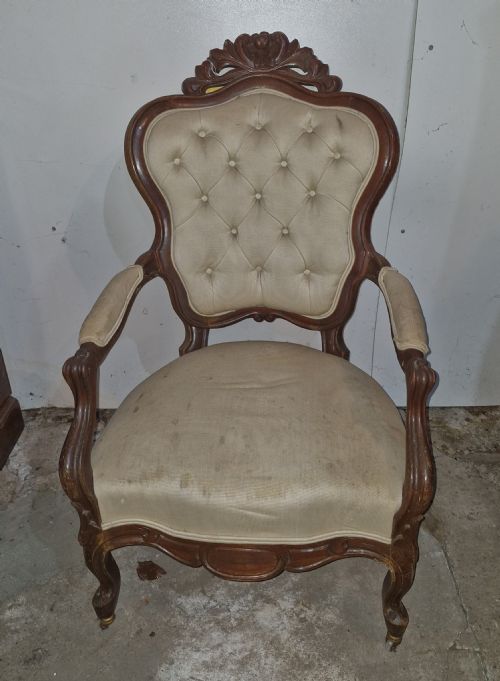
French Rococo Revival Armchairs
French rococo revival armchairs bring flamboyant eighteenth-century curves and rich gilt finishes into nineteenth-century seating.
French Rococo Revival Armchairs
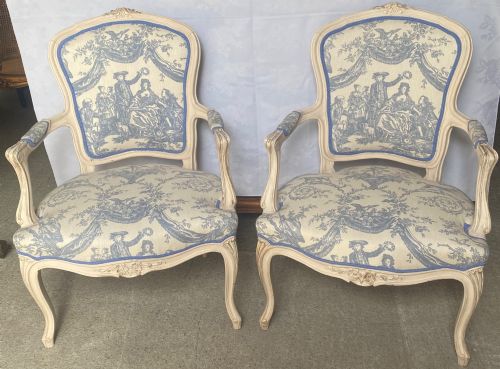
French rococo revival armchairs combine serpentine frames with ornate carving, drawing heavily on Louis XV and Napoleon III aesthetics. When searching for French rococo revival armchairs, buyers encounter seating designed for formal reception rooms and intimate salons alike.
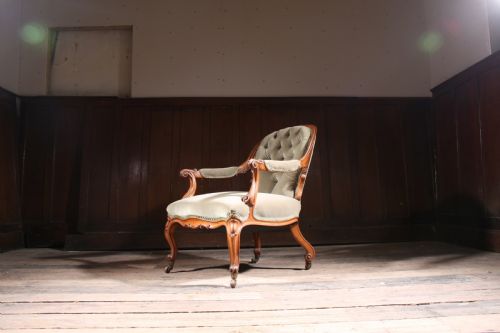
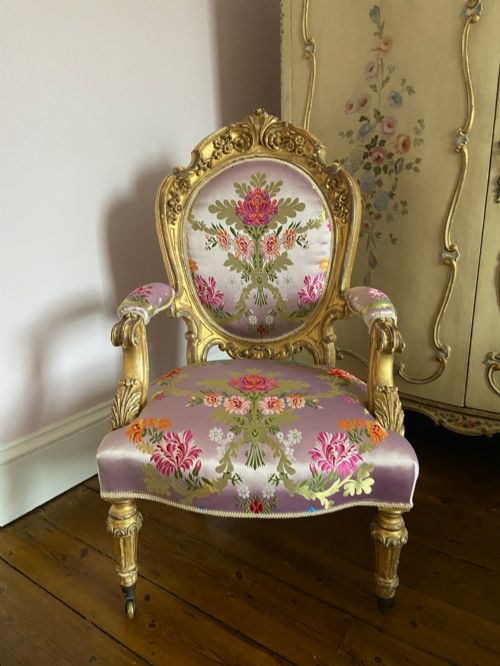
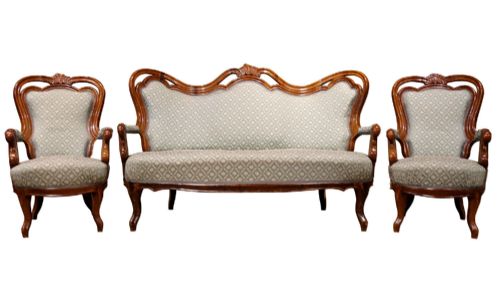
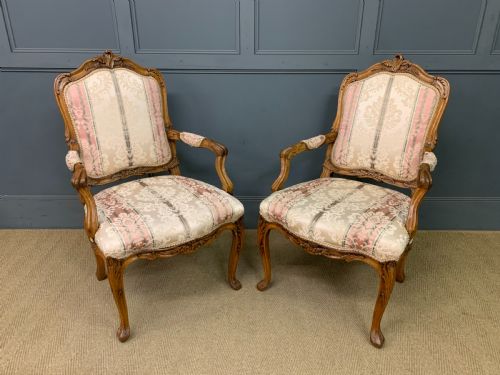
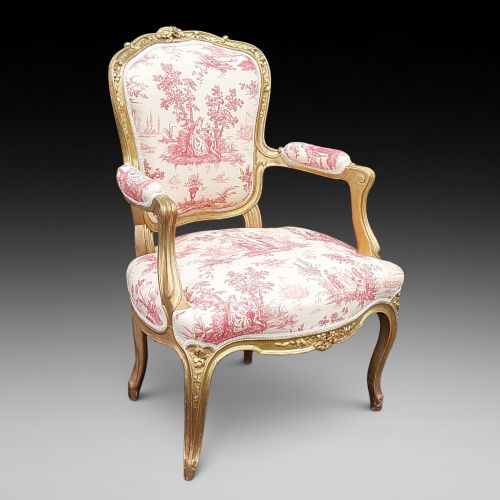
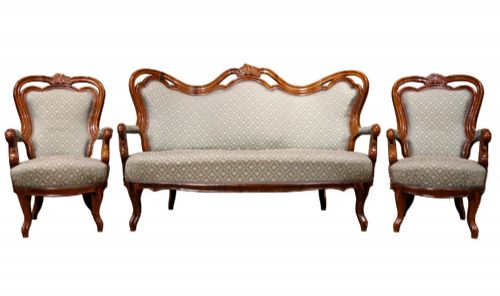
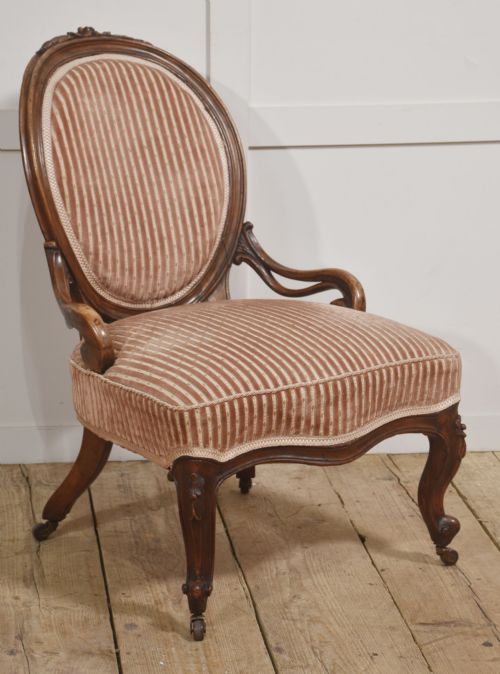
The versions most common here span the nineteenth and early twentieth centuries, heavily utilising walnut and giltwood. Makers shaped these frames into oval backs and open arm designs, often pairing them as matching salon suites.
Details range from exposed carved wooden structures to fully upholstered petit point and velvet coverings. Pieces appear in distinct regional interpretations, including English and continental adaptations of French models.
Assessing quality and craftsmanship
Quality rests upon the crispness of the hand-carved wooden ornament and the structural integrity of the joints. Superior examples display deep, flowing relief carving rather than shallow, mechanical shaping.
The choice of primary timber and the application of genuine gilding separate standard production from finer cabinetmaking. Upholstery materials also dictate grade, with heavy silk and fine petit point needlework marking higher tiers.
Vion et Baury Paris
The French Rococo Revival Armchairs Glossary
- Bergere
- An enclosed upholstered armchair with solid upholstered sides. These comfortable seats often include a loose cushion over a webbed base.
- Giltwood
- Timber coated with gold leaf or powder. This lustrous finish defines much of the revival furniture output.
- Petit point
- A fine count needlepoint embroidery executed on single-thread canvas. It frequently covers antique chair seats and backs with pictorial designs.
- Louis Quinze
- The French decorative style associated with the reign of Louis XV. Revival pieces replicate its asymmetrical curves and naturalistic motifs.
French Rococo Revival Armchairs: Frequently Asked Questions
How do I identify a true revival armchair?
Look for characteristic Louis XV elements such as cabriole legs, scroll feet, and asymmetrical cartouche motifs carved into walnut or giltwood frames.
Examine the construction methods and timber ageing to confirm nineteenth-century or early twentieth-century manufacture rather than modern reproduction.
Where were these chairs used historically?
These pieces belonged in formal drawing rooms, parlours, and private sitting rooms where entertaining took place. Their decorative presence signalled social standing and refined taste.
Pairs and larger salon suites allowed hosts to arrange matching seating groups for conversation.
How should I care for antique giltwood?
Giltwood surfaces require gentle dusting with a soft, dry cloth to protect the delicate gold leaf layer. Avoid liquid cleaners and modern polishes entirely.
Keep these armchairs away from direct sunlight and extreme humidity fluctuations to prevent the underlying gesso from cracking.
Can I use these armchairs daily?
These historic chairs serve well for relaxed daily seating provided the internal webbing and upholstery remain stable. Professional conservation ensures the antique frames support regular weight safely.
Placing them away from high-traffic areas protects the delicate carved woodwork and silk or velvet fabrics.