


French Parlor Chairs
French parlor chairs bring nineteenth-century reception rooms to life, offering decorative carved woodwork and graceful upholstery for daily seating.
French Parlor Chairs
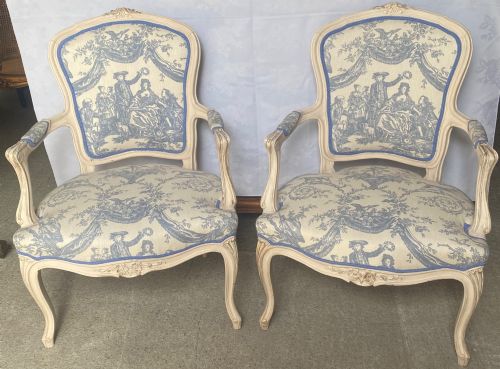
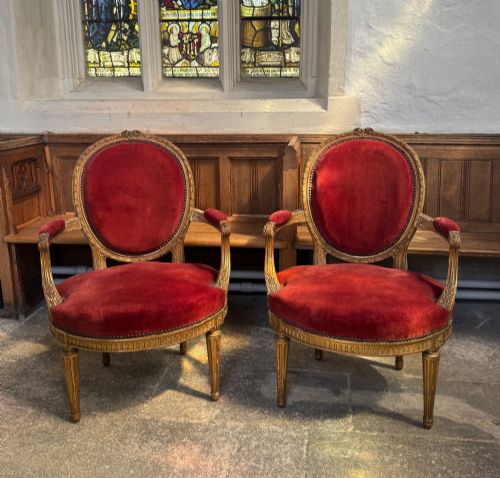
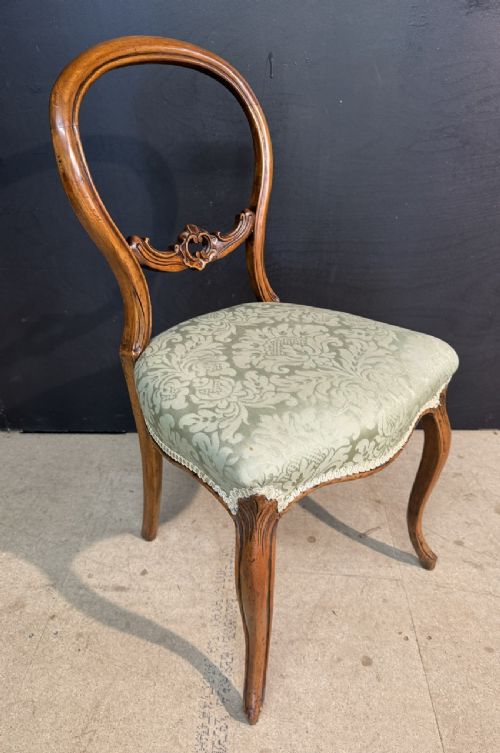
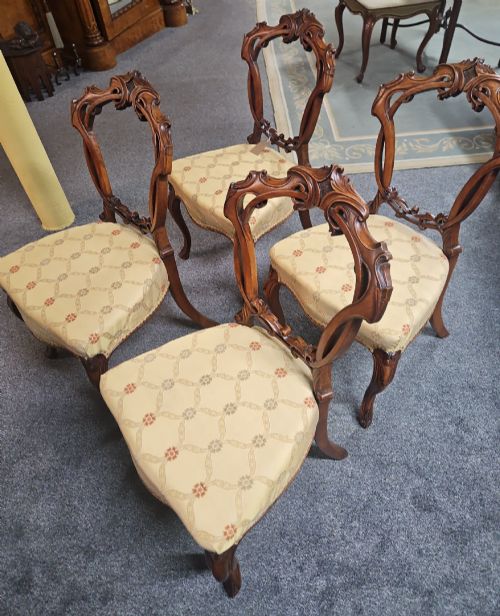
French parlor chairs include armchairs, side chairs, and salon suites shaped by nineteenth-century revival movements. Buyers selecting french parlor chairs frequently encounter walnut and giltwood frames influenced by Louis XV and Louis XVI styles.
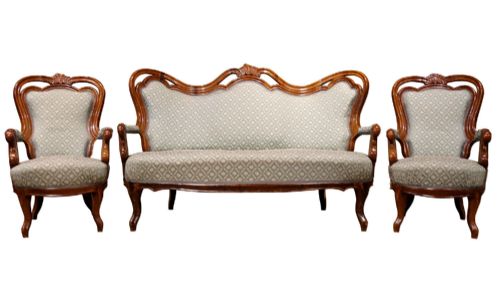
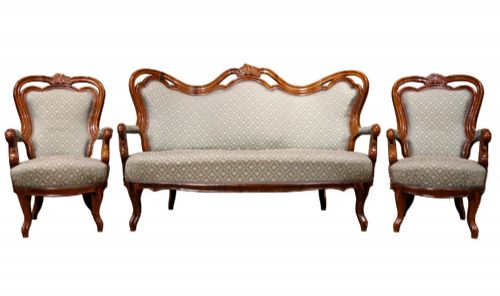
The selection ranges from single side chairs to multi-piece salon suites featuring cabriole legs and open arms. Many examples display Victorian interpretations of French design alongside pieces originating directly from the period.
How they were made
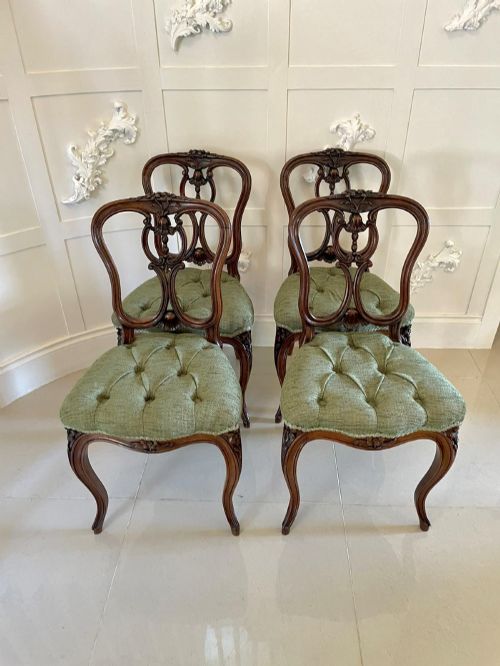
Frames are constructed from walnut, mahogany, and giltwood, shaped through carving and occasionally bentwood techniques. Woodwork is paired with upholstery fabrics such as damask and deep buttoned textiles.
Decoration relies on applied gilding, paint, and marquetry inlay to articulate revival styles. Structural joins support the open armchairs, side chairs, and larger settees found across the inventory.
Deep buttoned upholstery invites nineteenth-century guests to sink in deeply while maintaining proper posture during long afternoon calls.
What varies in quality
The crispness of the carved walnut or giltwood ornamentation distinguishes finer pieces from simpler production. Carvings on armchairs and salon suites display varying depths of relief and detail in the floral or classical motifs.
The integrity of the frame construction and the retention of original gilding or polished wood surfaces govern the standard of execution. Complete salon suites demonstrate consistency across chairs and sofas that single pieces lack.
Morison & Co of Edinburgh·Baumann
The French Parlor Chairs Glossary
- Bergere
- An enclosed upholstered armchair with wooden framing around the sides and back. This form appears frequently in nineteenth-century French seating.
- Cabriole leg
- A furniture leg that curves outward and then tapers inward, finishing in a pad or scroll foot. It is a defining feature of Rococo revival design.
- Giltwood
- Timber coated with gold leaf or a gold-coloured finish. This material is common on formal nineteenth-century salon seating.
- Salon suite
- A matching set of seating furniture comprising a settee and multiple armchairs or side chairs. These suites furnished nineteenth-century reception rooms.
- Damask
- A reversible figured fabric woven on a jacquard loom with patterns visible in the weave. It provides traditional upholstery for parlor chairs.
French Parlor Chairs: Frequently Asked Questions
What is a salon suite?
A salon suite is a matched group of seating furniture designed for nineteenth-century reception rooms. These collections typically include a settee paired with several armchairs or side chairs.
Such suites provide uniform seating for entertaining guests. They allow buyers to furnish a room with pieces sharing identical wood finishes and upholstery materials.
How do I identify Louis XV style?
Louis XV style chairs feature curved lines, cabriole legs, and organic scrollwork derived from eighteenth-century Rococo design. Nineteenth-century revivals replicate these flowing contours in carved walnut and giltwood.
These pieces avoid straight lines in favour of asymmetrical ornamentation and floral carving. The resulting forms appear light and graceful compared to earlier heavy revivals.
Where were parlor chairs used?
Parlor chairs occupied formal reception rooms where families hosted visitors and held social gatherings. These spaces displayed the household's best furniture and decorative arts.
Individual side chairs and armchairs were arranged to facilitate conversation. Larger homes utilised complete salon suites to unify the room's interior scheme.
Are giltwood chairs fragile?
Giltwood frames feature delicate gold leaf applications over a prepared gesso and wood base. The metallic surfaces require careful handling to prevent scratching or flaking of the finish.
While structurally sound for seating, these frames benefit from placement away from direct sunlight and moisture. Gentle dusting preserves the integrity of the gilded decoration.