







French Rococo Mirror Pair
A french rococo mirror pair brings asymmetric curves and gilt brilliance into a room, offering the matched symmetry collectors seek for a mantel or console.
French Rococo Mirror Pair
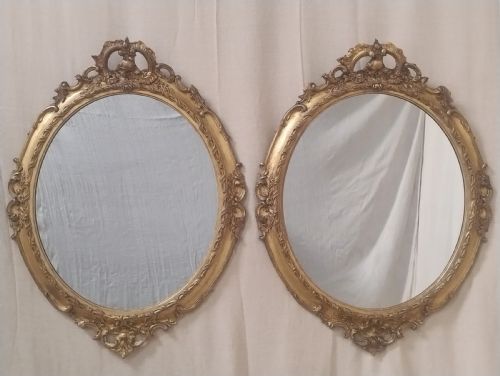
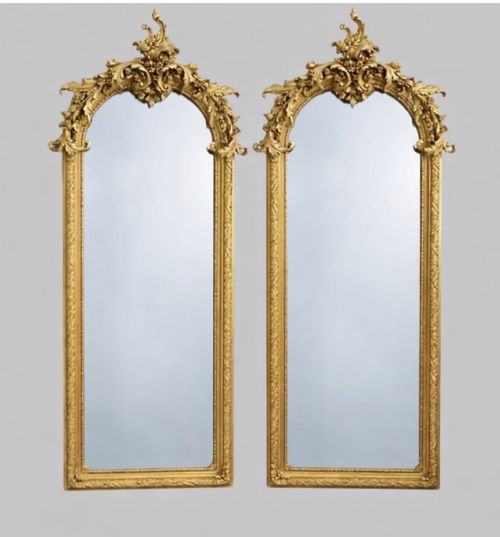
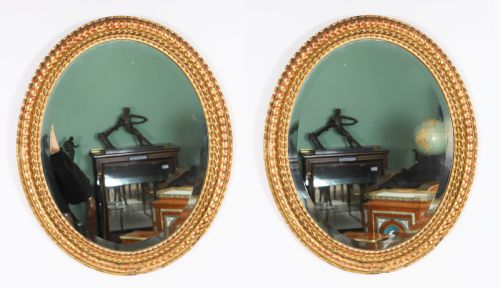
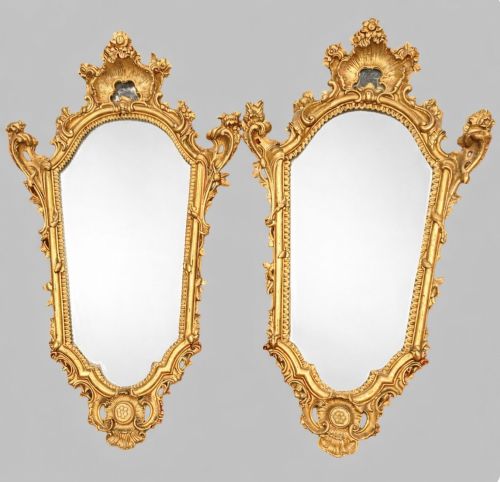
A french rococo mirror pair comprises matched wall-hanging looking glasses designed in the spirited 18th-century continental manner. The examples available here span the nineteenth century through the early twentieth century, taking the form of wall mirrors, girandoles, and mirrored sconces.
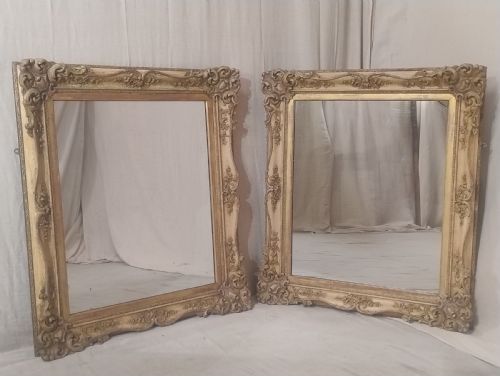
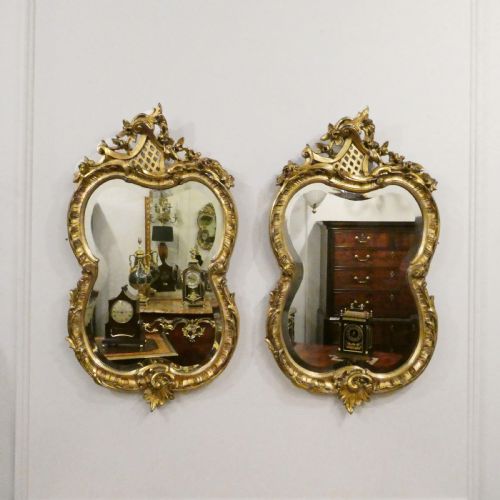
Makers working during the Victorian era and the 1920s reinterpreted these continental forms with exuberant scrollwork, leaf motifs, and oval or cartouche shapes. Buyers frequently encounter pairs finished with parcel gilt, burnished gold leaf, or giltwood frames that reflect light deeply.
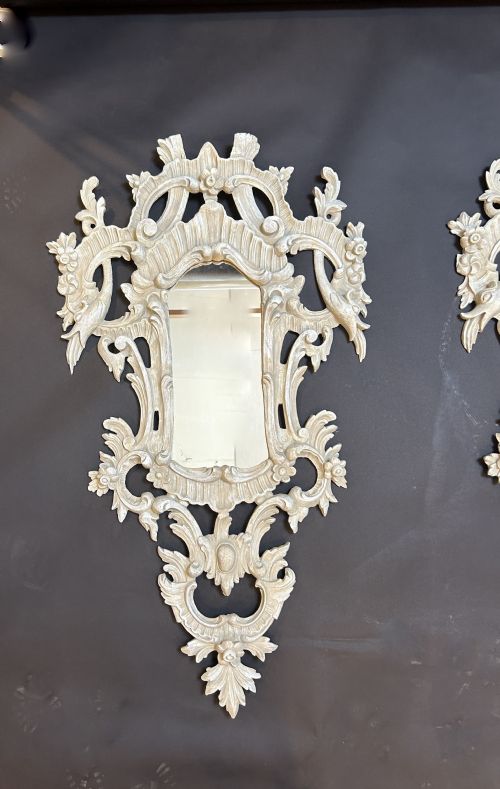
The styles seen across these listings include Rococo Revival, French Louis XV manner, and Florentine variants. Each matched pair provides a balanced decorative focal point rooted in historical revivalism.
Factors defining quality
The depth and crispness of the carved ornamentation distinguish finer examples from simpler decorative pieces. Crisp leaf work, scroll relief, and well-defined gesso modeling require skilled hand labour that elevates a pair above standard production.
The application of the gilt finish determines visual warmth and textural richness. Hand-applied gold leaf demonstrates superior handling compared to flat modern metallic paints, ageing with a softer patina across the nineteenth-century periods.
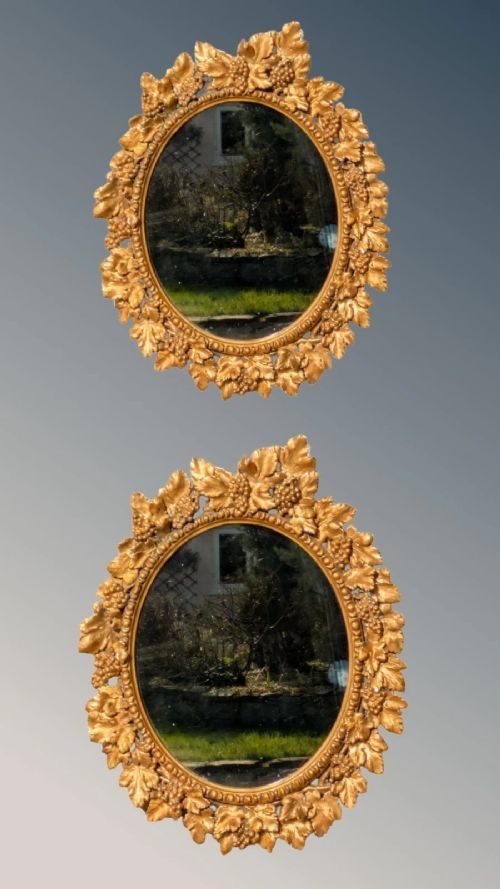
Vine leaves climb across some nineteenth-century wooden frames, bringing a touch of the vineyard right into the formal drawing room.
The French Rococo Mirror Pair Glossary
- Giltwood
- Wood that has been coated with gold leaf or gold paint. This finish provides the bright, reflective surfaces characteristic of antique wall mirrors.
- Gesso
- A plaster-like mixture applied to wood frames to create a smooth surface for gilding. Artisans carved intricate details directly into this ground layer.
- Girandole
- A branched wall fixture holding candles, often incorporating a mirror. These pieces combine illumination with reflective glass.
- Rococo Revival
- A nineteenth-century design movement mimicking the ornate, asymmetric curves of the 18th-century French style. It dominates the aesthetic of these paired looking glasses.
- Cartouche
- An ornamental tablet or frame resembling a rolled-up piece of paper, frequently seen shaping the borders of these mirrors.
French Rococo Mirror Pair: Frequently Asked Questions
How do I hang a heavy giltwood mirror pair safely?
Heavy carved wood and gesso frames require robust wall fixings secured directly into masonry or timber studs. Using two secure hanging points per mirror distributes the weight evenly and prevents shifting.
Ensure the hanging wire or integrated brackets match the substantial weight of antique gilt brass and wooden frames before mounting them symmetrically.
Where should I place a mirrored sconce pair?
Mirrored wall sconces suit spaces where they can capture and multiply ambient light, such as flanking a fireplace mantel or a large piece of furniture. Their integrated candle arms make them effective beside architectural focal points.
Consider eye-level placement to maximise the reflective impact of the glass and the decorative appeal of the gilt metalwork.
What is the difference between gesso and carved wood?
Carved wood forms the structural base of the frame, shaped by hand using gouges and chisels. Gesso is a chalk and binder mixture applied over that wood to build up fine sculptural details.
Skilful makers combined both techniques, carving the timber base and utilising the gesso layer to achieve sharp relief before applying gold leaf.
How do I clean antique gilt surfaces?
Dust giltwood and gesso frames gently with a soft, dry brush to prevent damage to delicate surface gilding. Moisture and commercial cleaning agents can strip historical gold leaf or painted finishes.
Glass panels require a minimal amount of glass cleaner applied to a cloth rather than sprayed directly, protecting the surrounding antique frame from liquid exposure.
How can I tell a 19th-century pair from a 1920s pair?
Nineteenth-century pieces often exhibit the hand-carved depth and gesso layering typical of Regency and Victorian revival workshops. Early twentieth-century interpretations sometimes incorporate simpler cast metal elements or painted carved wood.
Examining the construction of the frame backing and the characteristics of the mirror glass helps differentiate between Victorian production and later 1920s items.