



French Rococo Lady Desk
A french rococo lady desk offers compact elegance for correspondence, combining serpentine timber forms with cast ormolu mounts.
French Rococo Lady Desk
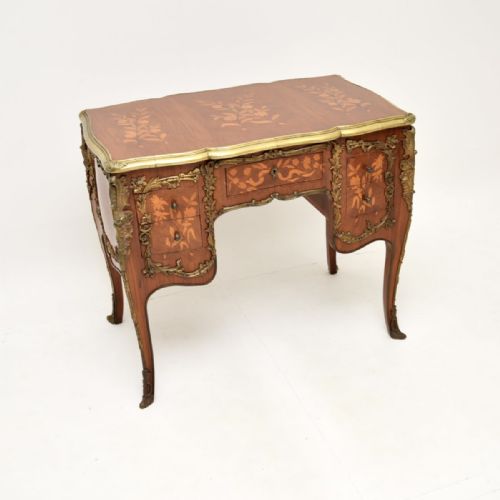
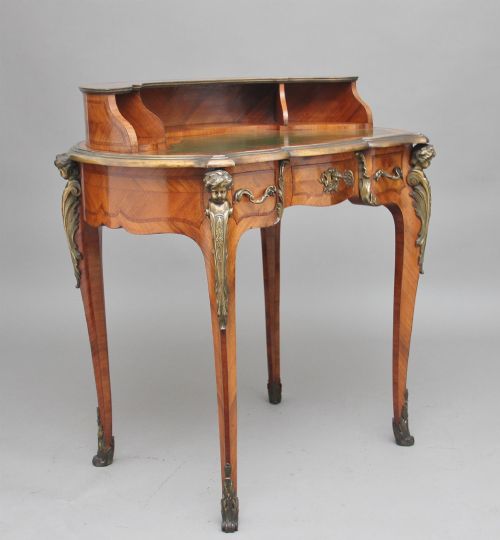
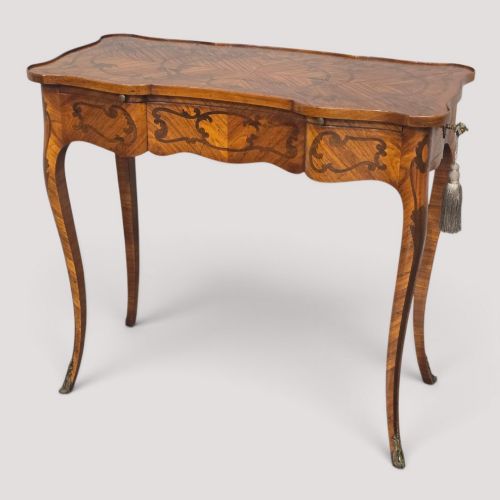
When you search for a french rococo lady desk, you encounter compact writing furniture designed for domestic correspondence and personal paperwork during the nineteenth century. These pieces emerge predominantly in revival styles such as Louis XV and French Rococo Revival, spanning periods from eighteen sixty to nineteen thirty.
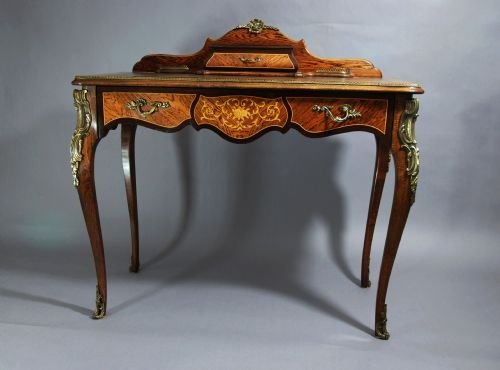
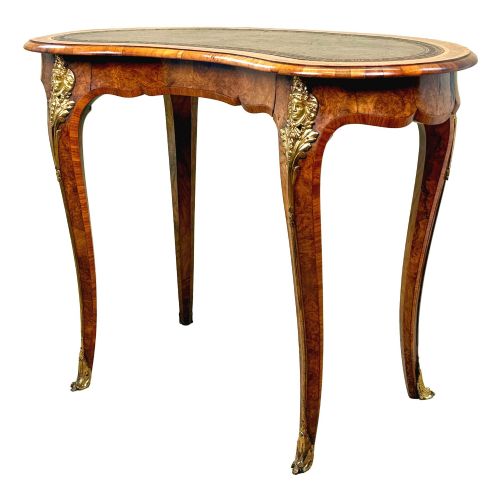
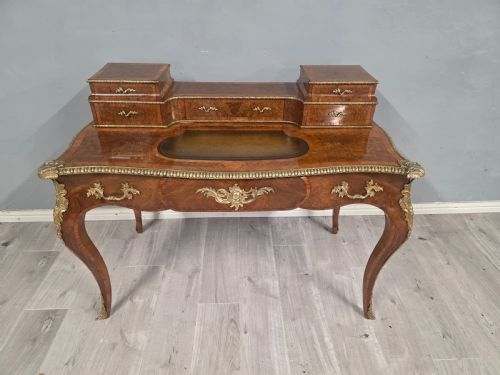
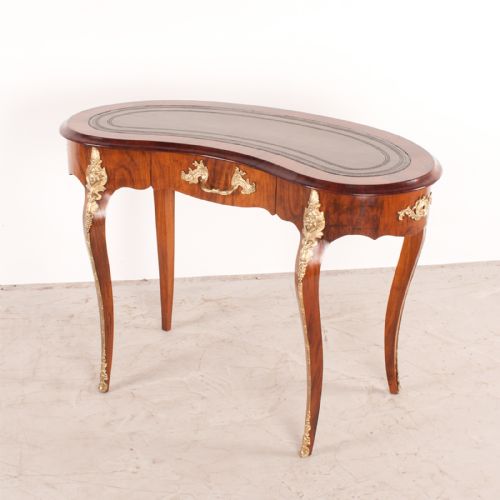
The most common forms on this page include the bureau de dame, the bonheur du jour with its upper tiers of small drawers and shelves, and kidney-shaped writing tables. Makers tailored these designs for smaller spaces, frequently incorporating sloping fall-fronts or leather-lined writing surfaces.
Materials span exotic timbers like kingwood, rosewood, and walnut, often contrasted with gilt bronze mounts and porcelain plaques. Pieces appear under various historical descriptors including writing cabinets and secretaires, reflecting the diverse nomenclature used by nineteenth-century cabinet makers.
Materials and construction methods
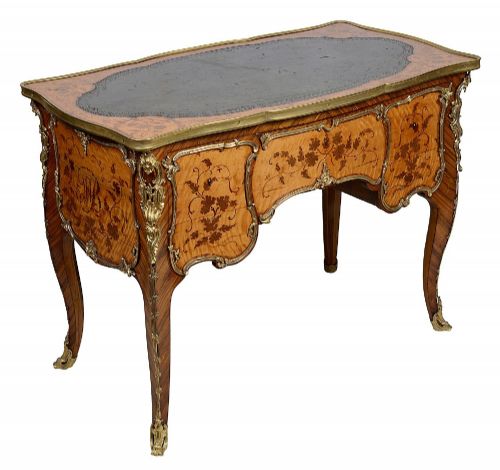
Cabinet makers constructed these desks using native and exotic hardwoods, applying complex marquetry patterns in kingwood, walnut, and rosewood across curved surfaces. Carcass frames supported intricate floral or geometric veneers, occasionally complemented by hand-painted Vernis Martin panels depicting pastoral scenes.
Gilded ormolu mounts were cast and chased to accentuate the serpentine outlines, corners, and cabriole legs characteristic of the rococo revival. Drawer interiors often incorporated secondary timbers, secret compartments, and fitted leather writing inserts secured with blind tooling.
French Rococo Lady Desk Retail Price Guide 2026
Typical asking prices for french rococo lady desk among the pieces listed under this phrase on Sellingantiques today, from the lower quarter to the upper quarter. They describe what is for sale here now, not the wider market.
Current listings feature nineteenth-century pieces spanning the Victorian era, utilising kingwood, walnut, and ormolu mounts.
Assessing quality in writing furniture
The standard of execution separates workshop productions, visible in the precision of the marquetry inlay and the crispness of the cast ormolu mounts. Finer examples display symmetrical wood grains, tightly fitted joints, and substantial bronze hardware rather than lightweight plated alternatives.
Interior detailing also defines the tier of a piece, with superior desks offering concealed drawers, hand-painted Sevres porcelain plaques, and original marble tops. The integration of structural curves with smooth mechanical action for fall-fronts or sliding surfaces indicates high-grade nineteenth-century craftsmanship.
Edwards and Roberts·Gillows·Robert Strachan and Co
The French Rococo Lady Desk Glossary
- Ormolu
- Gilded bronze used for decorative mounts and accents on furniture. This technique involves applying a mercury and gold amalgam to cast bronze.
- Marquetry
- Decorative veneer patterns formed from pieces of contrasting timber, shell, or ivory. Craftsmen arrange these elements to create pictorial or geometric designs on tabletops and fall-fronts.
- Bureau de Dame
- A ladies writing desk typically featuring a sloping fall-front flap. Inside, small compartments and pigeonholes organise stationery.
- Bonheur du Jour
- A small ladies writing desk with an elevated superstructure containing shelves and small drawers. This form became popular during the nineteenth-century revival periods.
- Vernis Martin
- A type of simulated Japanese lacquer developed in France. Artisans applied successive coats of varnish to achieve translucent painted panels.
French Rococo Lady Desk: Frequently Asked Questions
What is a french rococo lady desk?
A french rococo lady desk is a compact nineteenth-century writing table or bureau influenced by Louis XV design. These pieces utilise curved lines and decorative mounts for domestic correspondence.
Craftsmen built them in various forms, including the bureau de dame and the bonheur du jour, using exotic timbers and marquetry.
How were these desks used originally?
Owners utilised these pieces in private boudoirs and drawing rooms for writing letters, managing household accounts, and storing personal stationery. The upper tiers and internal compartments kept writing implements neatly arranged.
The sloping flaps provided a dedicated surface for ink-based writing before the widespread adoption of modern desks.
How do I distinguish between periods?
Distinguishing periods involves examining the choice of timber, the style of the ormolu mounts, and assembly techniques. Mid-nineteenth-century pieces often feature heavy walnut or kingwood veneers with robust cast bronze.
Later revival examples from the late nineteenth and early twentieth centuries may incorporate machine-cut marquetry or different secondary woods inside the drawers.
Where should I place a lady desk?
These desks suit living rooms, studies, or bedrooms as accent furniture due to their compact footprints and finished backs. Their modest scale allows them to function as writing surfaces or display tables.
Keep them away from direct sunlight and heat sources to protect the delicate wood veneers and leather inserts.