


French Rococo End Tables
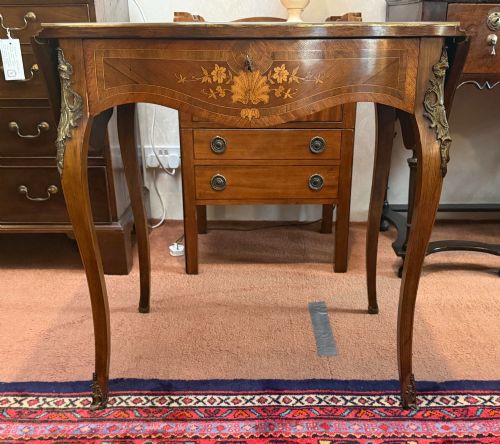
These French rococo end tables bring serpentine lines and gilt mounts into a room, offering small surfaces shaped for intimate corners.
French Rococo End Tables
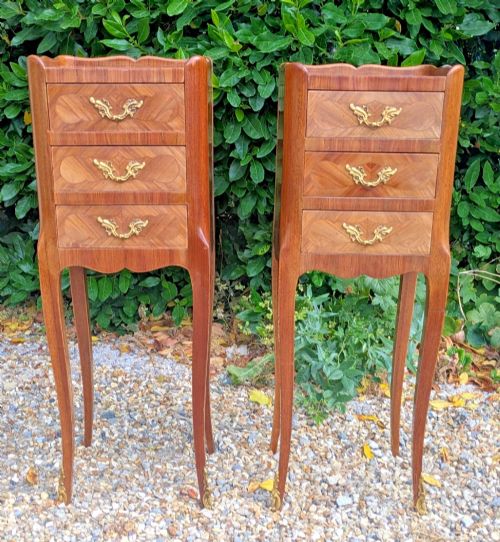
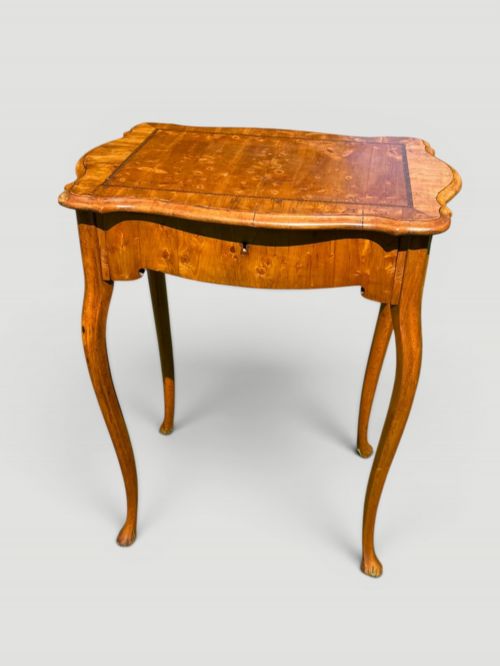
When you search for french rococo end tables, you encounter pieces spanning the nineteenth century through the interwar decades, taking forms such as side tables, bedside cabinets, and occasional tables. These items reflect revival aesthetics through curved silhouettes and ornamented surfaces designed for domestic utility.
The selection ranges from Victorian interpretations to 1920s painted pieces, often utilising kidney-shaped tops or compact proportions suited for smaller spaces. Buyers frequently find these works executed in walnut, kingwood, or painted wood, reflecting diverse regional interpretations of Louis XV style.
Construction and materials
Cabinetmakers constructed these forms using hardwood foundations like walnut and oak, veneered with decorative timbers such as kingwood and burr wood. Artisans applied floral marquetry or hand-painted finishes to wooden surfaces to achieve ornamental depth.
Metal mounts in brass and ormolu were cast and chased, then secured to corners and legs to accentuate the curvilinear profiles. Marble tops appeared on select examples, providing a durable and polished surface atop the wooden frames.
The listings feature pieces spanning the nineteenth century, the Victorian era, and the 1900s through the 1930s, constructed from walnut, kingwood, oak, and marble.
Assessing quality
The standard of execution in these tables reveals itself through the crispness of applied ormolu mounts and the precision of veneer work. Finer examples display meticulous floral marquetry and balanced proportions that respect the fluidity of the revival style.
Simpler pieces rely on painted wood finishes or modest turning, where the charm stems from surface patina rather than intricate cabinetmaking. The integration of fitted marble slabs and the weight of the timber frame further distinguish exhibition pieces from standard domestic furniture.
The French Rococo End Tables Glossary
- Ormolu
- Gilded bronze used for decorative mounts on furniture. This technique imparts a rich metallic sheen that complements wood veneers.
- Kingwood
- A dense, heavily figured timber frequently used for veneering decorative tables. Its dark grain provides strong visual contrast.
- Marquetry
- The art of applying pieces of veneer to a structure to form decorative patterns. Floral motifs appear frequently in these designs.
- Rococo Revival
- A nineteenth-century movement resurrecting the asymmetric curves and naturalistic ornamentation of the eighteenth century. It prioritizes elaborate scrollwork and serpentine forms.
French Rococo End Tables: Frequently Asked Questions
Where should I place an end table?
These tables fit easily beside armchairs, sofas, or beds where a small surface is useful for lamps or books. Their compact footprints allow them to occupy tight corners without crowding a room.
Because they feature decorative marquetry or gilt mounts, positioning them where adequate light can reach the surface enhances their visual detail.
How do I identify the period?
Dating relies on examining the timber construction, fastener types, and stylistic nuances present in the piece. Nineteenth-century examples often exhibit heavier bronze mounts and denser hardwoods.
Later revival pieces from the early twentieth century frequently incorporate painted finishes or lighter oak foundations, reflecting changing domestic tastes.
Are marble tops original?
Marble inserts on side tables and bedside cabinets were commonly specified during manufacture to provide a resilient surface for daily use. The stone was cut to fit the exact contours of the wooden frame.
Matching edge profiles and appropriate thickness relative to the base help confirm whether the slab belongs to the piece.
How do I care for painted wood?
Painted surfaces require gentle dusting with a dry, soft cloth to prevent abrasion of the finish. Avoid commercial polishes containing silicones or harsh solvents that might degrade historic paint.
Keeping the furniture away from direct heat sources and strong sunlight prevents the wood from drying and the paint from cracking over time.