






French Provincial Kitchen Island
These french provincial kitchen island pieces are sturdy works of utility that anchor a room, bringing authentic rustic presence and daily function.
French Provincial Kitchen Island
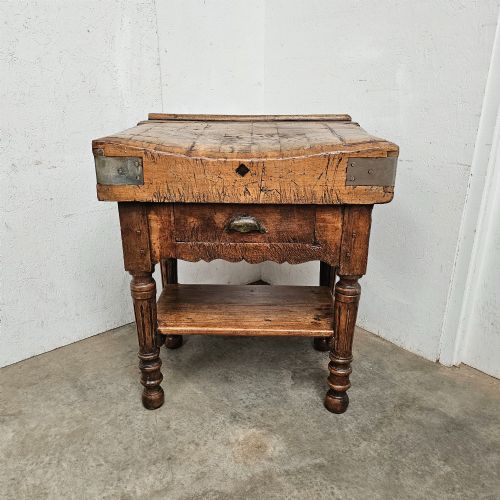
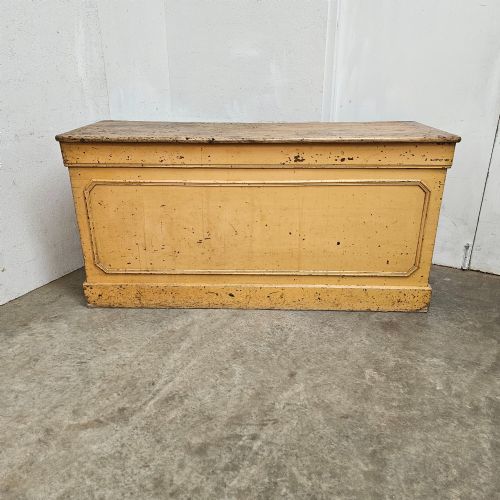
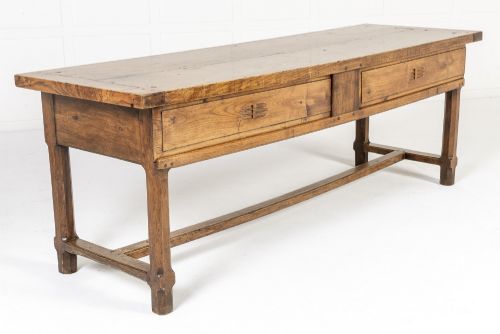
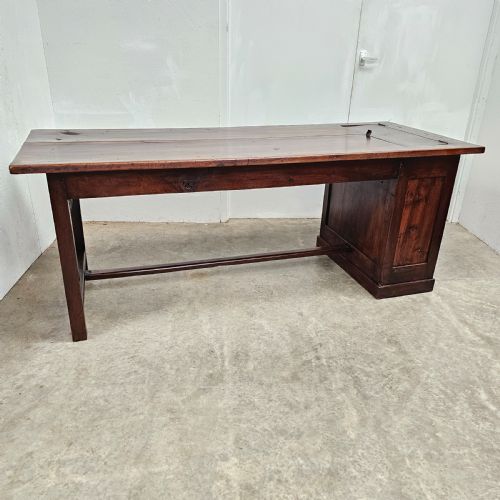
When you search for a french provincial kitchen island, you are looking at heavy-duty work tables, butchers blocks, drapers tables, and shop counters originating from rural France. The selections span from the eighteenth century through to the early twentieth century, showing decades of domestic and commercial service.
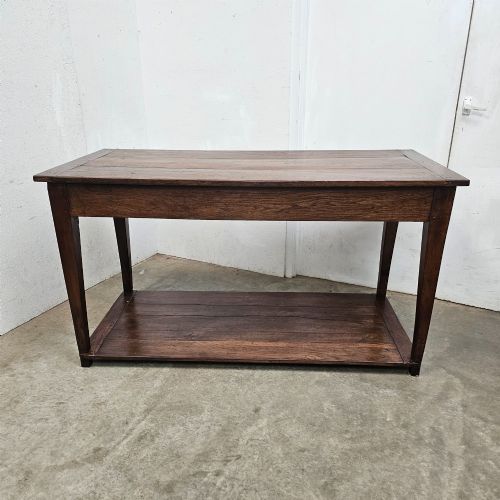
You are most likely to meet oak, pine, and beech tables featuring scrubbed tops, single drawers, and lower pot-shelves. These sturdy surfaces range from primitive work benches to polished farmhouse kitchen tables, reflecting the practical needs of past French kitchens and workshops.
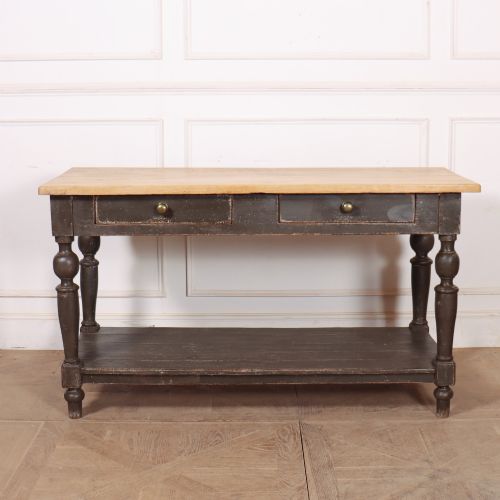
The forms encompass long drapers tables, robust chopping blocks on decorative or plain bases, and console work tables. Each piece serves as a physical record of utilitarian French craftsmanship, designed entirely around daily preparation and trade.
How They Were Made
Construction relies heavily on durable timbers like oak, pine, beech, elm, and walnut, often joined into thick two-board or multi-board table tops capable of withstanding heavy chopping and food preparation. Frames are pegged or mortised together securely, prioritising structural resilience over decorative display.
Secondary materials such as iron, metal, and brass appear in structural brackets, hinges, and drawer pulls, while selected pieces retain layers of original paint on their bases. Surfaces show the marks of hand-planing and sustained daily use rather than factory polish.
Some work tables retain deep chop marks and flour dust trapped in the grain from generations of French bakers.
What Varies in Quality
Quality reveals itself in the integrity of the timber and the depth of the original patina, where honest wear from centuries of preparation elevates a simple pine or oak board. Tables with substantial thickness to their tops and intact, uncompromised structural frames stand apart from later replacements.
The presence of original paint finishes, authentic hardware like brass and iron, and untouched maker details or stamps distinguish higher-tier commercial counters and butchers blocks from standard domestic work tables.
Trussant and Cie
The French Provincial Kitchen Island Glossary
- Butchers Block
- A thick wooden chopping surface designed for heavy meat preparation. These blocks often sit on heavy wooden frames or decorative bases.
- Drapers Table
- A long, narrow table historically used in textile shops for measuring and folding cloth. They typically feature lower pot-shelves for storage.
- Shop Counter
- A sturdy commercial table fitted with drawers or open compartments for retail service. Originals often retain traces of historic paint finishes.
- Pot-Shelf
- A lower stretcher shelf built into the base of a table or serving surface. It was traditionally used to store pots, pans, and heavy kitchen wares.
- Primitive
- A descriptive term for furniture made with basic tools and straightforward construction. These pieces emphasise raw utility and honest materials over refined style.
French Provincial Kitchen Island: Frequently Asked Questions
How do I clean an antique wooden top?
Wipe the surface gently with a damp cloth and mild soap, avoiding harsh chemical cleaners that strip the historic finish. Dry thoroughly immediately afterwards to protect the grain.
Treat the wood periodically with food-safe oils or waxes if the top is used regularly for food preparation. This preserves the patina without altering the colour.
Are these tables suitable for daily food preparation?
Many of these pieces were built precisely for chopping, baking, and kitchen work. Solid timber surfaces handle daily culinary tasks well when properly maintained.
Consider sealing or oiling older scrubbed tops depending on your hygiene preferences and how heavily you intend to use the surface for cooking.
How can I tell an older table apart?
Look closely at the joinery, tool marks, and timber shrinkage. Hand-cut pegs, uneven board widths, and genuine structural wear indicate older nineteenth or eighteenth century construction.
Examine the underside and legs for signs of hand-planing and authentic patination that modern reproductions cannot replicate.
What is the best way to live with original paint?
Embrace the flaking and scuffs as part of the piece's history. Original painted surfaces require a gentle touch and protection from excessive moisture.
Keep these tables away from direct heat sources and constant direct sunlight to prevent further drying or flaking of the historic pigment.