


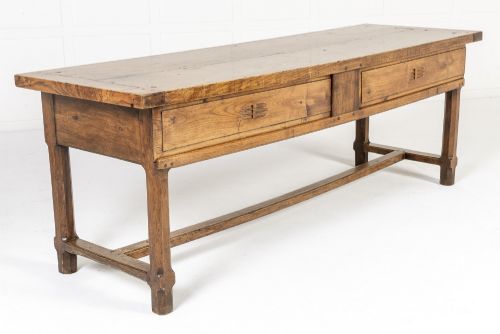
Wooden Kitchen Island Table
A wooden kitchen island table brings heavy timber utility and honest craftsmanship directly to the centre of domestic life.
Wooden Kitchen Island Table
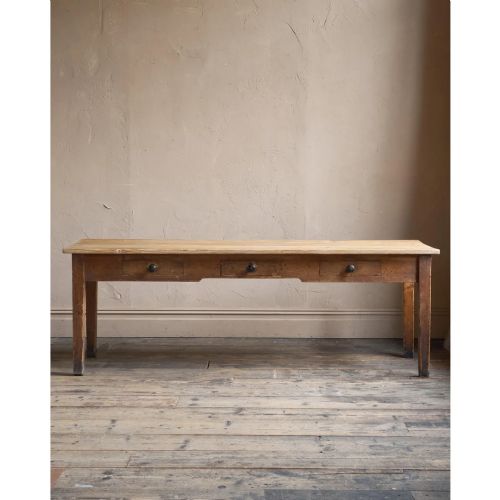
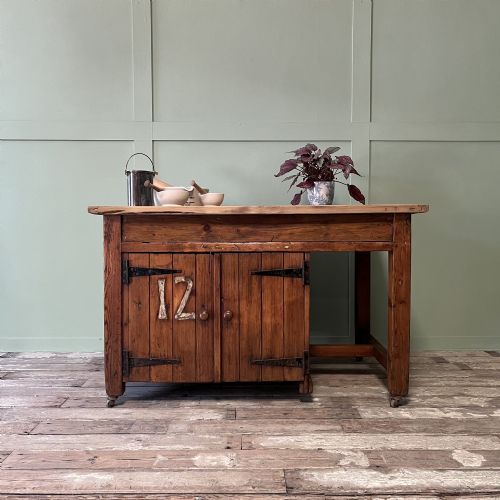
A wooden kitchen island table serves as the working heart of the room, drawing on forms originally built for preparation, baking, and butchery. Buyers searching for a wooden kitchen island table encounter sturdy work benches, drapers tables, and scullery pieces designed for daily endurance.
The selections span from the eighteenth century through the mid twentieth century, with nineteenth-century examples appearing most frequently. Origins stretch across English country houses and French provincial kitchens to Swedish homesteads, each bringing regional utility to the form.
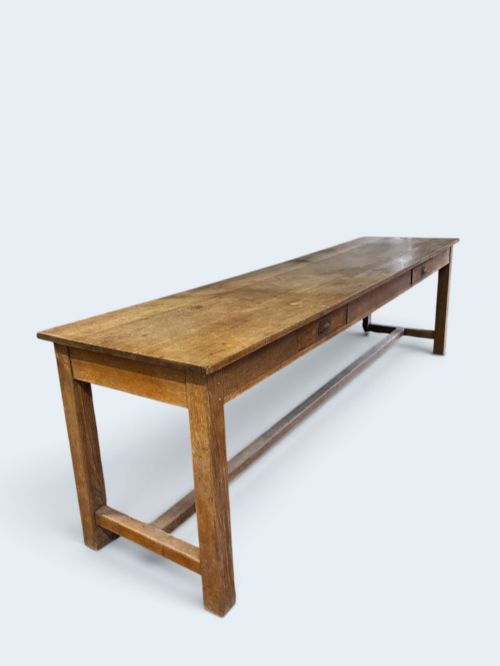
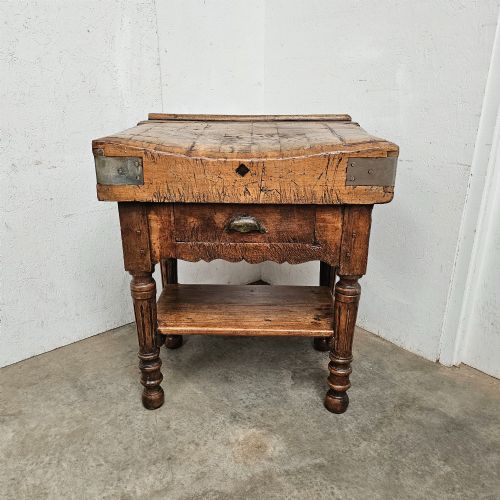
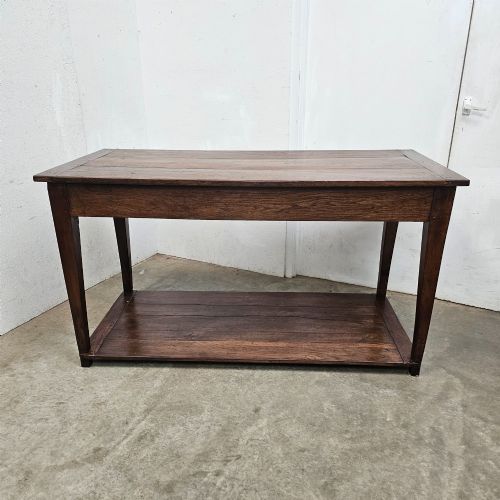
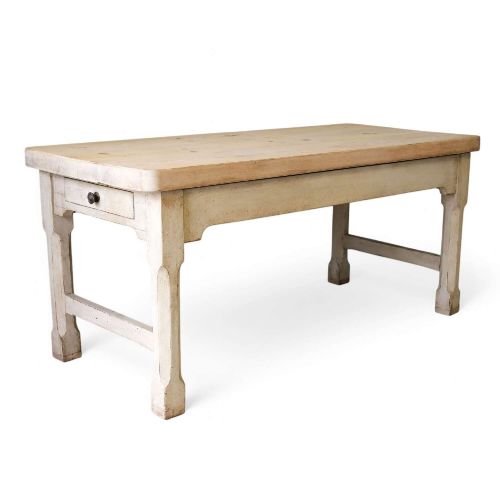
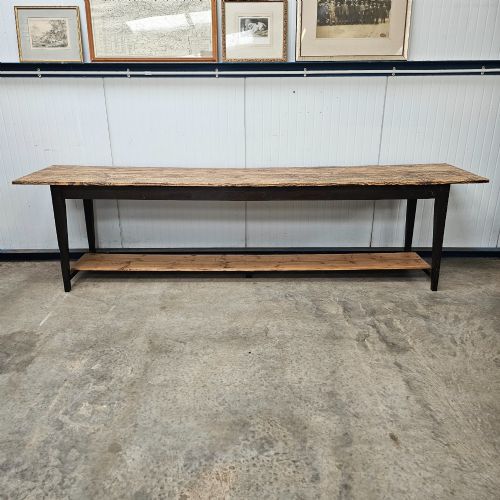
Forms vary from two-tier harvest tables and pot-shelf serving tables to solid chopping blocks on decorative bases. Many retain original drawers, iron vices, or lower shelves intended for storage during food preparation.
Determining Quality
The integrity of the timber top dictates the standing of the piece, with thicker, well-seasoned boards showing superior durability. Depth of character earned through generations of active use distinguishes honest working surfaces from purely decorative interpretations.
Proportion and structural balance separate simpler utilitarian items from finer country house examples. Original components, such as integrated drawers, pot shelves, and authentic iron vices, elevate the standing of a piece significantly.
Regional styles represented on this page range from French provincial and rustic farmhouse to Scandinavian country and Victorian.
The Wooden Kitchen Island Table Glossary
- Prep table
- A sturdy wooden surface utilised historically for food preparation, baking, and scullery tasks. These pieces often feature drawers for utensils and overhangs designed for kitchen work.
- Drapers table
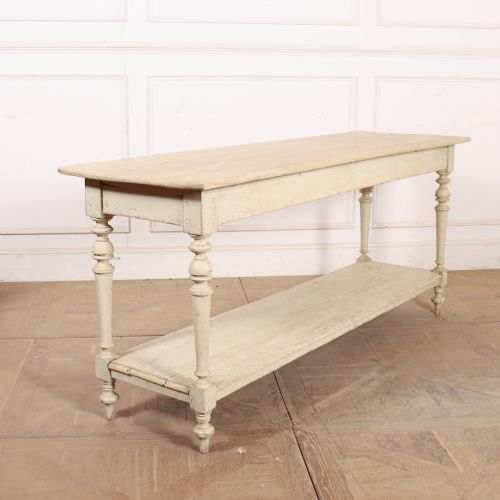
- A long, narrow utilitarian table originally utilised in cloth shops for measuring and folding textiles. Their generous length and narrow proportions make them adaptable as modern serving or island surfaces.
- Butchers block
- A thick, solid block of timber constructed end-grain or plank-style to absorb heavy chopping. They frequently sit upon dedicated wooden stands or heavy iron bases.
- Harvest table
- An elongated dining or work table traditionally used during seasonal gatherings. They provide substantial surface area supported by sturdy stretcher bases.
- Refectory table
- A long dining table featuring parallel legs connected by a central floor stretcher. They offer stable, spacious seating and serving arrangements for larger rooms.
Wooden Kitchen Island Table: Frequently Asked Questions
How are these tables used today?
These pieces function primarily as central kitchen islands for food preparation, cooking, and casual dining. Their robust construction handles everyday culinary tasks with ease.
Lower shelves and drawers provide practical storage for pots, pans, and utensils. They anchor open-plan kitchens by combining workspace with traditional character.
What woods were commonly used?
Makers selected dense hardwoods and durable softwoods depending on regional availability and specific utility. Pine and oak appear frequently in English and Swedish country furniture.
Beech, elm, and sycamore were often chosen for chopping tops and work surfaces due to their resistance to splitting under heavy impact.
How do I care for the wooden top?
Regular maintenance involves cleaning the surface with mild soap and water while avoiding excessive moisture. Periodic application of food-safe oils nourishes the timber and preserves its resistance to stains.
Allowing the wood to age naturally maintains the patina accumulated over decades of practical service. Avoid placing hot pans directly onto unprotected antique surfaces.
How do French and English styles differ?
French country examples often incorporate softer fruitwoods or elm alongside painted lower bases and decorative legs. They lean towards provincial elegance and refined proportions.
English pieces tend to focus on unpretentious utility, favouring thick pine or oak planks designed for heavy scullery work and country house service.
Can these tables fit modern kitchens?
Their diverse lengths, ranging from compact chopping blocks to long harvest tables, allow them to suit various kitchen dimensions. Narrower drapers tables fit well in galley layouts.
Freestanding designs offer flexibility because they require no permanent installation. They introduce warmth and history into contemporary kitchen spaces.