
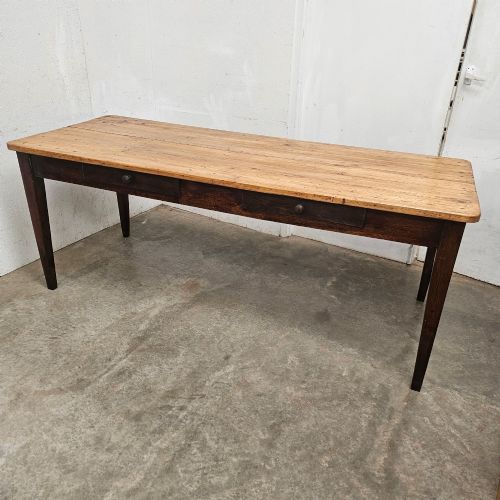
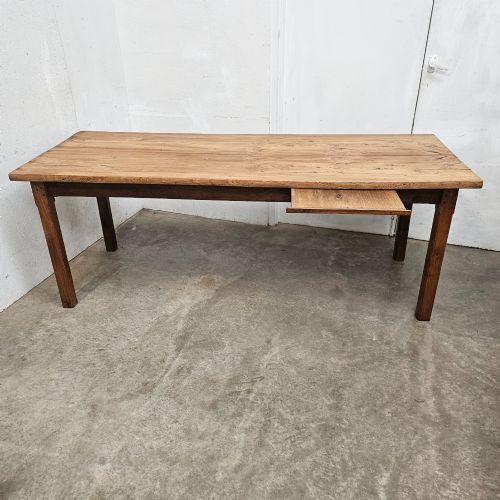
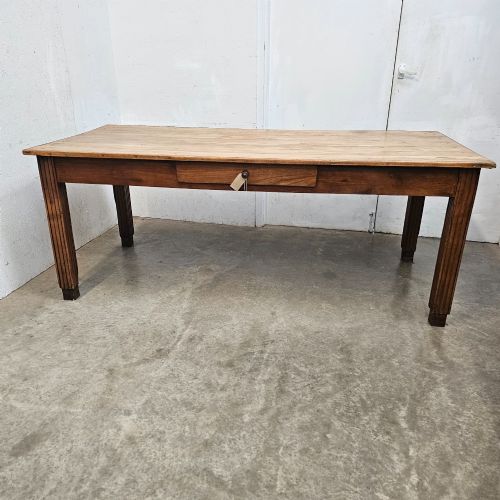
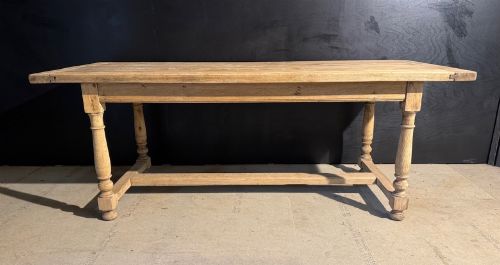
French Provincial Farmhouse Table
These heavy timber surfaces bring honest domestic utility into modern rooms.
French Provincial Farmhouse Table
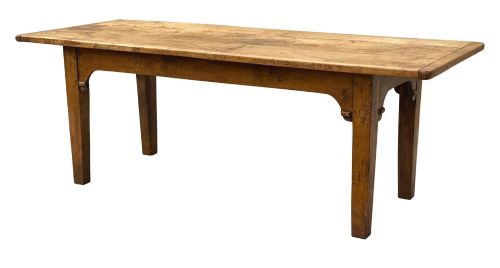
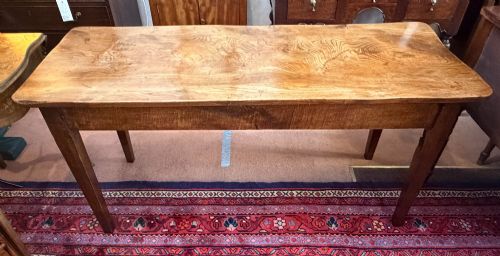
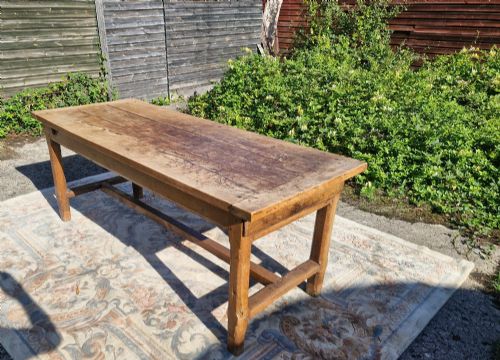
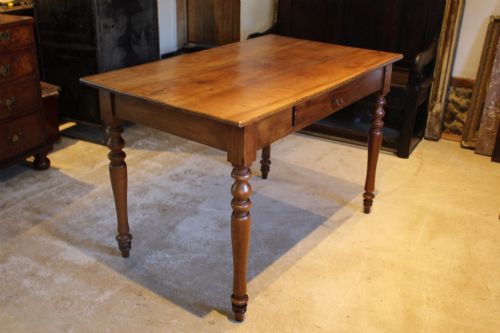
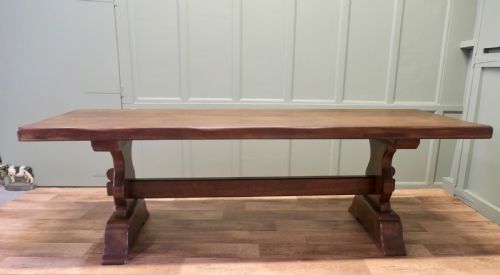
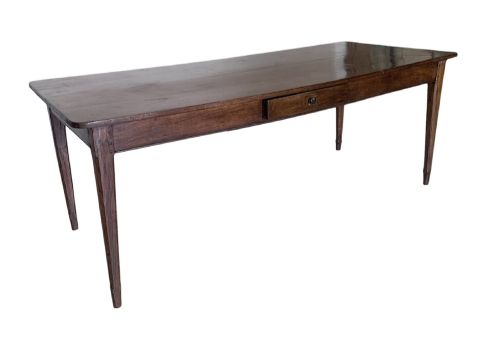
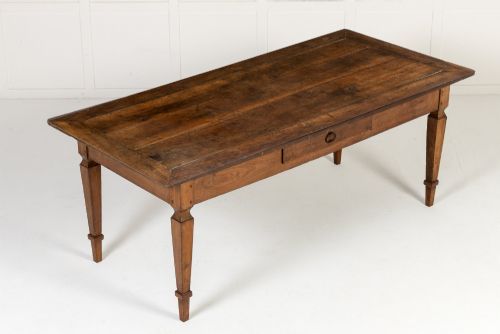
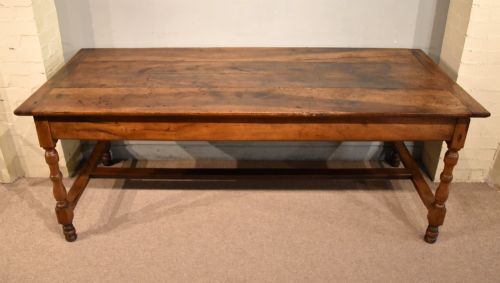
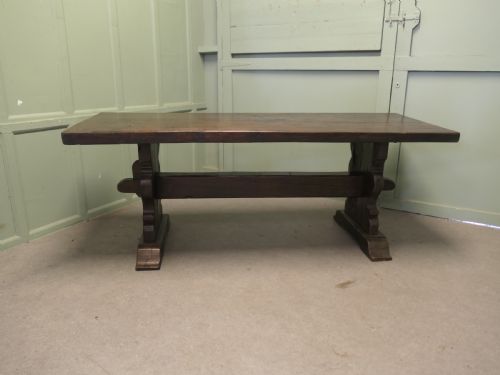
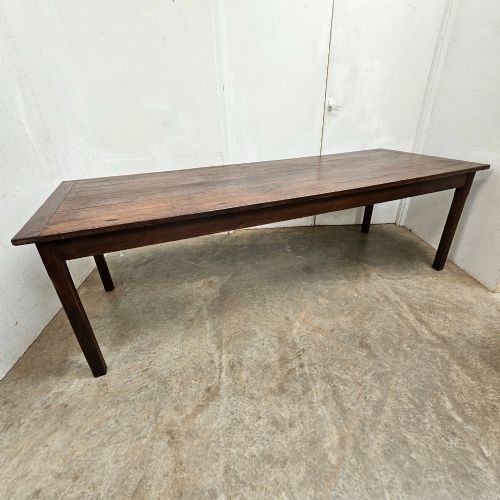
A french provincial farmhouse table is a sturdy working surface built for regional kitchens and dining rooms across France, appearing most frequently in forms dating from the eighteenth and nineteenth centuries. These pieces encompass dining tables, kitchen tables, refectory tables, and occasional coffee or console variants.
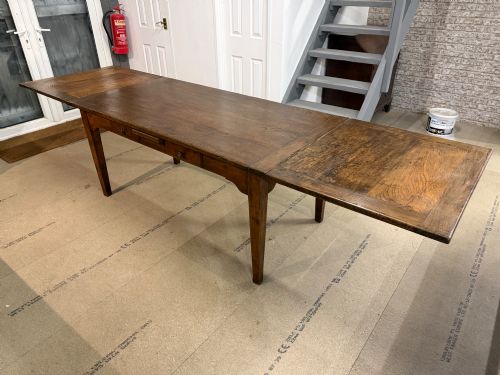
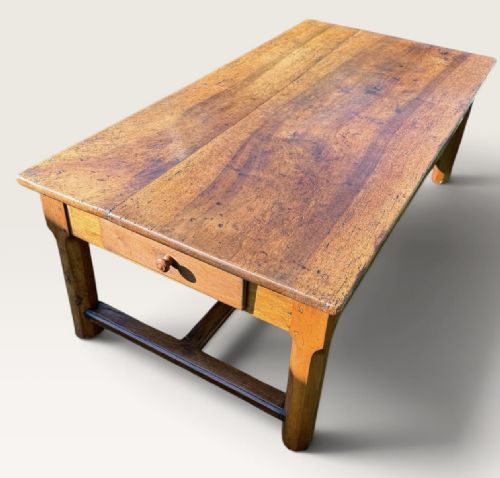
The materials you encounter most often on this page are oak, cherrywood, fruitwood, and pine, frequently shaped into long boards or fitted with functional drawers and extending leaves. They serve as the central gathering place for daily meals and domestic labour.
Construction and Materials
Carpenters relied on dense regional timbers such as oak, cherrywood, walnut, and pine, selecting woods that could withstand heavy daily use in busy kitchens. Boards were joined with sturdy pegged mortise and tenon construction, often featuring heavy plank tops supported by simple stretcher bases.
Practical additions like bread slides, storage drawers, and double extending mechanisms show that these tables were built primarily for utility rather than pure ornamentation.
Listings feature woods including oak, fruitwood, cherrywood, pine, walnut, and chestnut across eighteenth and nineteenth century periods.
Judging Quality
The character of the timber top sets the better examples apart, with single or double-board tops displaying deep patination outranking mismatched or heavily patched surfaces. Substantial framing and original stretcher bases contribute significantly to structural integrity.
Proportion and scale also dictate worth, as unusually long proportions or smaller provincial sizes retain more desirable architectural balance than awkward proportions.
The French Provincial Farmhouse Table Glossary
- Refectory table
- A long narrow dining table traditionally used in communal dining halls and adopted for large country kitchens. These pieces offer substantial length and sturdy leg clearances.
- Bread slide
- A pull-out shelf traditionally used for cooling loaves or expanding the working surface. This feature slides directly beneath the main tabletop.
- Fruitwood
- A collective term for timber sourced from fruit-bearing trees such as cherry, pear, or apple. It yields a warm tone and fine grain.
- Draw leaf table
- A table equipped with underleaves that pull out from each end to extend the surface area. The mechanism allows the main top to remain level while expanding.
French Provincial Farmhouse Table: Frequently Asked Questions
How do I date these tables?
Makers relied on hand tools and regional timber choices that shifted across the eighteenth and nineteenth centuries. Joinery techniques and wear patterns reveal the age of the structure.
examine the underside of the plank top and the peg construction for signs of hand-cut joints rather than modern fasteners.
Are these tables suitable for daily kitchen use?
These pieces were originally constructed for heavy kitchen labour and communal dining. Their robust timber builds handle daily traffic remarkably well.
simply maintain the wood with appropriate oils to protect the historic surface from moisture and heat.
What is the difference between oak and fruitwood versions?
Oak provides a harder, coarser grain with structural resilience suited for large refectory formats. Fruitwoods like cherry display a smoother, warmer tone.
both timbers were utilised extensively in provincial workshops depending on local tree availability.
How do I spot an extending mechanism?
Double extending tables feature additional leaves housed beneath the main surface that slide outward on wooden runners. This design accommodated larger gatherings in regional homes.
check the underside channels to see how the secondary leaves operate.