
French Pier Table Marble
A french pier table marble brings architectural line and a heavy stone surface directly against a wall.
French Pier Table Marble
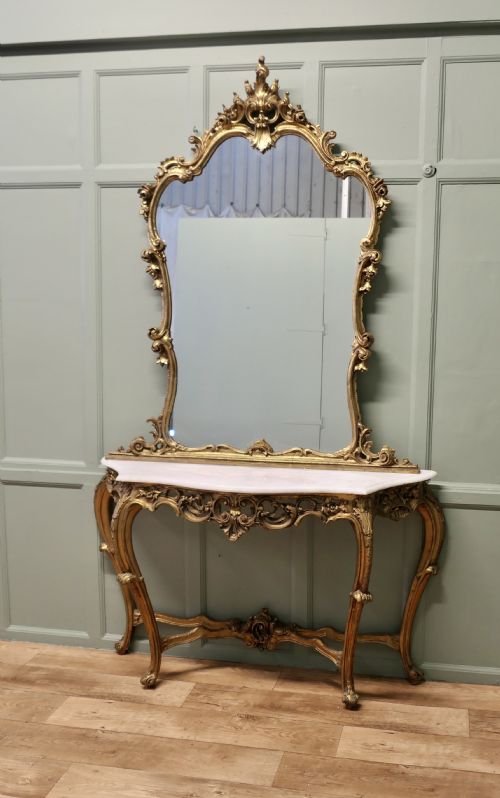
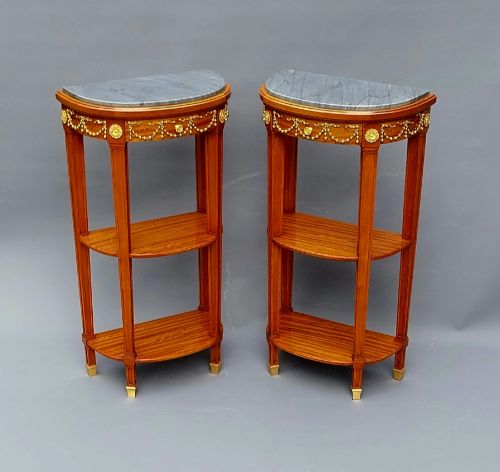
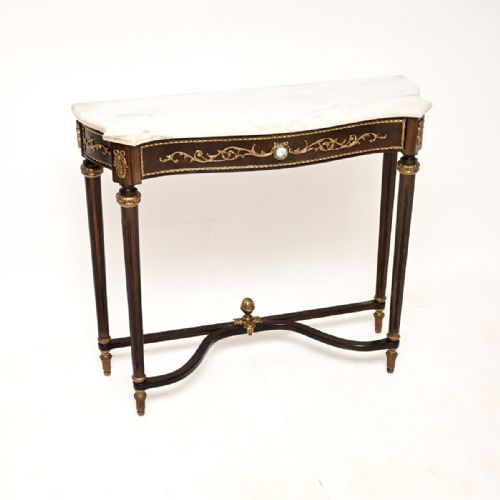
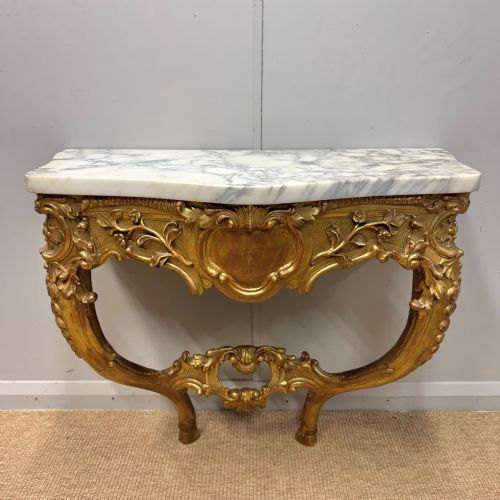
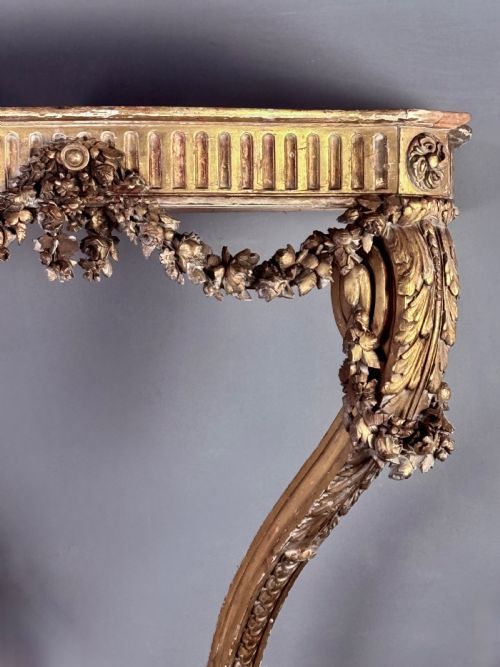
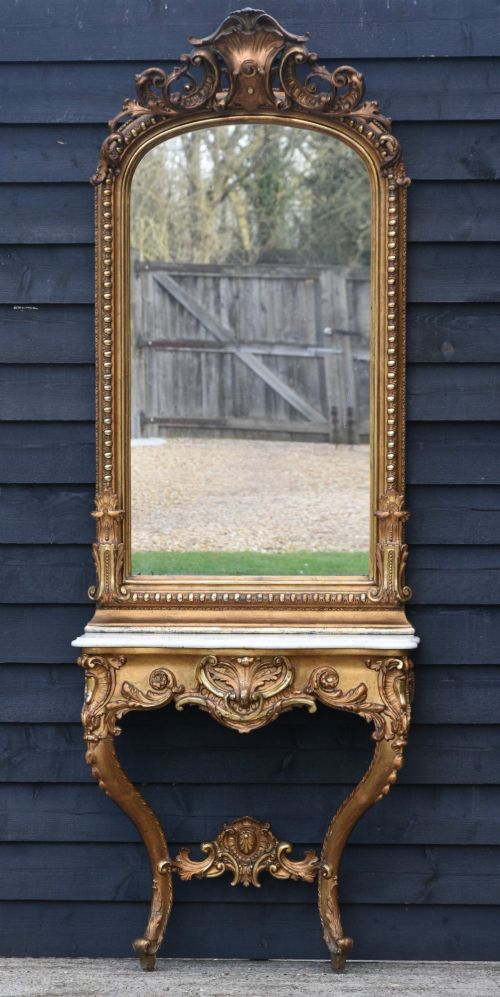
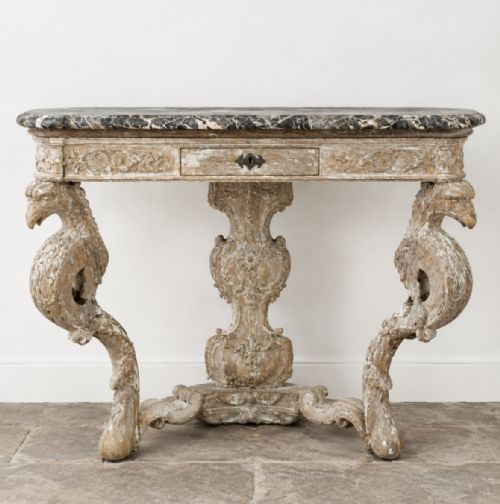
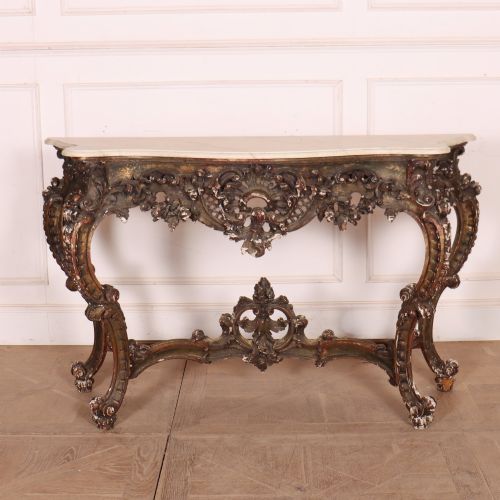
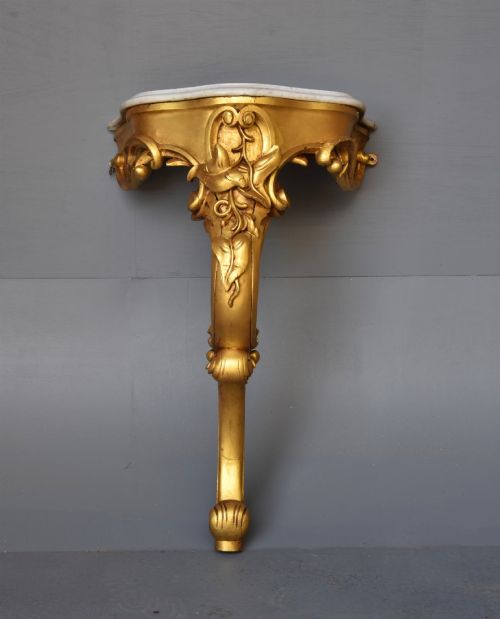
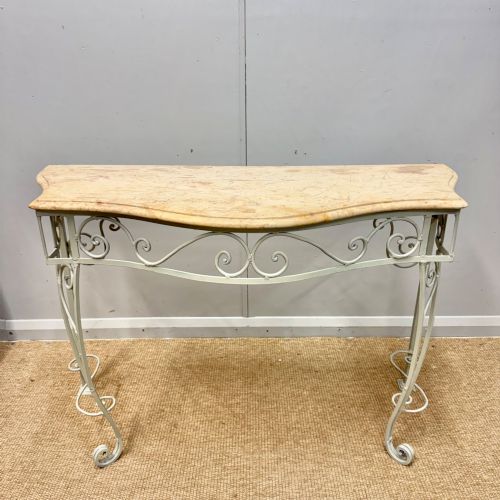
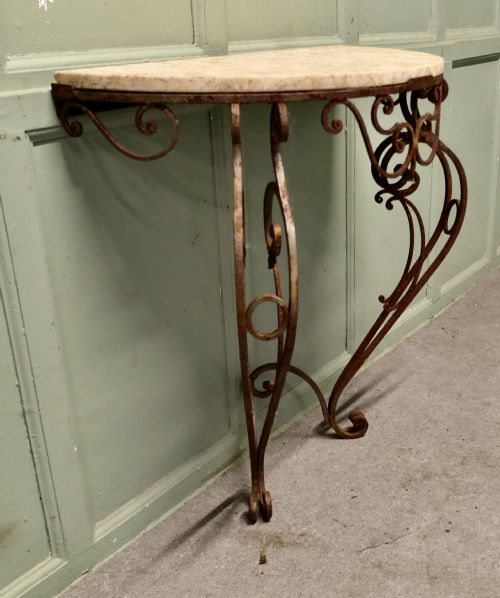
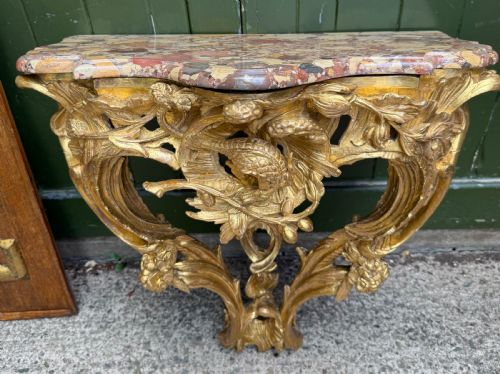
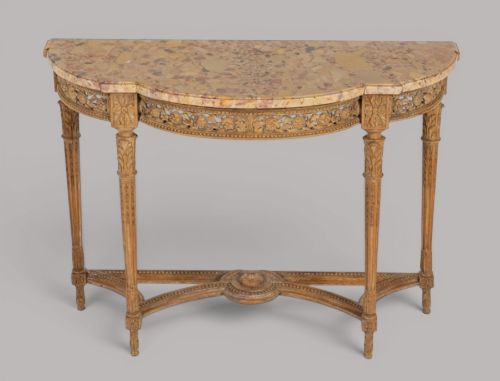
A french pier table marble combines a supportive wooden or iron base with a fitted stone slab designed to sit flush against a wall beneath a mirror or window space. These pieces appear predominantly in nineteenth-century and eighteenth-century forms, running from grand gilded iterations to simpler wrought iron variations.
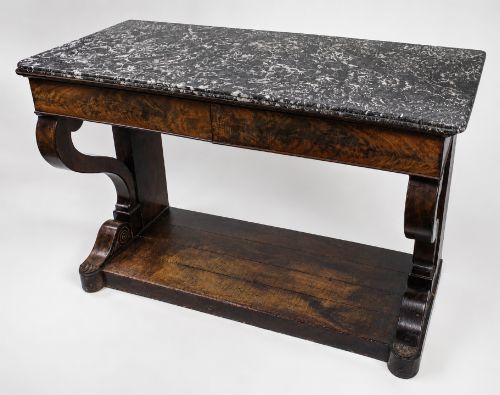
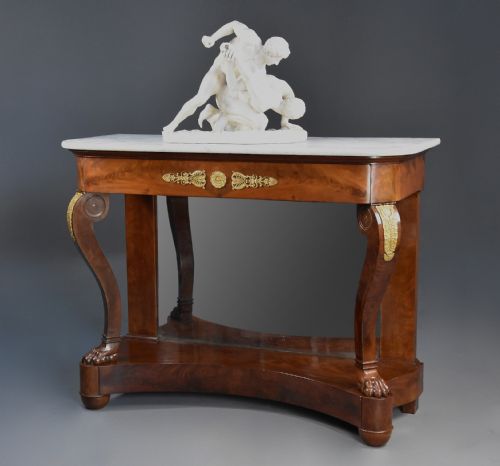
Makers and workshops produced console tables, side tables, and paired console table and mirror sets that served both decorative and functional purposes in reception rooms and hallways. The most frequent encounters on this page involve nineteenth-century giltwood and mahogany examples topped with shaped or figured marble.
Regional variants span from ornate rococo and empire styles down to rustic country interpretations and later revival pieces from the early twentieth century. Each version retains the characteristic shallow depth intended to occupy wall space between architectural openings without obstructing movement.
Materials and construction
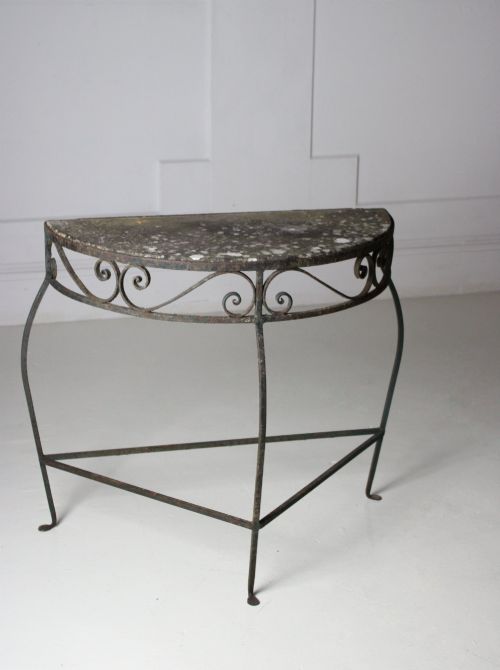
Carpenters and joiners shaped structural carcasses from mahogany, walnut, oak, and softer woods before applying gesso and gold leaf or retaining polished timber finishes. Wrought iron also appears as a primary structural material, particularly in rural or later twentieth-century iterations.
Carvers worked directly into timber or gesso layers to produce intricate rococo scrolls and neoclassical motifs on giltwood frames. Stone masons fitted heavy marble slabs - including breche d'alep, sienna, and fossil varieties - directly to the timber or iron upper frames.
Periods represented span from the eighteenth century through the 1930s, encompassing empire, rococo, and various revival movements.
Judging construction and finish
The refinement of the carved ornamentation separates standard production from exceptional work, particularly in the crispness of giltwood and gesso enrichment. Hand-carved detail displays sharp undercutting and fluid movement compared to heavier, blunt moulding.
The choice and thickness of the stone slab dictate the upper tiers of quality, with figured or breche d'alep marble varieties indicating higher ambition than plain slabs. Stamped cabinetmaker signatures on timber frames further elevate specific pieces above anonymous workshop output.
Felix-Alfred Ternisien·Krieger Paris
The French Pier Table Marble Glossary
- Pier table
- A table designed specifically to stand against the wall space between two windows. These items often accompanied matching tall mirrors.
- Giltwood
- Timber coated with gold leaf over a prepared gesso ground. This finish reflects light within formal nineteenth-century interiors.
- Breche d'alep
- A specific type of multi-coloured figured marble. French cabinetmakers favored this stone for decorative console surfaces.
- Trumeau
- A decorative wall mirror or panel positioned above a pier table. It creates a unified architectural scheme on the wall.
- Charles X
- A French decorative art period spanning the early nineteenth century. Furniture from this era emphasises clean mahogany veneers and restrained classical mounts.
French Pier Table Marble: Frequently Asked Questions
How do I style a french pier table marble?
Position the piece flat against a central wall space, ideally beneath a matching pier mirror or trumeau frame. Keep objects on the stone surface minimal to allow the marble grain and carved base to remain visible.
Ensure the shallow depth of the console does not crowd narrow hallways or walkways. The stone top handles everyday decorative objects well without requiring protective covers.
Were these tables used without mirrors?
Many examples functioned independently as side tables or console tables against blank drawing room walls. Paired console tables and mirror sets also existed for grander architectural schemes.
The absence of a matching mirror simply shifts visual focus down to the carved apron and the marble slab itself.
How do I clean the marble top?
Wipe the stone surface using a soft, damp cloth and neutral soap to remove dust and surface marks. Avoid acidic cleaners that etch polished marble finishes.
Dry the stone thoroughly after wiping to maintain the natural sheen of the polished surface.
What is the difference between a console and a pier table?
The terms frequently overlap in historical records, though a pier table specifically addresses the architectural space between architectural windows. Console tables generally fasten to any wall and may rely on front legs for support.
Both forms share the essential shallow footprint and fitted stone top characteristic of this furniture category.