





French Period Lighting Appliques
French period lighting appliques bring enduring character to walls through decorative metalwork and refined forms.
French Period Lighting Appliques
French period lighting appliques encompass wall lights and wall sconces designed to mount directly onto vertical surfaces. When you search for french period lighting appliques, you encounter items intended to provide both illumination and decorative presence in a room.
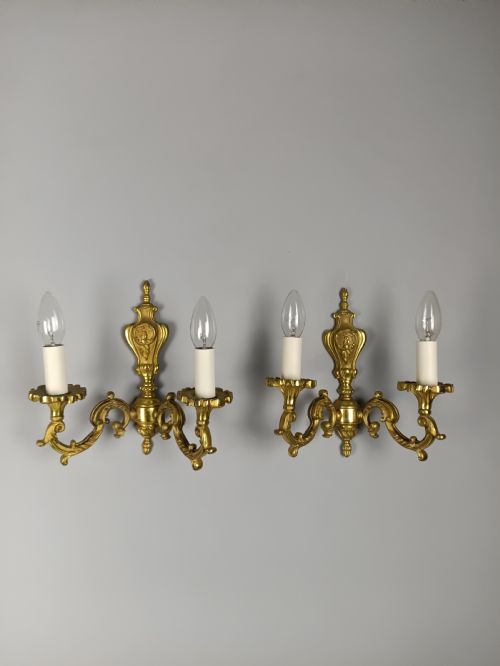
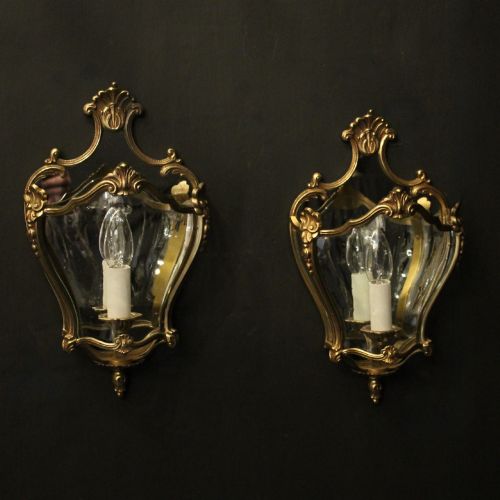
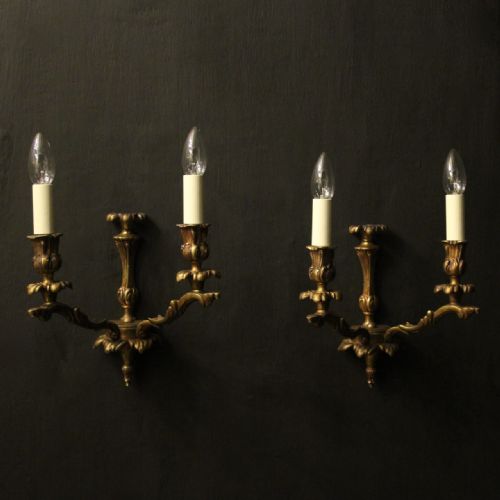
The pieces listed here date from the 19th century through the early decades of the 20th century, including Edwardian examples and designs from the 1900s to 1930. Wall lights and twin arm wall lights dominate the selection, alongside half lanterns and wall sconces.
Stylistic influences span French Rococo, French Empire, French Neoclassical, Louis XV style, Louis XVI, and Art Deco. Pairs and larger sets appear frequently throughout the available selection.
How they were made
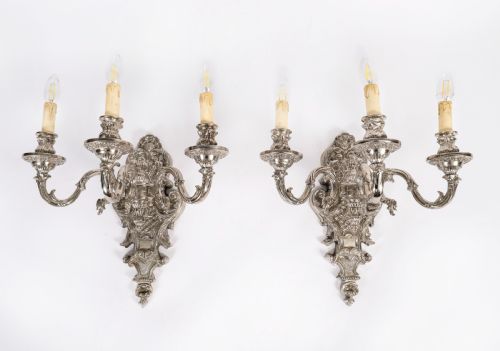
Construction relies heavily on metals such as brass, bronze, and silver plate, shaped to form structural arms and backplates. Many examples feature finishes of ormolu, gilded brass, or gilded bronze to create a reflective metallic surface.
Additional materials include glass and green enamel incorporated into specific designs like Art Deco pieces. Metal casting and gilt work define the primary manufacturing techniques seen across the period.
French Period Lighting Appliques Retail Price Guide 2026
Typical asking prices for french period lighting appliques among the pieces listed under this phrase on Sellingantiques today, from the lower quarter to the upper quarter. They describe what is for sale here now, not the wider market.
Materials recorded in current listings include brass, gilt bronze, metal, gilded brass, gilded bronze, ormolu, glass, and silver plate.
What varies in quality
The refinement of the cast metalwork and the depth of the gilding set individual pieces apart. Finer examples display crisper surface detail in stylistic motifs such as Neoclassical or Empire ornamentation.
Scale and configuration also introduce variation, ranging from single items to matched sets of six twin arm lights. The complexity of the chosen style, from restrained Edwardian brass to ornate French Rococo Revival, shapes the visual impact of each applique.
The French Period Lighting Appliques Glossary
- Applique
- A decorative wall-mounted light fixture designed to hold candles or electric lamps. It projects illumination forward from the wall surface.
- Ormolu
- Gilded bronze or brass achieved through the application of a gold amalgam or modern plating methods. This finish imparts a rich metallic sheen to the metal substrate.
- Twin Arm
- A configuration featuring two distinct branching arms extending from a central backplate to hold light sources. This format is common in larger wall lights.
- Empire
- A stylistic period drawing inspiration from classical antiquity, characterised by symmetrical designs and martial motifs. It manifests in bronze and brass wall lights.
- Rococo
- A decorative style defined by asymmetrical curves, scrollwork, and naturalistic ornamentation. French Rococo appliques display elaborate flowing contours.
French Period Lighting Appliques: Frequently Asked Questions
How are french period lighting appliques mounted?
These fixtures attach directly to wall surfaces using secure backplates designed for vertical display. Proper installation ensures the weight of the metal structure is adequately supported.
Electrical wiring runs through the wall to connect with internal components, particularly on pieces that have been rewired for modern use.
What styles are common among these appliques?
Styles include French Empire, French Rococo, French Neoclassical, Louis XV, Louis XVI, and Art Deco. Each style reflects the decorative preferences of its respective era through specific motifs.
Edwardian and early twentieth century pieces offer alternative interpretations of traditional forms.
How do I identify the period of a wall light?
Dating relies on stylistic markers, construction methods, and materials such as gilded bronze or brass. Examining the cast details reveals the aesthetic vocabulary of periods like the nineteenth century or the 1920s and 1930s.
Comparative analysis with documented examples helps clarify the date of manufacture.