






French Pendant Necklace
A french pendant necklace brings together Continental artistry and personal devotion, offering wearable history crafted from gold, enamel, and glass.
French Pendant Necklace
A french pendant necklace encompasses a diverse array of devotional medals, artistic glass pieces, and nature-inspired designs originating from the late nineteenth century through the mid-twentieth century. Buyers exploring this category encounter everything from intricate religious charms to striking Art Deco and Art Nouveau masterworks.
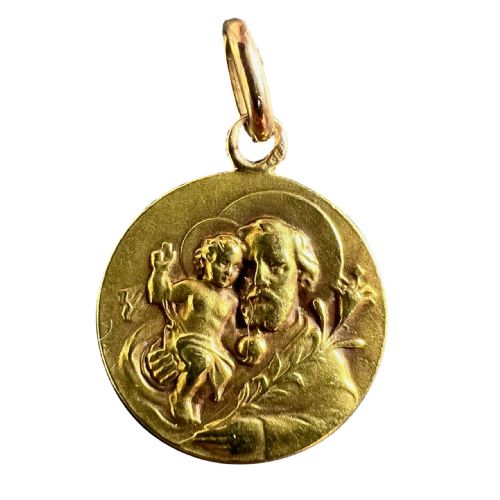
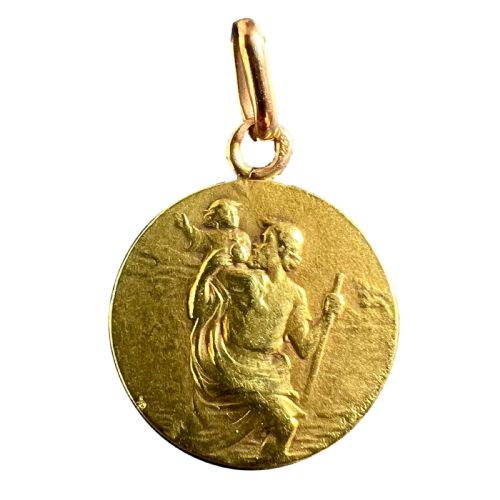
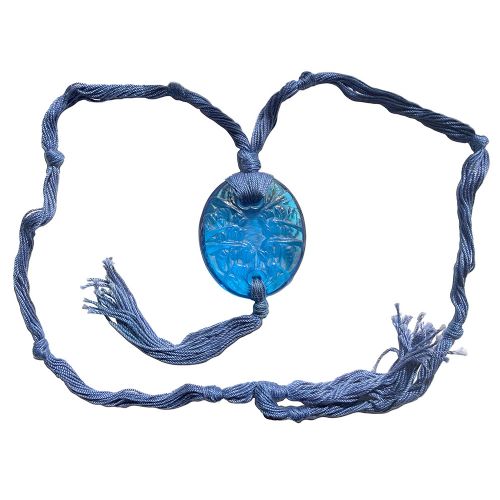
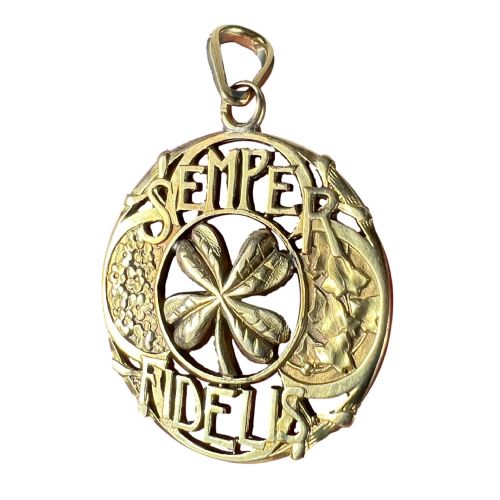
Religious medals dedicated to figures such as the Virgin Mary or Saint Christopher dominate the selection in yellow, rose, and white gold. Alongside these sacred items, glass pendants featuring botanical and insect motifs demonstrate the distinct creative output of French ateliers during the early decades of the twentieth century.
How they were made
Goldsmiths utilised eighteen-carat yellow, rose, and white gold to cast and stamp intricate religious medals, often incorporating pierced openwork details and delicate monogram engraving. Plique-a-jour enamel appears frequently on these gold pieces, suspending translucent coloured glass within wire frameworks to catch the light.
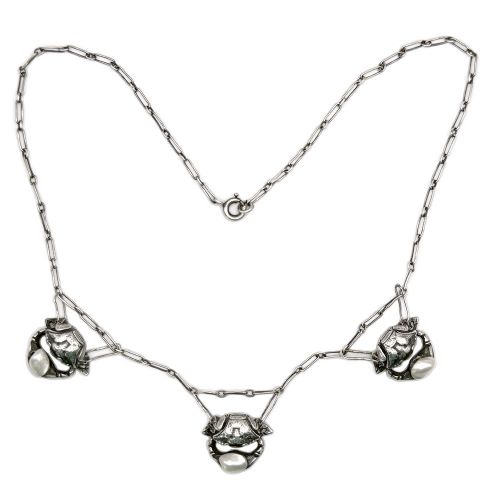
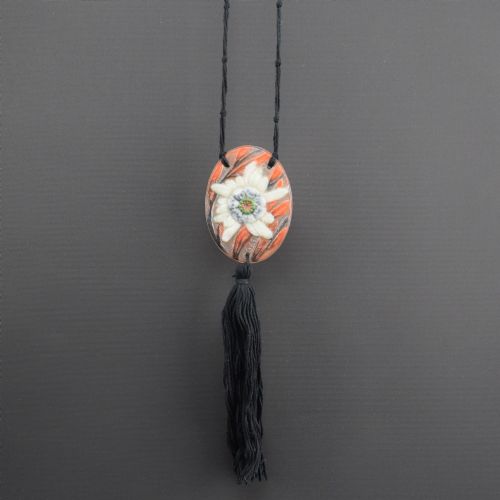
Glass artists employed pate de verre techniques to mould sculptural pendants depicting thistles, butterflies, and cicadas in rich hues. Silversmiths and jewellers also integrated diamonds, river pearls, and coral into silver and gold settings using traditional hand-assembly methods.
French Pendant Necklace Retail Price Guide 2026
Typical asking prices for french pendant necklace among the pieces listed under this phrase on Sellingantiques today, from the lower quarter to the upper quarter. They describe what is for sale here now, not the wider market.
Listings feature yellow gold, rose gold, enamel, silver, diamonds, coral, and pate de verre glass across several decades.
What varies in quality
The distinction between standard commercial output and exceptional pieces rests primarily on the prestige of the designer and the execution of specialist enamelling techniques. Works bearing the signatures of established glassmakers or master medallists command attention through superior clarity and depth of colour.
The crispness of the stamping on gold medals and the preservation of translucent enamel cells without cracking indicate the level of care taken during production. Pieces featuring detailed hand-carved motifs or complex multi-coloured enamel work represent the upper tier of period craftsmanship.
Henry Miault·Argy Rousseau·R Lalique·Paul Brandt·Monier·Pageli Perriat·Sellier·Dropsy·Mazzoni·Perroud·Gabriel Argy-Rousseau·Amalric Walter
The French Pendant Necklace Glossary
- Plique-a-jour
- An enamelling technique where enamel is applied to open cells without a backing, allowing light to shine through like stained glass. This method creates a translucent, jewel-like effect often seen in religious pendants.
- Pate de verre
- A method of glass casting where crushed glass is packed into a mould and fused in a kiln. The resulting pieces display distinctive textured surfaces and nuanced colour gradients.
- Medal
- A small stamped or cast metallic plaque, often worn as a pendant, depicting religious iconography, saints, or personal ciphers. These items served devotional or commemorative functions.
- Art Nouveau
- A decorative style characterised by flowing, organic lines inspired by natural forms such as plants, insects, and hair. This aesthetic flourished around the turn of the twentieth century.
French Pendant Necklace: Frequently Asked Questions
What is a french pendant necklace?
A french pendant necklace is a suspended ornament originating from France, typically taking the form of a gold religious medal, an enamel charm, or an artistic glass pendant.
These pieces reflect specific stylistic movements like Art Nouveau and Art Deco, combining precious metals with detailed miniature sculpture or translucent glass.
How were religious medals worn?
Religious medals were traditionally suspended from delicate gold chains to be worn close to the heart as protective talismans or symbols of faith.
Many feature specific saints, such as Saint Christopher or the Virgin Mary, and often commemorate personal milestones like first communions or travels.
How do I identify glass pendants?
Glass pendants from this era often utilise pate de verre or enamelling techniques to depict natural subjects like insects, flowers, and doves.
Signatures or moulded marks from notable glass artists frequently appear on the reverse or lower edge of these distinctive artistic creations.
What periods do these pieces span?
The available selection primarily spans from the late nineteenth century through the Edwardian period, the Art Deco era, and into mid-century design.
Victorian and Georgian antique examples also appear alongside pieces from the nineteen-fifties and nineteen-sixties, showing a broad timeline of French jewellery making.