





French Patinated Table
These french patinated table items bring together metalwork and marble across periods from the Regency to Art Deco.
French Patinated Table
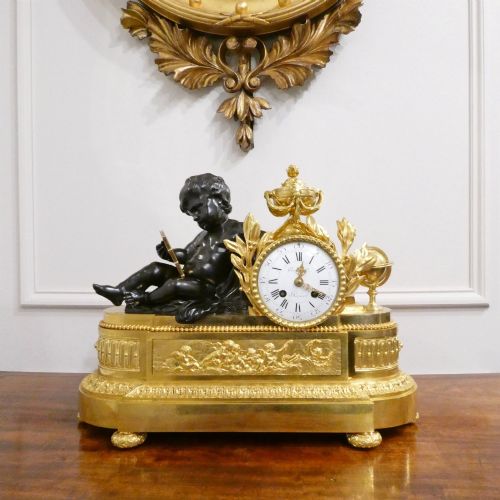
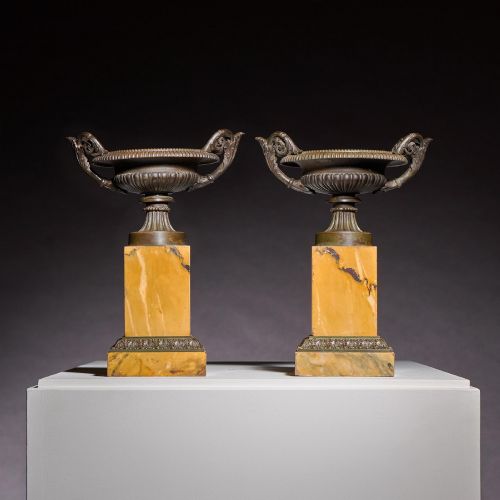
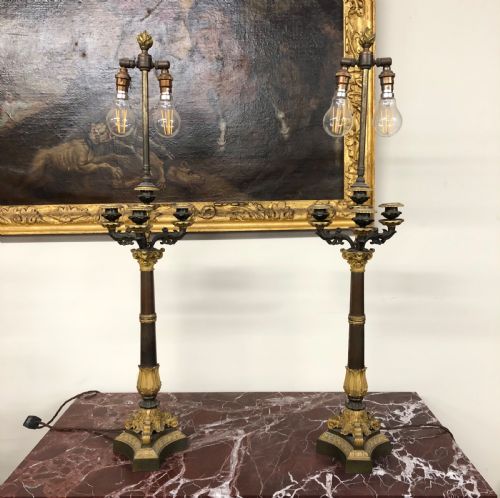
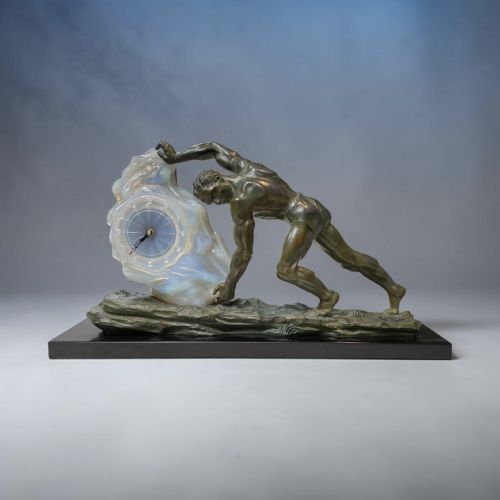
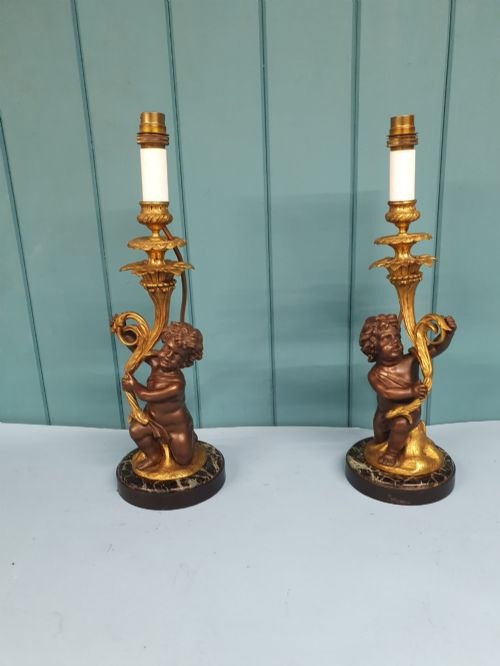
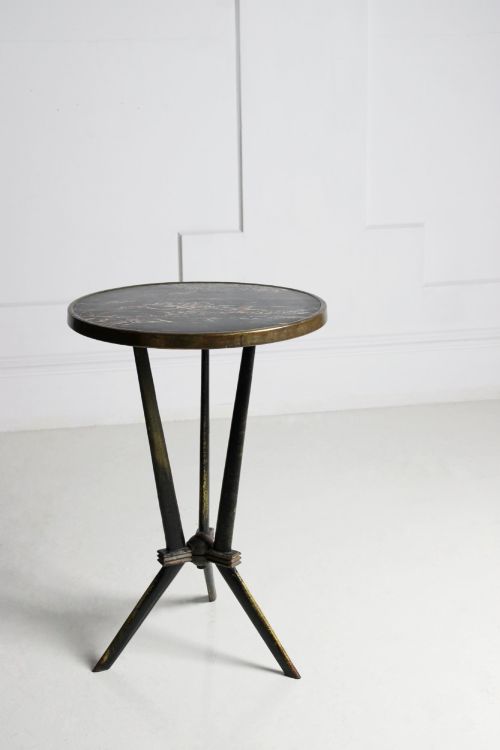
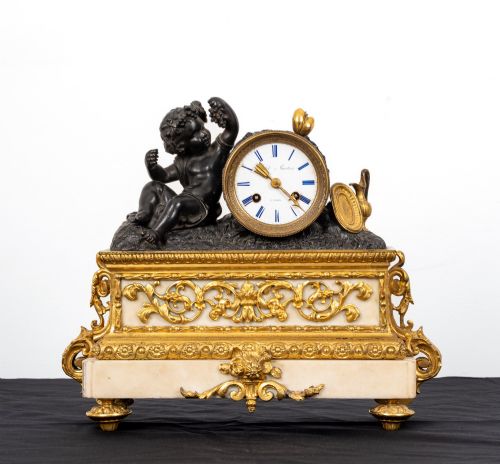
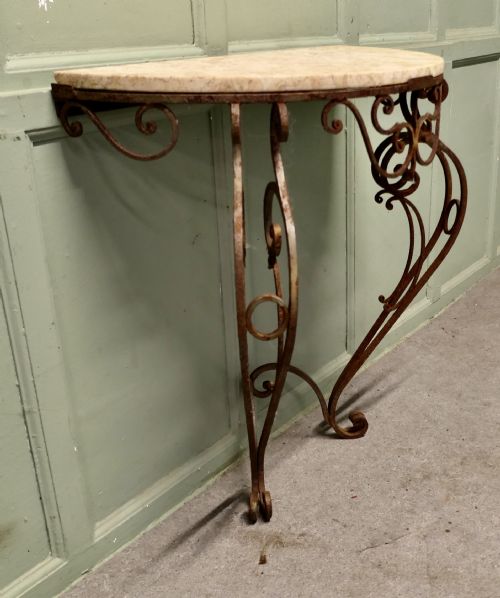
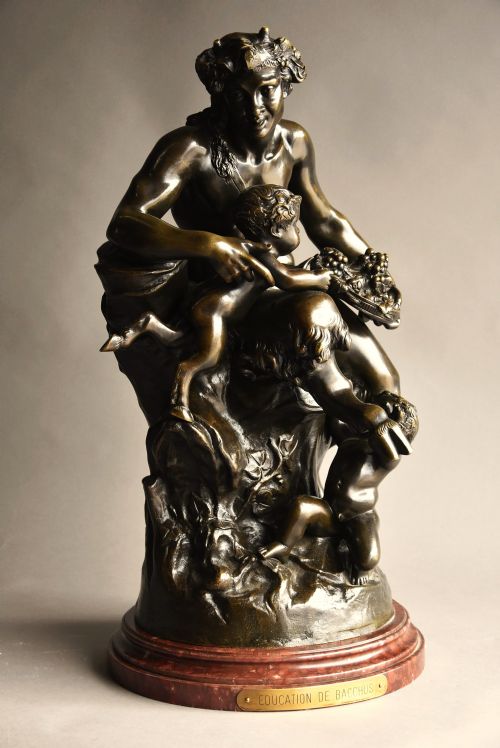
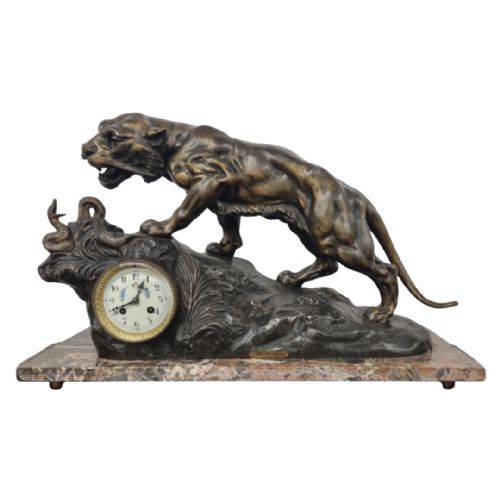
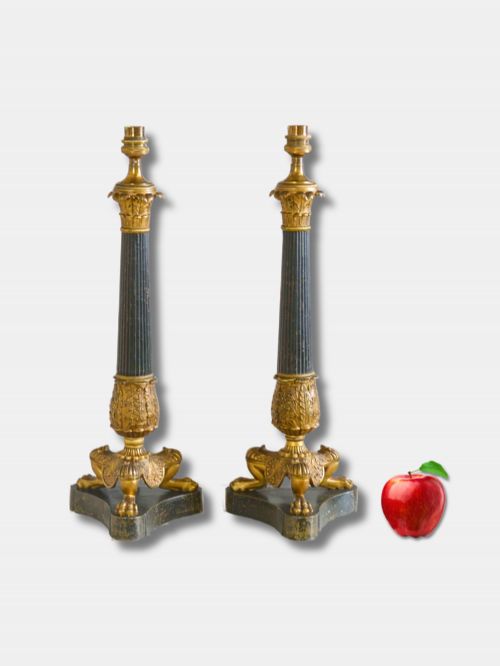
A french patinated table search reveals a varied assembly of works, incorporating sculptural mantel clocks, candelabra, and decorative lamps alongside occasional auxiliary furniture such as cast iron bistro tables and marble console tables. The selection spans the nineteenth century through to the 1930s, capturing shifts in design from French Empire and Rococo Revival to Art Nouveau and Art Deco forms.
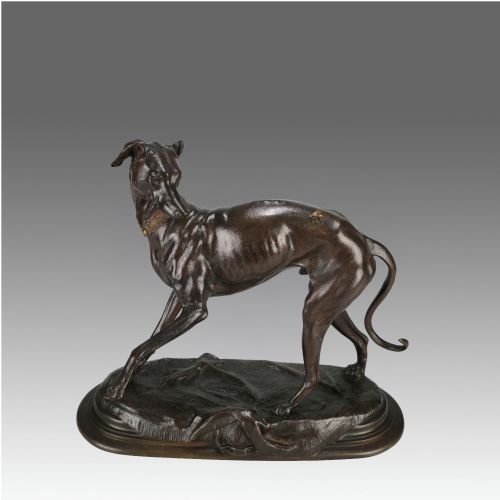
Buyers encounter numerous figural objects and lighting fixtures featuring dark metallic surfaces, often combined with contrasting ormolu, gilt bronze, and white marble bases. Sculptural groups of animals and mythological figures appear frequently, demonstrating the diverse output of French workshops from the periods listed.
How they were made
The objects utilise cast bronze, brass, white metal, and cast iron, frequently finished with a dark chemical patination applied to the metal surfaces. This treatment is often paired with fire-gilded ormolu highlights, enamel dials, cut glass, and carved marble components.
Foundry work relies on traditional casting methods followed by hand-chasing to refine details on figural groups, clock cases, and lamp stems. Ormolu elements are securely pinned or mounted to the primary bronze bodies, while marble bases are turned and polished to support heavier sculptural forms.
French Patinated Table Retail Price Guide 2026
Typical asking prices for french patinated table among the pieces listed under this phrase on Sellingantiques today, from the lower quarter to the upper quarter. They describe what is for sale here now, not the wider market.
Materials recorded across the inventory include patinated bronze, ormolu, cast iron, marble, glass, and enamel.
What varies in quality
The integration of mixed media also dictates standard; superior pieces combine substantial bronze castings with dense, well-veined marble plinths and original fire-gilt ormolu rather than later surface treatments. Signed works by recorded artists and established foundries consistently demonstrate higher levels of finishing craftsmanship.
Auguste Moreau·R Varnier·Vincenti·Siffel and Cartier·Claude Michel Clodian·P J Mêne·Alfred Barye·Georges Leleu·Rabiat·Hector Lemaire
The French Patinated Table Glossary
- Patinated bronze
- Bronze that has been treated with chemical solutions to produce a controlled surface colour, typically dark brown, green, or near-black. This finish protects the underlying metal and highlights modeled details.
- Ormolu
- A gilded bronze technique utilising finely ground gold mercury amalgam applied to a bronze base. It provides a bright golden surface that contrasts against darker patinated sections.
- Animalier
- A nineteenth-century artistic style focusing on the realistic depiction of animals, particularly horses, dogs, and wild beasts in motion. These sculptures often feature detailed patinated surfaces.
- Console table
- A wall-mounted or freestanding table designed to sit against a flat surface, frequently constructed with marble tops and heavy wooden or wrought iron frames.
- Torchère
- A tall ornamental stand or lamp designed to hold lights, often formed as a classical column or figural standard in bronze and brass.
French Patinated Table: Frequently Asked Questions
Where should I place these items?
Position heavier mantel clocks and candelabra on stable, level surfaces such as sideboards, mantelpieces, or dedicated console tables. Ensure they are kept away from direct heat sources and strong, continuous moisture.
Lamps and smaller sculptural pieces function well on desks or side tables where their patinated details can be appreciated close up. Adequate support is essential given the weight of the marble and bronze components.
How do I identify the period?
Examine the stylistic vocabulary, noting whether the piece employs classical motifs, organic Art Nouveau curves, or geometric Art Deco lines. Foundry marks, signatures, and dial construction provide further chronological clues.
Materials such as mercury-gilded ormolu or specific marble types often align with nineteenth-century manufacturing techniques. Comparing pieces to dated examples from the same maker helps narrow the timeframe of origin.
What is the difference between bronze and brass?
Bronze is an alloy primarily composed of copper and tin, prized for its durability and ability to hold fine detail when cast. It forms the foundation for most sculptural works and patinated figural clock cases.
Brass is an alloy of copper and zinc, typically possessing a brighter, more golden hue when unpolished. It appears frequently in lamp components, desk accessories, and structural frames.